
American Beech
Fagus grandifolia
A smooth-barked forest tree with golden, papery leaves that cling through winter, and nuts that attract bears, turkeys, and deer.
- Type
- Hardwoods
- Leaves
- Unlobed leaves
- Region
- Northeast, Southeast, Midwest & Plains
- Typical size
- 50–80 ft tall, with a trunk 1–3 ft across
- Range
- The eastern United States, from Nova Scotia to Florida and west to Texas
- Look for it
- Fall and winter, when golden leaves hang on young trees
How to identify it
- Bark is smooth, thin, and pale gray, like elephant skin.
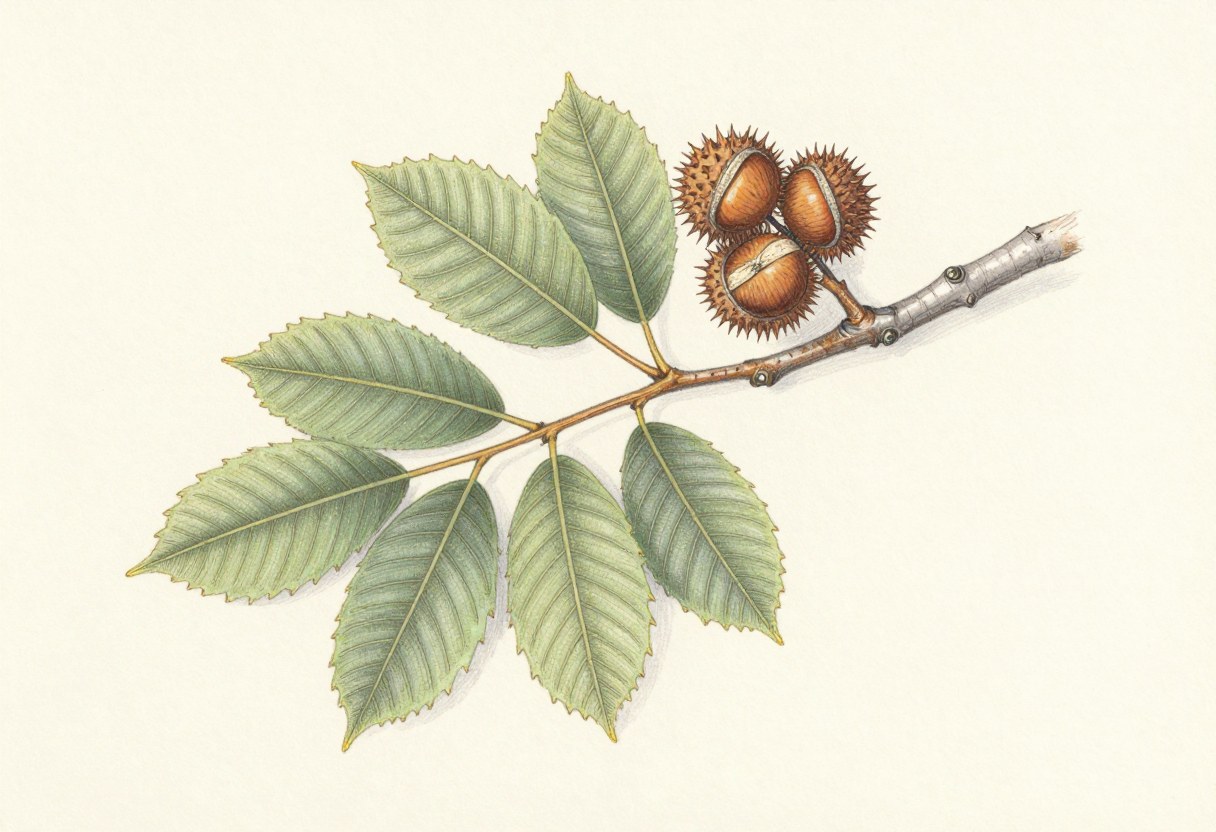
- Leaves are oval with straight, parallel veins, each ending in a small tooth.
- Beechnuts are three-sided and held in prickly husks.
- Young trees keep their dry, bronze leaves through winter.
Often confused with
- American hornbeam: a smaller tree with smooth, muscle-like gray bark and leaves with double teeth.
Why it matters outdoors
- Beechnuts are an important food for bears, deer, turkeys, and squirrels.
- Bears climb beech trees for nuts and leave claw marks in the smooth bark.
- Dense hardwood that makes good firewood.
Field notes
Beech trees are important to wildlife in the fall, and old trees often show black claw scars where bears have climbed them. Those scars are a clue to where bears feed.
Beech bark disease has hurt many stands, so healthy old beeches are especially valuable.
Related guides
This guide helps you recognize trees and avoid harmful plants. It does not teach foraging, and nothing here is advice to eat or use a wild plant. Identification from a drawing can be wrong, so check with a regional field guide or a local expert, such as your state forestry or extension service.