
Field Guide / Ticks, Spiders & Biting Pests
Lone Star Tick
Amblyomma americanum
Also called: turkey tick, seed tick (larvae)
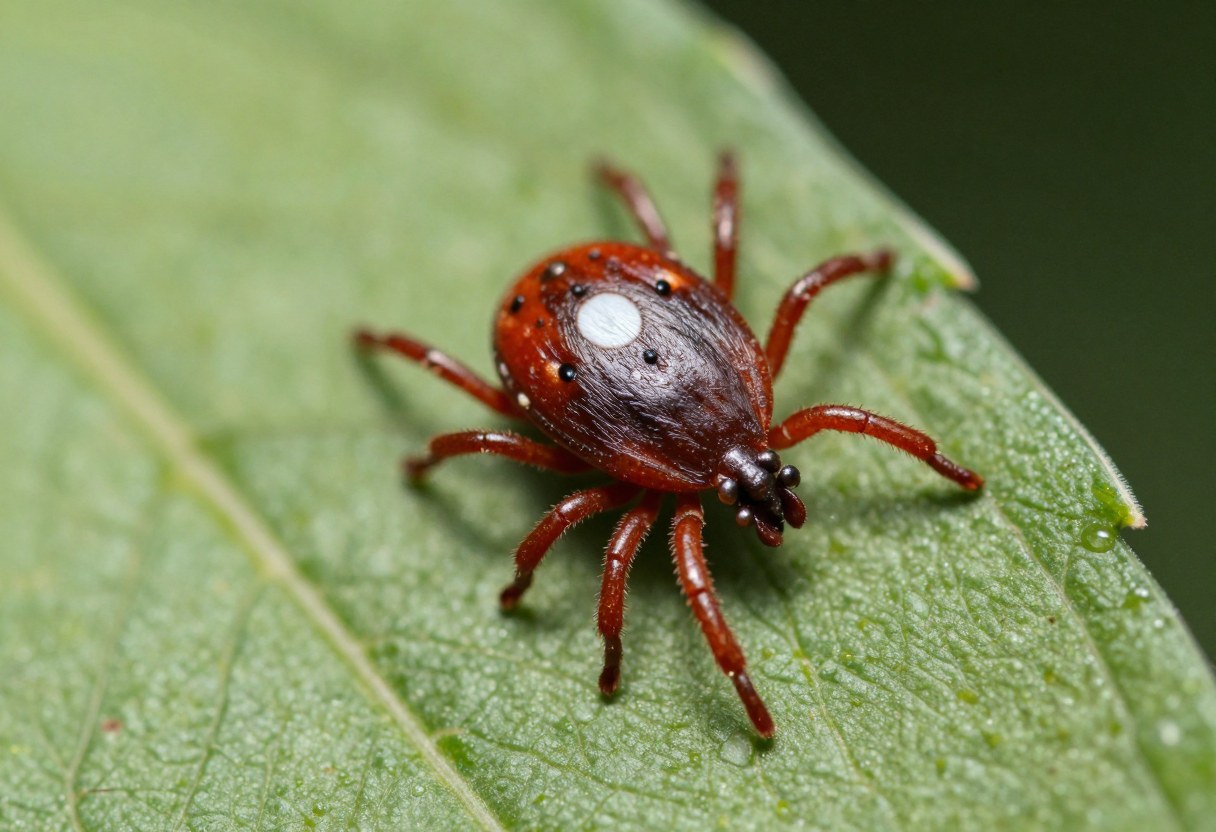
An aggressive tick of the South and Midwest, recognized by the single white spot on the adult female, and linked to alpha-gal syndrome, a red-meat allergy.
- Kind
- Ticks
- Size
- Adult female about 1/8 to 1/4 inch unfed
- Range
- The southeastern and south-central states, the Midwest, and increasingly farther north along the East Coast
- Regions
- Southeast, Midwest & Plains, Northeast, Southwest
- When active
- Spring through fall, with larvae in late summer
- Concern
- Can carry disease, Allergic reactions
Note: Hunters who handle and eat game are often bitten by lone star ticks. Alpha-gal syndrome is real, so tell your doctor about tick bites if you develop meat-related allergic symptoms.
How to identify it
- The adult female has one bright white spot in the middle of her back.
- The male has scattered whitish streaks along the edge of the body.
- The body is reddish-brown and rounded.
- Young larvae can swarm in groups, and people call them seed ticks.
Health risk
Lone star ticks can spread ehrlichiosis, tularemia, and Heartland virus. A bite can also cause alpha-gal syndrome, an allergy to red meat, which can lead to hives, stomach pain, or serious reactions hours after eating beef, pork, or venison.
How to avoid it
- Treat boots, pants, socks, and gear with 0.5% permethrin, or buy pre-treated clothing. Do not put permethrin on skin.
- Use an EPA-registered repellent on exposed skin, such as DEET, picaridin, IR3535, or oil of lemon eucalyptus, and follow the label.
- Walk in the center of trails, and avoid brushing against tall grass and leaf litter when you can.
- Do a full tick check after being outdoors: under the arms, in and around the ears, inside the belly button, behind the knees, in and around the hair, between the legs, and around the waist.
- Shower within two hours of coming indoors, and tumble dry clothes on high heat for 10 minutes to kill ticks. Check pets and gear too.
If you find a tick on you
- Use clean, fine-tipped tweezers to grasp the tick as close to the skin's surface as you can.
- Pull upward with steady, even pressure. Do not twist or jerk, which can leave mouthparts in the skin. If some stay behind, remove them with the tweezers if you can, and otherwise leave them alone and let the skin heal.
- Clean the bite and your hands with rubbing alcohol or soap and water.
- Do not crush the tick. Dispose of it by putting it in alcohol, sealing it in a bag or container, wrapping it tightly in tape, or flushing it down the toilet.
- Do not use folk remedies such as nail polish, petroleum jelly, or a hot match to make the tick let go.
When to get medical care
- See a doctor if you get a fever, chills, a rash (including a spreading or bull's-eye rash), a severe headache, or muscle and joint aches in the days to weeks after a tick bite.
- Tell the doctor you were bitten by a tick, where you were, and about when it happened.
- Get care if you cannot remove the tick, or if the bite looks infected.
- If you develop hives, stomach pain, or swelling several hours after eating red meat, talk to a doctor about alpha-gal syndrome.
Call 911 for trouble breathing, swelling of the face or throat, a racing heart, dizziness, or fainting.
Often confused with
- American Dog Tick: larger shield with ornate pale markings and no single white spot.
- Blacklegged Tick: smaller, with no white spot.
Field notes
Lone star ticks actively chase hosts and are often found in large numbers in woods and brush. Their range has spread north in recent decades.
Related guides
This page is general information from public health sources such as the CDC, not medical advice. Risks vary with where you live, your health, and any allergies, so talk to a doctor or pharmacist about repellents, allergy plans, and vaccines. Follow the label on any repellent or insecticide.