
Field Guide / Ticks, Spiders & Biting Pests
American Dog Tick
Dermacentor variabilis
Also called: wood tick
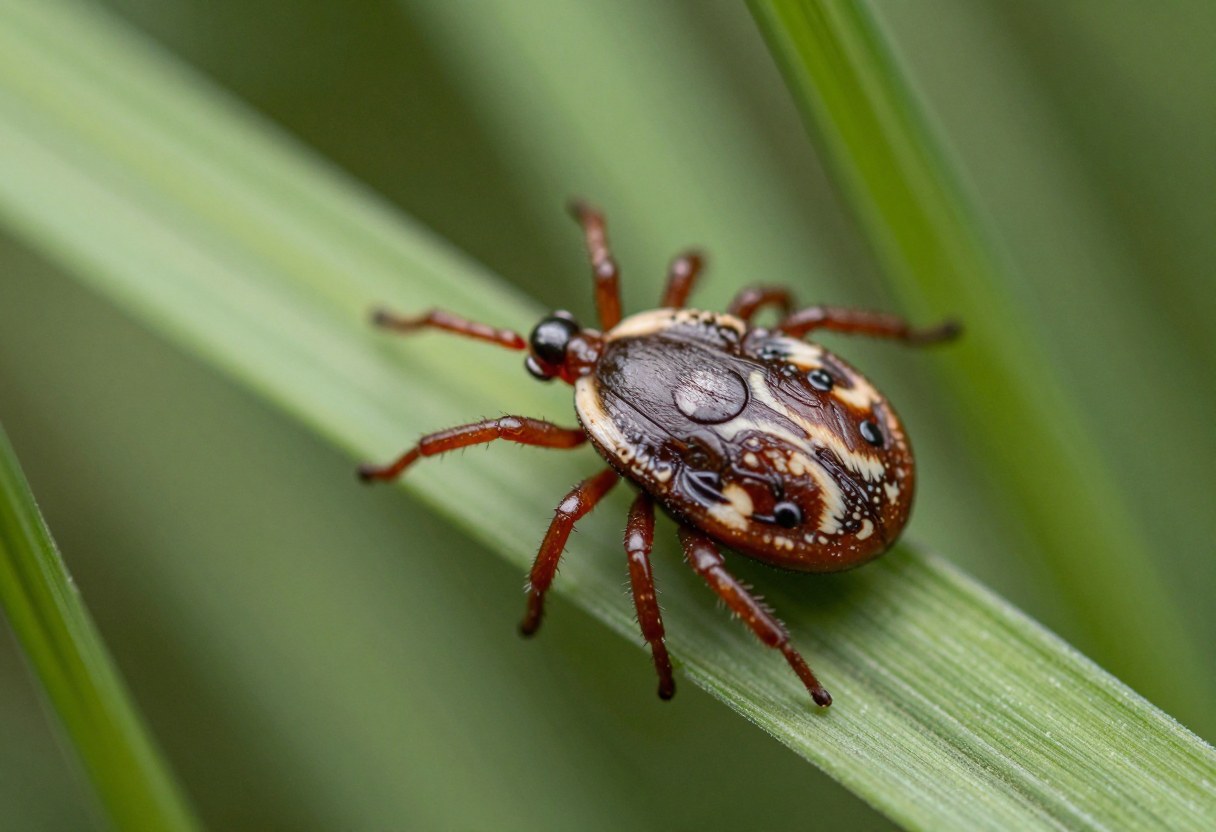
A large, common tick of grassy trails and field edges, easy to spot with its cream markings, and a carrier of Rocky Mountain spotted fever and tularemia.
- Kind
- Ticks
- Size
- Unfed adult about 3/16 inch; swells to about 1/2 inch when fed
- Range
- East of the Rocky Mountains and in limited areas on the Pacific Coast
- Regions
- Northeast, Southeast, Midwest & Plains, Rockies & West
- When active
- Spring through summer
- Concern
- Can carry disease
How to identify it
- The body is flat and brown, with ornate whitish or cream markings on the shield behind the head.
- Females are larger than males, and the shield covers only part of the back.
- Unfed ticks are flat; fed ticks swell and turn gray-blue.
- It is larger than a blacklegged tick.
Health risk
American dog ticks can spread Rocky Mountain spotted fever and tularemia. Rocky Mountain spotted fever can become serious if untreated, so watch for symptoms. They do not spread Lyme disease.
How to avoid it
- Treat boots, pants, socks, and gear with 0.5% permethrin, or buy pre-treated clothing. Do not put permethrin on skin.
- Use an EPA-registered repellent on exposed skin, such as DEET, picaridin, IR3535, or oil of lemon eucalyptus, and follow the label.
- Walk in the center of trails, and avoid brushing against tall grass and leaf litter when you can.
- Do a full tick check after being outdoors: under the arms, in and around the ears, inside the belly button, behind the knees, in and around the hair, between the legs, and around the waist.
- Shower within two hours of coming indoors, and tumble dry clothes on high heat for 10 minutes to kill ticks. Check pets and gear too.
If you find a tick on you
- Use clean, fine-tipped tweezers to grasp the tick as close to the skin's surface as you can.
- Pull upward with steady, even pressure. Do not twist or jerk, which can leave mouthparts in the skin. If some stay behind, remove them with the tweezers if you can, and otherwise leave them alone and let the skin heal.
- Clean the bite and your hands with rubbing alcohol or soap and water.
- Do not crush the tick. Dispose of it by putting it in alcohol, sealing it in a bag or container, wrapping it tightly in tape, or flushing it down the toilet.
- Do not use folk remedies such as nail polish, petroleum jelly, or a hot match to make the tick let go.
When to get medical care
- See a doctor if you get a fever, chills, a rash (including a spreading or bull's-eye rash), a severe headache, or muscle and joint aches in the days to weeks after a tick bite.
- Tell the doctor you were bitten by a tick, where you were, and about when it happened.
- Get care if you cannot remove the tick, or if the bite looks infected.
Call 911 for trouble breathing, swelling of the face or throat, a racing heart, dizziness, or fainting.
Often confused with
- Lone Star Tick: the female has one white spot, rather than a patterned shield.
- Rocky Mountain Wood Tick: very similar, found in the Rocky Mountain region.
Field notes
American dog ticks wait on grass and low brush along trails and roads and climb onto people and dogs that brush past. They are one of the ticks hunters and hikers find most often in warm months.
Related guides
This page is general information from public health sources such as the CDC, not medical advice. Risks vary with where you live, your health, and any allergies, so talk to a doctor or pharmacist about repellents, allergy plans, and vaccines. Follow the label on any repellent or insecticide.