
Field Guide / Ticks, Spiders & Biting Pests
Brown Recluse Spider
Loxosceles reclusa
Also called: fiddleback, violin spider
A shy, light brown spider with a violin-shaped mark, native to the south-central United States, whose bite is often painless at first and sometimes leaves a slow-healing wound.
- Kind
- Spiders & Scorpions
- Size
- Body about 1/4 to 1/2 inch, with a leg span of about an inch
- Range
- The south-central United States, from Texas and Nebraska east to Georgia and Ohio
- Regions
- Midwest & Plains, Southeast, Southwest
- When active
- Year-round indoors, and warm months outdoors
- Concern
- Medically significant venom
How to identify it
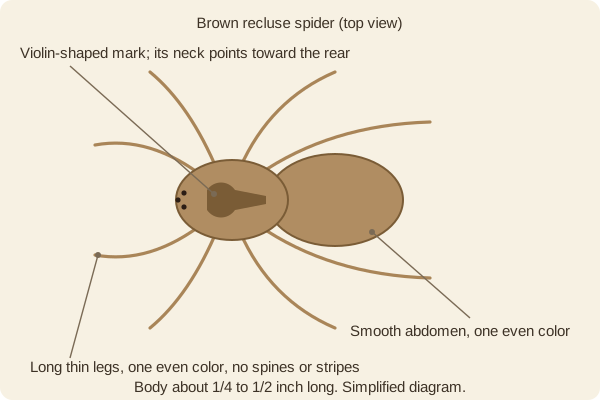
- The body is a uniform light to medium brown.
- A darker violin-shaped mark sits on the front half of the body, with the neck of the violin pointing toward the rear.
- The legs are long, thin, and uniform in color, without spines or stripes.
- It lives in undisturbed places such as sheds, woodpiles, and cabins.
Health risk
Most brown recluse bites are mild and heal on their own. Some can cause a wound that slowly enlarges and takes weeks to heal, and rarely the bite can cause fever and illness. Many wounds blamed on recluses are actually other skin problems.
How to avoid it
- Shake out clothing, boots, and bedding in cabins and sheds before use.
- Wear gloves when moving stored items, wood, and boxes.
- Store items in sealed plastic containers and keep clutter down.
- Keep beds away from walls and do not let bedding touch the floor, in places where recluses live.
If you are bitten or stung
- Wash the area with soap and water, and apply a cool compress.
- Elevate the area if it is a limb, and avoid heat, which can make the wound worse.
- Keep an eye on the bite and get care if it worsens.
- If you can safely do so, save the spider in a jar for identification.
When to get medical care
- See a doctor if a bite develops a blister, turns dark or blue, grows, or does not improve in a few days.
- Get care for fever, chills, body aches, or a widening rash after a bite.
Call 911 for trouble breathing, swelling of the face or throat, a racing heart, dizziness, or fainting.
Often confused with
- Black Widow Spider: a shiny black spider with a red hourglass, not a brown one with a violin mark.
Field notes
Brown recluses are not found in most of the country, even though many people believe they are everywhere. Outside their native range, a diagnosis of a recluse bite is unlikely.
Related guides
This page is general information from public health sources such as the CDC, not medical advice. Risks vary with where you live, your health, and any allergies, so talk to a doctor or pharmacist about repellents, allergy plans, and vaccines. Follow the label on any repellent or insecticide.