
Field Guide / Ticks, Spiders & Biting Pests
Black Widow Spider
Latrodectus species
Also called: widow spider
A shy, shiny black spider with a red hourglass underneath, found in woodpiles, sheds, and dark corners, with a neurotoxic bite that needs medical care.
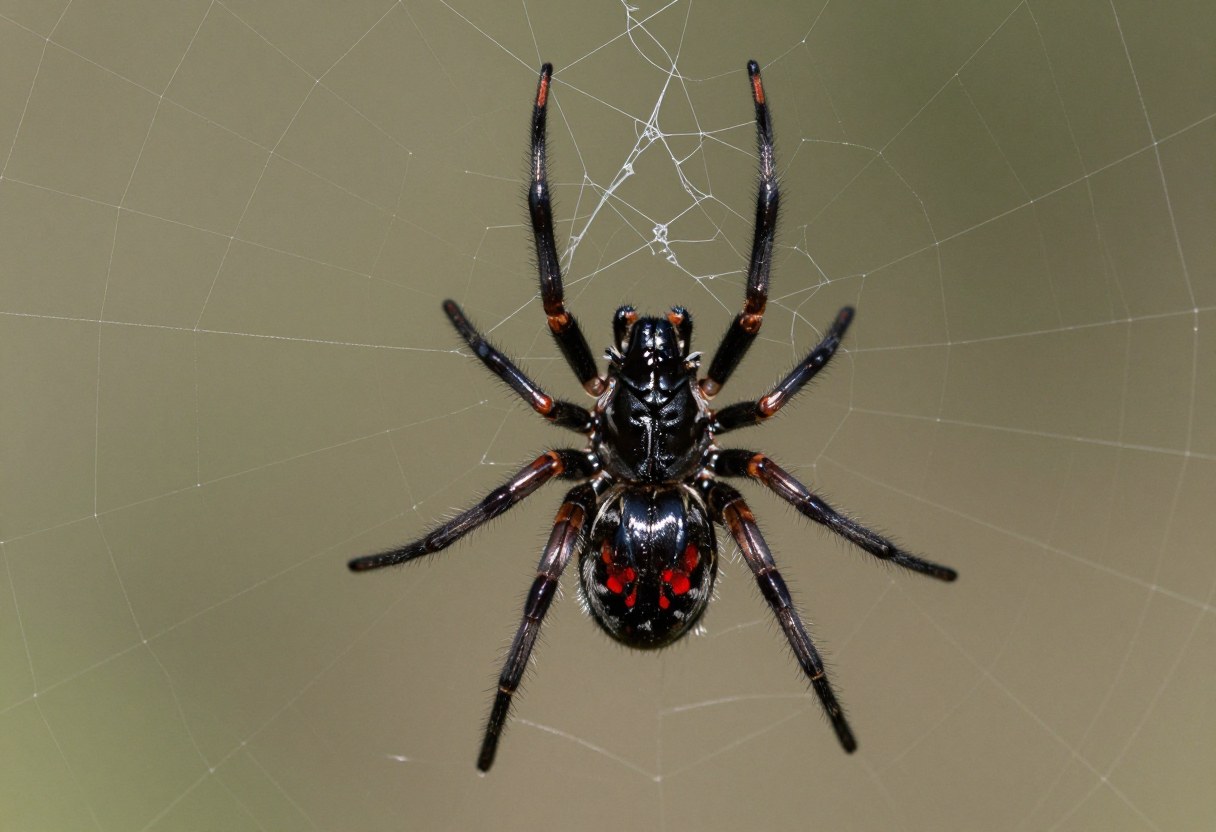
- Kind
- Spiders & Scorpions
- Size
- Female body about 1/2 inch, with a leg span of about 1.5 inches
- Range
- Found throughout the United States, most common in the South and West
- Regions
- Northeast, Southeast, Midwest & Plains, Southwest, Rockies & West
- When active
- Warm months, and year-round in mild areas
- Concern
- Medically significant venom
How to identify it
- The female is shiny jet black with a round, bulbous abdomen.
- A red or orange hourglass marking sits on the underside of the abdomen.
- The web is tangled and messy, close to the ground.
- Males and young spiders are smaller and paler, with stripes or spots.
Health risk
A black widow bite can cause severe muscle pain and cramping, sweating, nausea, and a rise in blood pressure. Deaths are rare, but young children, older adults, and people with health problems are at higher risk.
How to avoid it
- Wear gloves when moving wood, rocks, or debris.
- Shake out boots, gloves, and clothing before putting them on, especially if stored in a shed or garage.
- Check outhouse seats and the undersides of benches and picnic tables.
- Keep woodpiles away from structures when you can, and bring in firewood only as needed.
If you are bitten or stung
- Wash the bite with soap and water, and apply a cold pack to help with pain.
- Keep the person calm and still, and get medical care right away.
- Call Poison Help at 1-800-222-1222 for advice while you arrange care.
- Do not cut the bite, apply a tourniquet, or try to suck out venom.
When to get medical care
- Get medical care for any suspected black widow bite, especially in a child, an older adult, or someone with a health condition.
- Go to the emergency room for severe pain, cramping, trouble breathing, or chest pain.
Call 911 for trouble breathing, swelling of the face or throat, a racing heart, dizziness, or fainting.
Often confused with
- Brown Recluse: a different spider, tan-brown with a violin mark.
Field notes
Black widows bite when pressed against skin, such as when a hand reaches into a dark space. They are not aggressive and prefer to hide.
Related guides
This page is general information from public health sources such as the CDC, not medical advice. Risks vary with where you live, your health, and any allergies, so talk to a doctor or pharmacist about repellents, allergy plans, and vaccines. Follow the label on any repellent or insecticide.