
Field Guide / Ticks, Spiders & Biting Pests
Biting Midge
Culicoides species
Also called: no-see-um, punkie, sand fly
A tiny, nearly invisible biting fly of shorelines and marshes, common at dusk and dawn, with a surprisingly painful bite.
- Kind
- Biting Flies & Mites
- Size
- About 1/16 inch
- Range
- Throughout the United States, especially near coasts, marshes, and wet ground
- Regions
- Northeast, Southeast, Midwest & Plains, Southwest, Rockies & West
- When active
- Warm months, especially at dusk and dawn
- Concern
- Painful or itchy
How to identify it
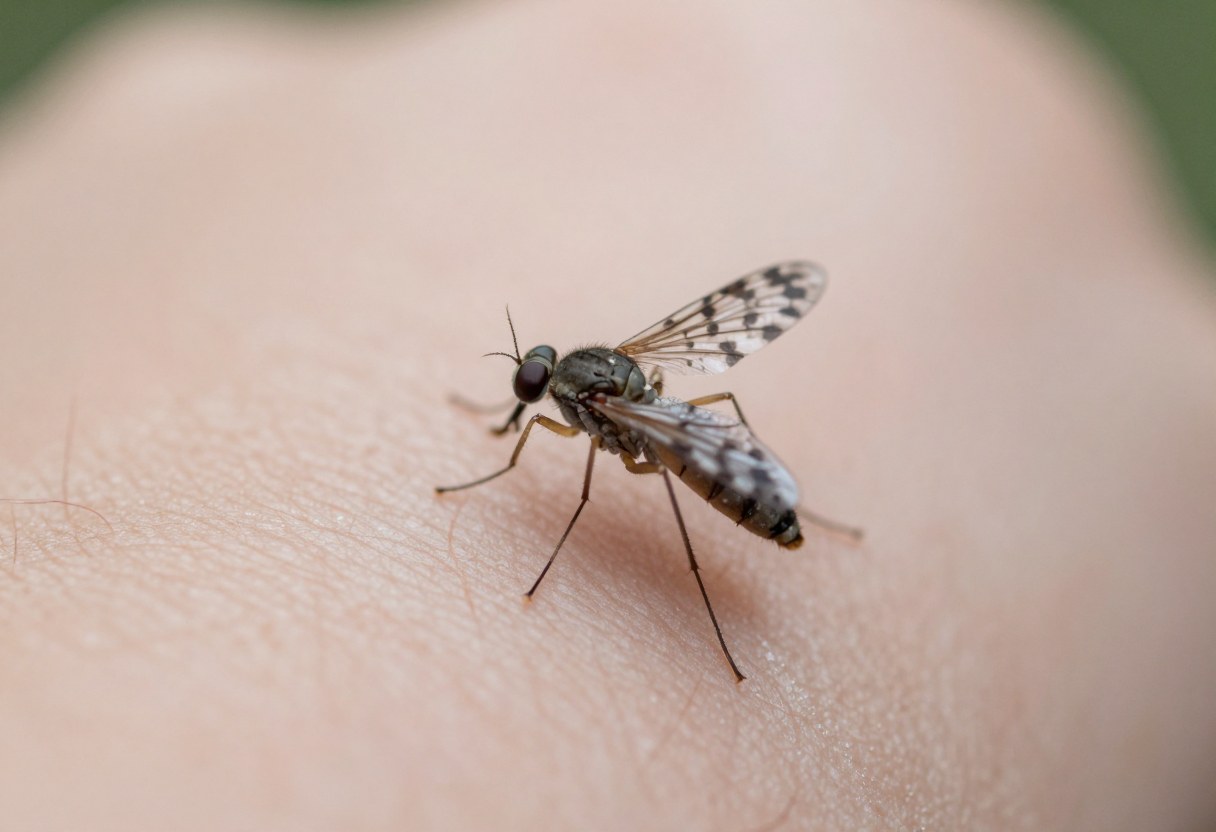
- A tiny gray gnat, so small it passes through window screens.
- The wings are held flat over the back and often have a spotted pattern.
- Bites feel like a burning prick and leave small, itchy red bumps.
- Swarms gather near water and in still air at dusk and dawn.
Health risk
Biting midges cause painful, itchy bites that can last days. In the United States they are mostly a nuisance, though some species can spread diseases to livestock and wildlife.
How to avoid it
- Use an EPA-registered repellent on exposed skin, such as DEET, picaridin, IR3535, or oil of lemon eucalyptus, and follow the label.
- Choose breezy spots, since midges struggle in wind, and use a fan at camp.
- Wear long sleeves and pants, or a head net, near water at dusk and dawn.
- Use fine-mesh screens or netting in camp.
If you are bitten or stung
- Wash the bites with soap and water.
- Apply a cold pack or cool cloth, and use hydrocortisone cream or calamine lotion as the label directs.
- Try not to scratch, which can break the skin and lead to infection.
When to get medical care
- See a doctor if bites look infected, with spreading redness, warmth, or pus.
- Get care for swelling, hives, or trouble breathing after a bite.
Call 911 for trouble breathing, swelling of the face or throat, a racing heart, dizziness, or fainting.
Often confused with
- Mosquito: larger, with a long proboscis, and not able to slip through screens.
Field notes
Biting midges are called no-see-ums because they are hard to see. Standard screens often do not stop them, and fine-mesh netting does.
Related guides
This page is general information from public health sources such as the CDC, not medical advice. Risks vary with where you live, your health, and any allergies, so talk to a doctor or pharmacist about repellents, allergy plans, and vaccines. Follow the label on any repellent or insecticide.