

Tripod and Head
Also called: tripod, binocular tripod
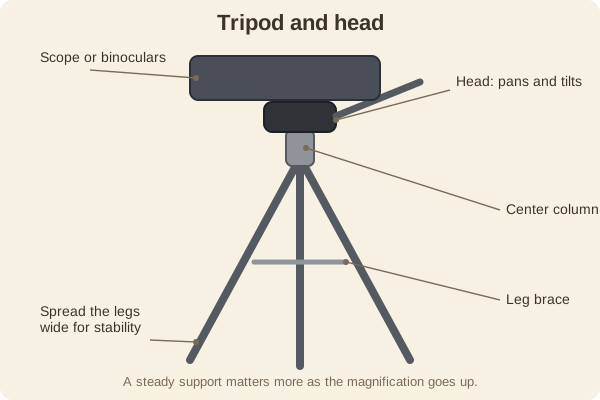
The stand that holds a spotting scope, telescope, or large binoculars steady. A good tripod improves every view.
- Type
- Tools & Accessories
- Materials
- Aluminum is cheaper; carbon fiber is lighter and damps vibration
- Head types
- Pan-tilt, fluid, or ball heads
- Rule of thumb
- Choose one that is stable at full height without extending the center column
- Used for
- Hunting, Stargazing, Birding & wildlife, Target shooting
What it is good for
- Spotting scopes and large binoculars.
- Long observing sessions with less fatigue.
- Reducing the shake that high power magnifies.
Where it falls short
- Adds weight and setup time.
- A cheap, flimsy tripod can be worse than none.
- The center column adds wobble.
Tips
- Spread the legs wide and hang a pack from the hook for extra stability on windy days.
Works well with
- Spotting Scope: needs a tripod.
- Astronomy Binoculars: usually used on one.
Field notes
Magnification magnifies shake too. Doubling the power doubles how much any wobble shows, which is why a steady support matters more as the power goes up.
Related guides
Specs here are typical, not guarantees; models differ, so check the maker's published numbers. Never look at the Sun through any optic without a certified solar filter, and zero or mount a scope with the firearm unloaded and pointed in a safe direction. Rules on optics, such as scopes on certain hunts or lasers and electronics, differ by state; our state resources directory links to each state's official regulations. Want a buying guide? Read Choosing Hunting Optics.