

Spotting Scope
Also called: spotter, field scope
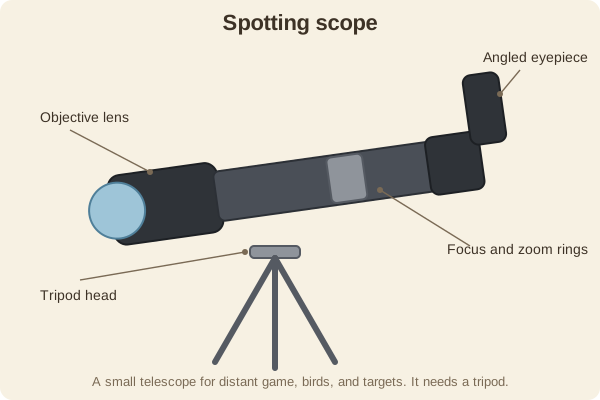
A small telescope for looking at distant game, birds, or targets. It has more power than binoculars and sits on a tripod.
- Type
- Scopes
- Typical zoom
- 15-45x to 20-60x
- Objective size
- Often 60 to 85 mm
- Body style
- Straight or angled eyepiece
- Support
- Needs a tripod
- Used for
- Hunting, Birding & wildlife, Target shooting
What it is good for
- Judging game across a canyon or field.
- Birding and shorebird identification.
- Spotting hits on a target at the range.
Where it falls short
- Heavy and slow to set up compared with binoculars.
- Very high power shows heat shimmer and shake.
- Not meant for scanning while walking.
Tips
- Use the lowest zoom that shows what you need, because the image is brighter and steadier.
- An angled eyepiece is easier on the neck at a tripod.
Works well with
- Tripod and Head: required for a steady view.
- Roof Prism Binoculars: used to find game before you zoom in.
Field notes
Most hunters scan with binoculars first and use the spotting scope to look closer once they have found something.
Related guides
Specs here are typical, not guarantees; models differ, so check the maker's published numbers. Never look at the Sun through any optic without a certified solar filter, and zero or mount a scope with the firearm unloaded and pointed in a safe direction. Rules on optics, such as scopes on certain hunts or lasers and electronics, differ by state; our state resources directory links to each state's official regulations. Want a buying guide? Read Choosing Hunting Optics.