

Astronomy Binoculars
Also called: giant binoculars, 15x70, 20x80
Large, high-power binoculars built for the night sky. They show star clusters, the Moon, and faint fuzzy objects, but they need a tripod.
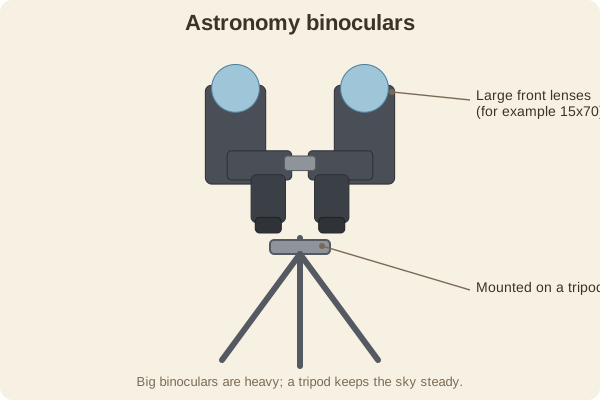
- Type
- Binoculars
- Typical sizes
- 10x50, 15x70, 20x80, and larger
- Support
- A tripod or mount is needed above about 10x
- Exit pupil
- About 4 to 5 mm
- Used for
- Stargazing
Safety: Never point any binocular at the Sun, even briefly. It can cause permanent eye damage.
What it is good for
- Sweeping across the Milky Way and star clusters.
- Beginners who want a wide view of the sky.
- A grab-and-go night-sky tool.
Where it falls short
- Heavy, so hand-holding them for long is tiring.
- Too bulky for most hunting use.
- Higher power makes shake more visible.
Tips
- Use a tripod adapter and a steady head, or lie back in a reclining chair with elbows braced.
Works well with
- Tripod and Head: steadies a heavy pair.
- Magnification: more power means more visible shake.
Field notes
Big binoculars collect much more light than the eye can alone, so they reveal many objects invisible without them. The wide field makes it easy to find your way around.
Related guides
Specs here are typical, not guarantees; models differ, so check the maker's published numbers. Never look at the Sun through any optic without a certified solar filter, and zero or mount a scope with the firearm unloaded and pointed in a safe direction. Rules on optics, such as scopes on certain hunts or lasers and electronics, differ by state; our state resources directory links to each state's official regulations. Want a buying guide? Read Choosing Hunting Optics.