
Waypoints, Tracks, and Routes
Also called: waypoint, track log, breadcrumb trail, GPX, route, backtrack
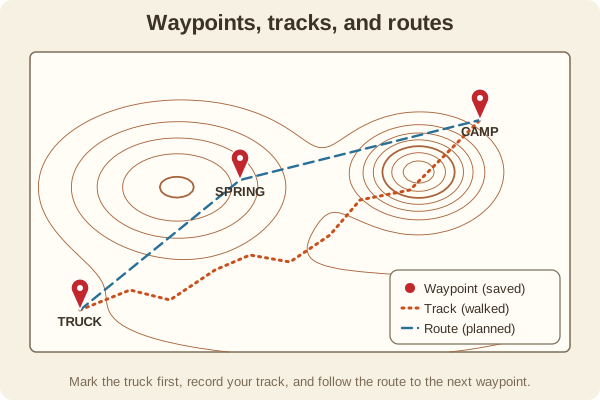
A waypoint is a saved spot, a track is the trail you actually walked, and a route is a planned line to follow. Together they let you find your way back and share a trip.
- Type
- GPS & Devices
- Waypoint
- A single saved position, such as a trailhead, camp, stand, spring, or fishing spot
- Track
- A recorded breadcrumb line of where you went, often saved as a GPX file
- Route
- A planned series of waypoints to follow in order
- Backtrack
- A feature that guides you back along your own track
- Used for
- Hiking & camping, Hunting, Fishing & boating
What it is good for
- Finding the truck, camp, or a stand again in the dark.
- Marking a good fishing hole, water source, or downed game.
- Sharing a route with a friend or loading one from a trail site.
Where it falls short
- A track records where you went, including mistakes and detours.
- A waypoint is only as good as the position accuracy at that moment.
- Memory fills up if you log tracks too often on a small device.
Tips
- Name waypoints clearly, such as 'TRUCK' or 'CAMP 1', and mark the truck first.
- Start the track at the trailhead and save it at the end.
- Export or screenshot key waypoints and keep a written copy of the truck's coordinates.
Works well with
- Handheld GPS: stores and follows them.
- Phone Navigation Apps: can record tracks too.
- Latitude and Longitude: how a waypoint is written.
Field notes
The simplest, most useful habit is to mark a waypoint where you park. A saved truck position gives you a way home even if the trail is gone or it is dark.
Related guides
Numbers here are typical, and values such as magnetic declination change over time and place, so check a current source such as NOAA or your map's legend. Practice near home before you rely on a skill far from help, carry a paper map and compass as a backup, and tell someone your plan. Rules on electronics, land access, and trespass differ by state; our state resources directory links to each state's official regulations. Want a step-by-step guide? Read Trail Navigation Basics.