
STOP When You Are Lost
Also called: lost, what to do if lost, STOP, stay put, whistle signal, disoriented
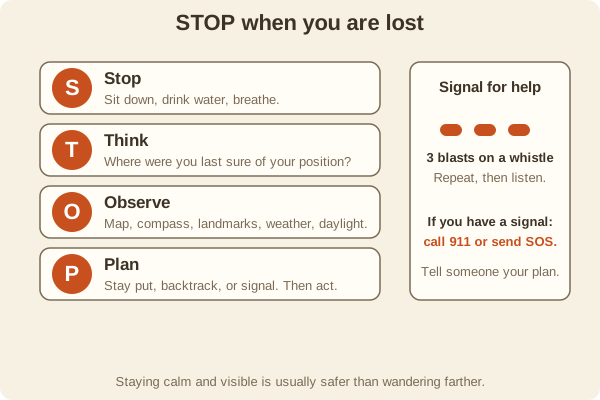
If you think you are lost, Stop, Think, Observe, and Plan. Most people who stay calm and stay put are found sooner than those who keep wandering.
- Type
- Techniques
- S: Stop
- Sit down, drink water, and take a few breaths
- T: Think
- Recall the last place you were sure of, and what you have with you
- O: Observe
- Check the map, compass, GPS, landmarks, weather, and time before dark
- P: Plan
- Decide to stay put, backtrack to the last known spot, or move to a better place, then act
- Signals
- Three blasts on a whistle (or three of any signal) is a widely used distress call
- Used for
- Hiking & camping, Hunting, Fishing & boating
Safety: If you are hurt, in danger, or cannot find your way, call 911 or send an SOS right away if you have a signal or a satellite device. This entry is general guidance, not a replacement for training.
What it is good for
- Making a calm decision instead of a panicked one.
- Anyone who has told someone their plan and is expected back.
Where it falls short
- Staying put only helps if someone knows you are missing and where to look.
- Staying put may be wrong if you are in danger from cold, water, or a hazard.
Tips
- Tell someone your route and your return time before every trip.
- Carry a whistle, a light, a map and compass, and an emergency blanket.
- If you can call or send an SOS, do it early rather than late.
Works well with
- Satellite Communicator: a way to call for help.
- Handrails and Catching Features: useful for working your way back.
Field notes
Panic makes people take risks, such as hurrying downhill in the dark. Stopping gives you time to think, drink, and make a better plan.
Related guides
Numbers here are typical, and values such as magnetic declination change over time and place, so check a current source such as NOAA or your map's legend. Practice near home before you rely on a skill far from help, carry a paper map and compass as a backup, and tell someone your plan. Rules on electronics, land access, and trespass differ by state; our state resources directory links to each state's official regulations. Want a step-by-step guide? Read Trail Navigation Basics.