
Map Scale
Also called: scale bar, representative fraction, 1:24,000, bar scale, map distance
The scale tells you how map distance relates to ground distance. A bigger number after the colon means a smaller-looking, less detailed map.
- Type
- Maps & Grids
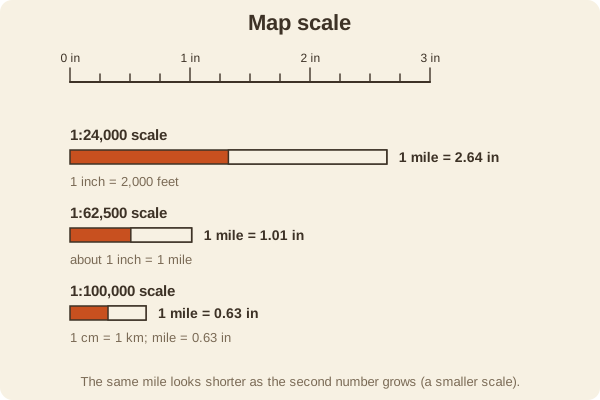
- 1:24,000
- 1 inch = 2,000 feet; a mile is about 2.64 inches
- 1:62,500
- About 1 inch = 1 mile
- 1:100,000
- 1 centimeter = 1 kilometer; a mile is about 0.63 inches
- How to convert
- Ground distance = map distance times the second number
- Used for
- Hiking & camping, Hunting, Fishing & boating
What it is good for
- Estimating how far a route is and how long it will take.
- Choosing a map detailed enough for hunting or off-trail use.
Where it falls short
- Measuring a straight line ignores climbs and curves, so real walking distance is longer.
- A photocopy or phone zoom can change the printed scale, so use the bar.
Tips
- Use the printed bar scale rather than a ruler, since it stays right if the map is resized.
- Lay a string or paper strip along a winding trail, then measure it against the bar.
- A common pace is 2 to 3 miles per hour on flat ground, slower with a pack or a climb.
Works well with
- Topographic Map: usually printed at 1:24,000.
- Pace Count: checks distance on the ground.
Field notes
A scale of 1:24,000 is a fraction: one unit on the map equals 24,000 of the same unit on the ground. That is why 1 inch becomes 24,000 inches, or 2,000 feet.
Related guides
Numbers here are typical, and values such as magnetic declination change over time and place, so check a current source such as NOAA or your map's legend. Practice near home before you rely on a skill far from help, carry a paper map and compass as a backup, and tell someone your plan. Rules on electronics, land access, and trespass differ by state; our state resources directory links to each state's official regulations. Want a step-by-step guide? Read Trail Navigation Basics.