
Multi-Day Hiking and Backpacking Trip Planning
How to plan a multi-day backpacking trip's itinerary, permits, and resupply — the logistics that decide whether a trip goes smoothly.
Published September 12, 2026
Why Multi-Day Trips Fail on Planning, Not Fitness
Most struggling multi-day hikers aren't undertrained — they're under-planned. A day hike forgives a lot of planning mistakes because you're never more than a few hours from your car; a multi-day trip removes that safety net, and a planning gap that's a minor inconvenience on day one (an overly ambitious mileage target, a permit you didn't realize you needed, a food supply that runs short) compounds into a genuine problem by day three. The good news is that trip planning is a learnable skill built on a handful of concrete steps, not an intuition some hikers just have.
1. Choosing a Realistic Route and Mileage
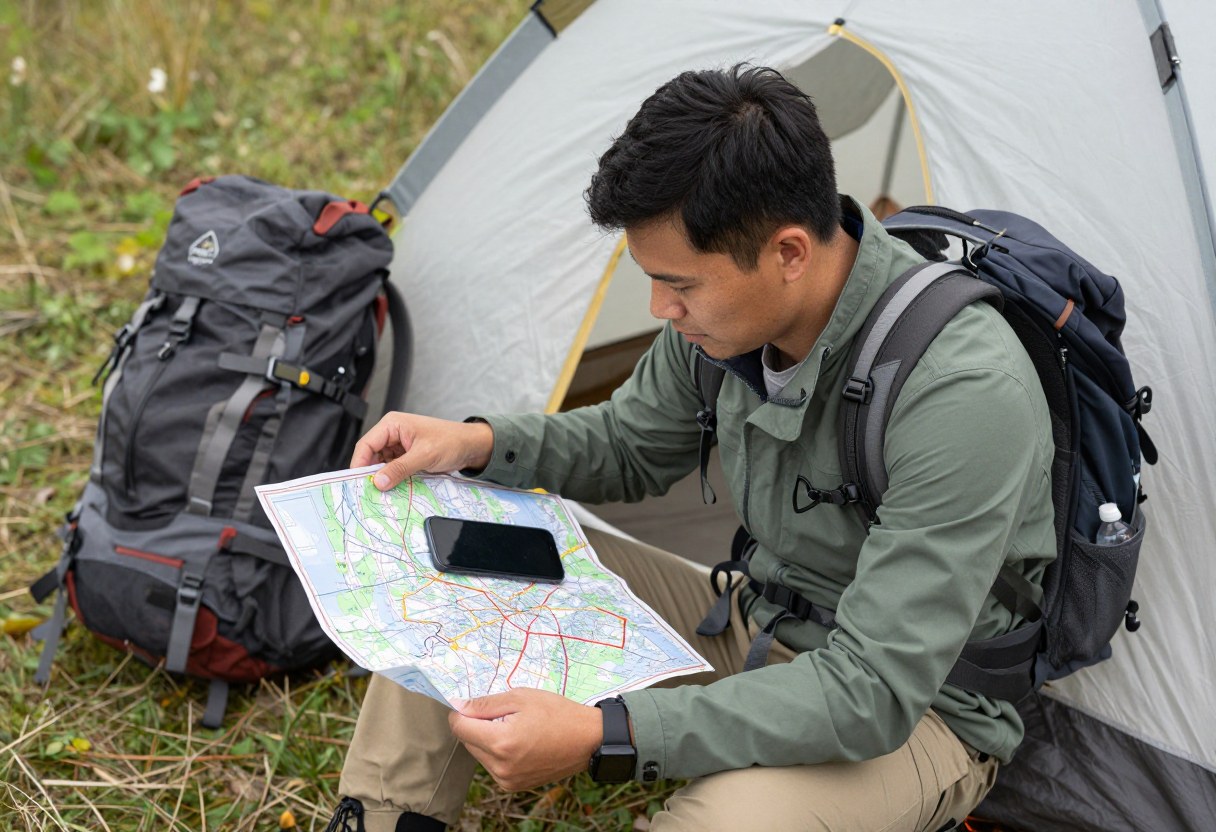
- Base your daily mileage target on your demonstrated pace on similar terrain, loaded with a full pack — not on a fit, unloaded day-hike pace. A loaded overnight pack meaningfully slows most hikers, and terrain (elevation gain, trail surface) matters more than raw distance.
- Build in at least one lower-mileage or rest day on trips longer than four or five days, especially for a first multi-day trip — a schedule with zero margin turns any delay (weather, an injury, a slower-than-expected section) into a crisis rather than a minor adjustment.
- Research the specific trail's elevation profile, water sources, and typical conditions for the season you're hiking in, rather than assuming a route's difficulty from mileage alone — two 10-mile days can be wildly different depending on elevation gain and trail surface.
2. Permits and Reservations
- Research permit requirements well before your trip — many popular multi-day trails and wilderness areas require permits, some allocated by lottery months in advance, and showing up without one can mean being turned away at the trailhead.
- Check both entry permits and any campsite-specific reservations — some areas require you to reserve specific backcountry campsites for specific nights, not just a general area permit, which affects how flexible your itinerary can be.
- Confirm group size limits and any fire or campfire restrictions for the specific area and season, since these vary significantly by land management agency and are often stricter during dry seasons.
3. Planning Food and Resupply
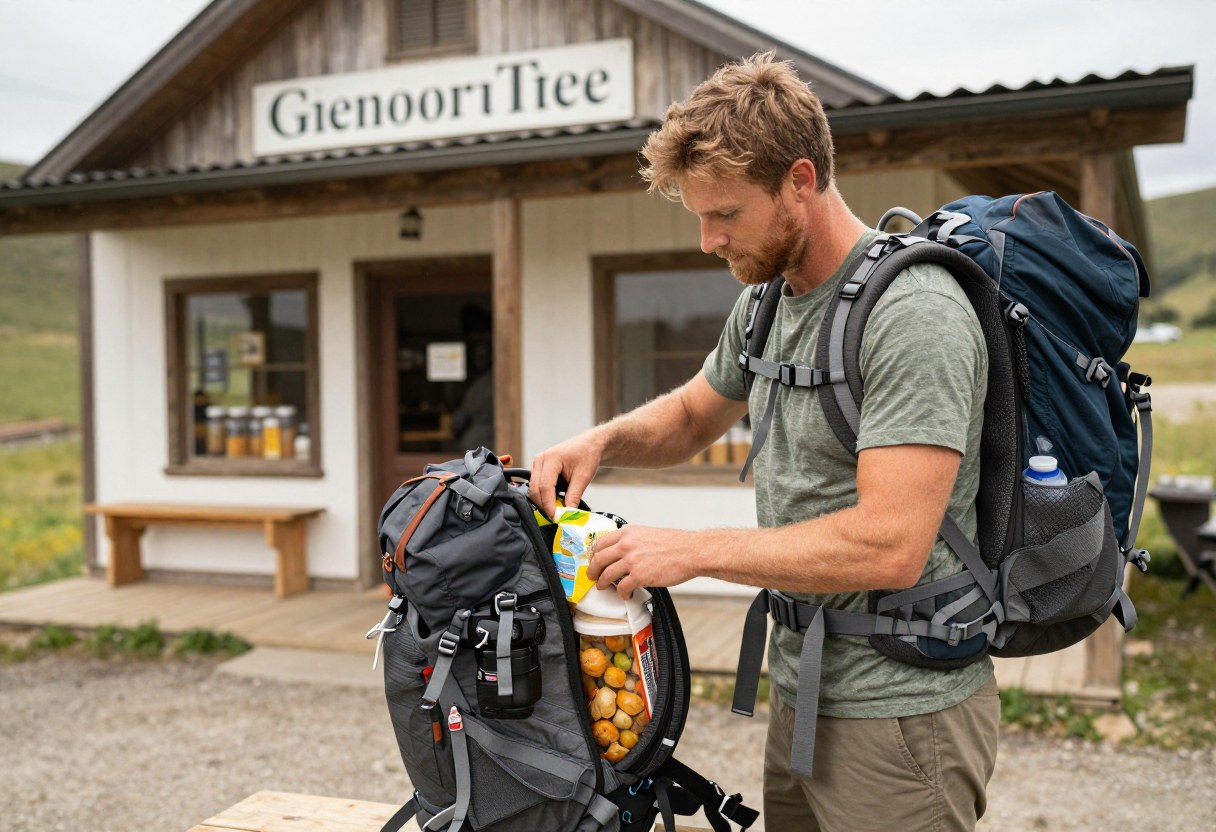
- Calculate calories per day realistically — multi-day backpacking with a loaded pack burns significantly more than typical daily activity, and underestimating food needs is a common first-time mistake that leaves hikers hungry and low-energy by the trip's second half.
- For trips beyond about five to seven days, plan a resupply point — either mailing a box ahead to a trail town post office or store, or buying food along the way at a known resupply location, rather than trying to carry a week-plus of food from the start.
- Prioritize calorie-dense, lightweight food (nut butters, dehydrated meals, trail mix, olive oil as an add-in) to manage pack weight, since food weight adds up fast on longer trips and is one of the few pack-weight categories you have real control over.
4. Water Planning
- Identify water sources along your route in advance, using a current trail guide or recent trip reports rather than an old map — seasonal water sources can be dry at certain times of year even when a map shows them as reliable.
- Carry a water filter or purification method and know its limitations — some filters don't remove viruses, which matters more in some regions and water sources than others; research what's appropriate for your specific trip.
- Plan your daily water carrying capacity around the actual gaps between reliable sources, not an assumed "there's probably something along the way" — a dry stretch longer than expected is a genuinely dangerous planning failure, not just an inconvenience.
5. Building In Communication and a Safety Margin
- Leave a detailed itinerary with someone not on the trip, including your planned route, expected camp locations each night, and a specific date/time by which you should be back in contact — this is the single most important thing you can do for a multi-day trip's safety margin.
- Consider a satellite messenger or personal locator beacon for remote multi-day trips where cell coverage is unreliable — these allow both routine check-ins and emergency communication where a phone alone can't.
- Build a genuine buffer day into your return timeline before anyone should worry or initiate a search — weather delays, an injury requiring a slower pace, or simply a harder-than-expected section can add a day without it being an actual emergency.
Don't Skip This: A detailed itinerary left with someone at home, including a specific "if you haven't heard from me by this date, here's who to call" plan, costs nothing and is more valuable to your actual safety than almost any single piece of gear on a multi-day trip.
6. Common First Multi-Day Trip Mistakes
- Planning daily mileage based on unloaded day-hike pace, then falling badly behind schedule once the full pack and cumulative fatigue set in.
- Not researching permits until close to the trip, then either scrambling for a last-minute option or having to change the route entirely.
- Underestimating food needs, arriving at the last day genuinely low on calories rather than with a small planned buffer.
- Assuming water sources shown on a map or app are current and reliable, without checking recent trip reports for the specific season.
- Leaving no real information with anyone at home, or leaving it too vague ("hiking somewhere in the mountains this weekend") to be useful if something actually goes wrong.
Quick Decision Checklist
- My daily mileage targets are based on loaded-pack pace on similar terrain, not unloaded day-hike pace
- I've confirmed permit and campsite reservation requirements for this specific trail and dates
- I have a food plan with realistic calorie estimates, and a resupply plan if the trip is longer than about a week
- I've researched current water source reliability for this season, not just what an old map shows
- I've left a detailed itinerary and a specific "when to worry" date with someone not on the trip
Glossary
- Resupply: A planned point during a long trip — often a trail town — where a hiker restocks food, either by mailing a box ahead or buying supplies locally.
- Personal Locator Beacon (PLB): A device that sends a distress signal with GPS location to emergency responders, used for emergency-only communication in areas without cell coverage.
- Zero Day: A rest day taken during a multi-day trip with no hiking mileage, typically used for recovery, resupply, or waiting out bad weather.
Final Takeaway
A smooth multi-day trip is decided well before the trailhead — by a realistic mileage plan built on loaded pace, permits sorted in advance, a genuine food and water plan, and a detailed itinerary left with someone at home. None of this requires elite fitness or expensive gear; it requires treating planning as seriously as you'd treat the hiking itself.
Permit systems, water source reliability, and land management rules vary significantly by location and change over time — always confirm current requirements directly with the managing agency for your specific trail before finalizing a trip.