

Baseplate Compass
Also called: orienteering compass, map compass, hiking compass
A compass on a clear plastic base with a rotating dial and a ruler edge. It is the best everyday choice for working with a map.
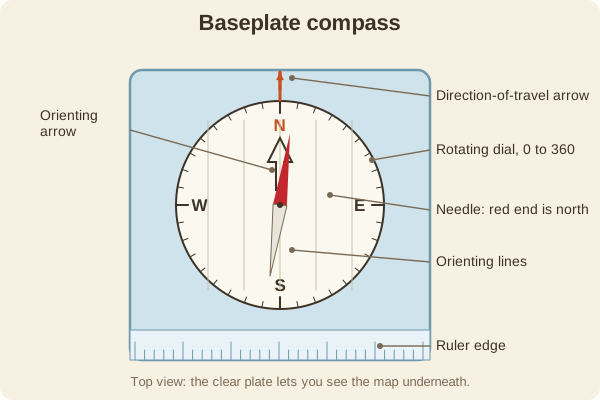
- Type
- Compass
- Main parts
- Base plate, rotating dial (bezel), magnetic needle, orienting arrow, direction-of-travel arrow
- Dial markings
- 0 to 360 degrees, often in 2-degree steps
- Needle
- Red end points to magnetic north; usually liquid-filled to settle quickly
- Extras to look for
- Adjustable declination, a sighting mirror, a global needle that works in other hemispheres
- Used for
- Hiking & camping, Hunting, Fishing & boating
What it is good for
- Taking a bearing from a map and following it on the ground.
- Orienting a map and finding where you are.
- Hikers, hunters, and anglers who want one dependable, light compass.
Where it falls short
- Aiming it at a distant object is less precise than a sighting compass.
- A needle that is not settled or is near steel will give a wrong reading.
- Cheap ones can have bubbles or a sticky needle, so test before you trust it.
Tips
- Hold it flat and level, at about waist height, with the direction-of-travel arrow pointing away from you.
- Learn to use it at home first, on a hike you already know.
- Keep a spare on a cord or in a different pocket than your phone.
Works well with
- Taking a Bearing: the main thing a baseplate compass is for.
- Magnetic Declination: set or correct for it before you trust a map bearing.
- Compass Interference: keep it away from steel and electronics.
Field notes
The clear base lets you see the map beneath the compass, and its ruler edge and orienting lines make it easy to line up with the map's north-south grid lines. Most hikers never need anything more than a simple, liquid-filled baseplate model.
Related guides
Numbers here are typical, and values such as magnetic declination change over time and place, so check a current source such as NOAA or your map's legend. Practice near home before you rely on a skill far from help, carry a paper map and compass as a backup, and tell someone your plan. Rules on electronics, land access, and trespass differ by state; our state resources directory links to each state's official regulations. Want a step-by-step guide? Read Trail Navigation Basics.