
White Bass
Morone chrysops
A silvery, schooling fish that makes spring spawning runs up rivers and chases baitfish to the surface in summer, often providing nonstop action.
- Type
- Bass
- Water
- Warm water
- Habitat
- Lakes, Reservoirs, Rivers
- Typical size
- 10 to 15 inches, about 1 to 2 lb
- Range
- Native to the Great Lakes and the Mississippi River basin and Gulf Coast, and widely stocked in reservoirs across much of the central and southern US.
- Best seasons
- Spring spawning runs up tributaries; summer and fall schooling activity
How to identify it
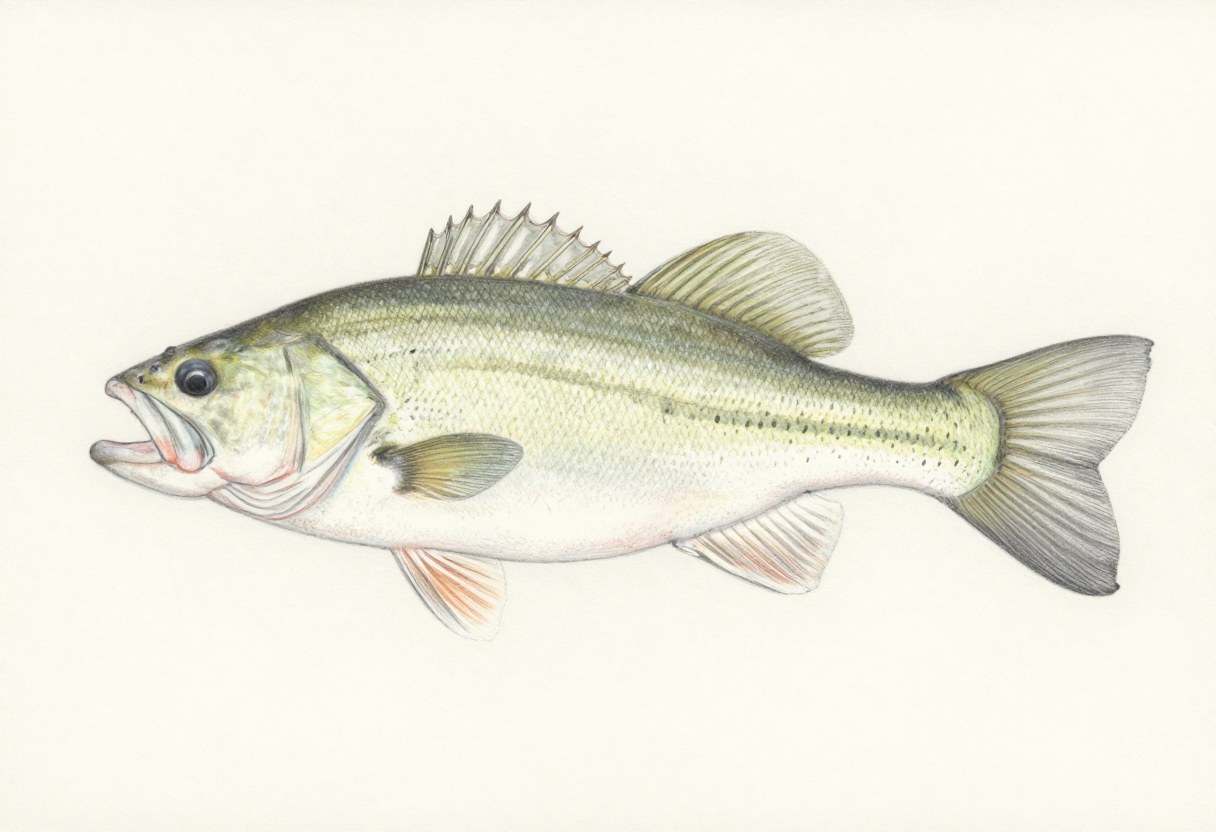
- The silvery-white body is deep and compressed, with a darker olive-green back.
- Six to eight thin dark horizontal stripes run along the sides; they are faint and often broken below the lateral line.
- The spiny and soft dorsal fins are separate.
- A single tooth patch sits on the tongue.
Often confused with
- Striped Bass: longer and more streamlined, with darker, unbroken stripes and two tooth patches on the tongue.
Best baits and lures
- Small jigs
- Inline spinners
- Small crankbaits
- Live minnows
- Spoons
Techniques
- Cast small jigs or spinners in tributary runs in spring
- Watch for birds and splashing and cast into surface-feeding schools
- Troll small crankbaits over open-water flats
- Fish below dams and in current in spring
Fishing notes
When water warms in spring, white bass move in large numbers from lakes and reservoirs up into rivers and creeks to spawn. These runs can produce fast fishing for a few weeks, and local anglers watch the water temperature and river levels closely.
In summer, white bass school in open water and drive shad to the surface. Gulls diving over a patch of boiling water is the signal: cast a small spoon or jig into the edge of the school and let it sink a few feet.
They are an excellent beginner fish and good eating when kept cold, with a dark red lateral strip of meat that many anglers trim away.
Related guides
Size limits, bag limits, legal baits, and seasons vary by state and waterbody and change over time. Check your state's current regulations — our state resources directory links straight to each state's official fishing rules and license portal.