
Striped Bass
Morone saxatilis
A large, powerful, striped predator that lives in the ocean, in bays and rivers, and in landlocked reservoirs where it has been stocked.
- Type
- Bass
- Water
- Cool water
- Habitat
- Reservoirs, Rivers, Lakes
- Typical size
- 5 to 20 lb in freshwater reservoirs; larger fish are possible
- Range
- Native to the Atlantic coast, where it migrates between the ocean and rivers; landlocked populations and stocked fish live in reservoirs across the southern and western US and elsewhere.
- Best seasons
- Fall and spring; cooler months in southern reservoirs, early and late in summer
How to identify it
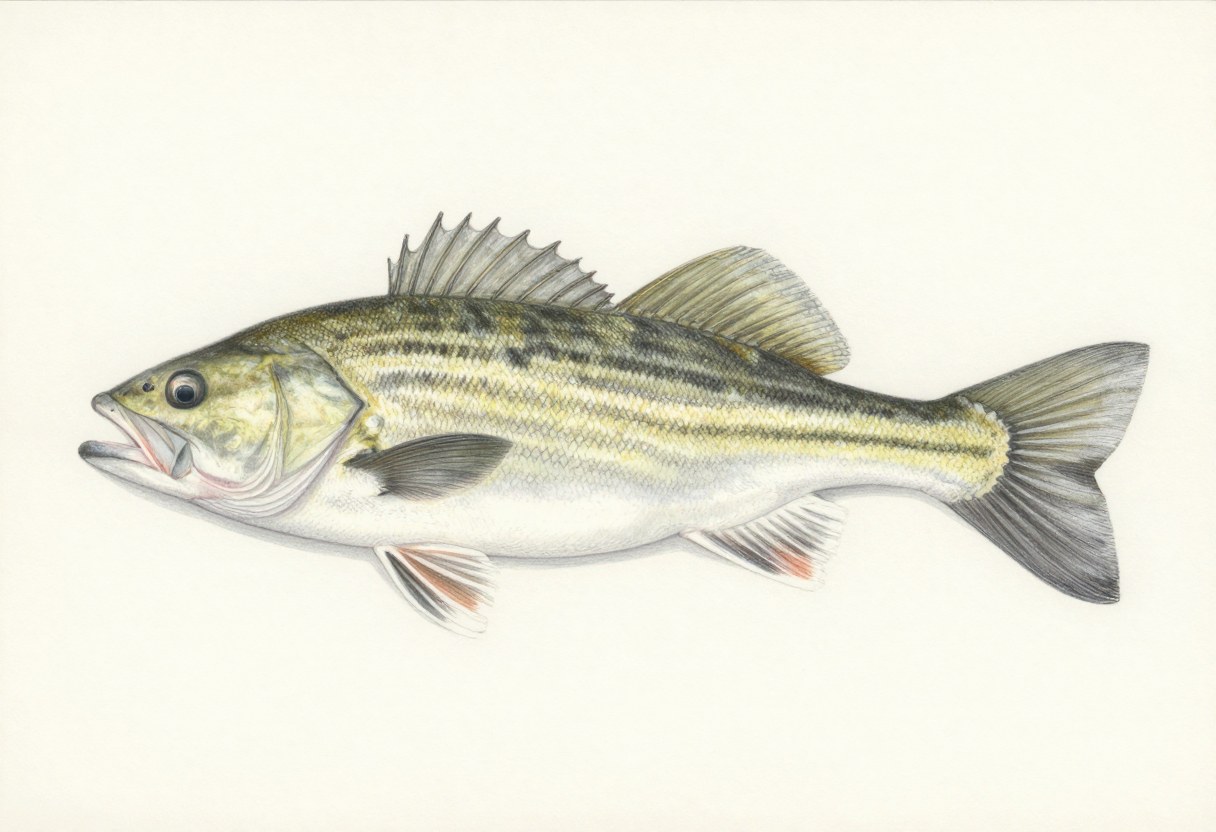
- Seven or eight dark, unbroken stripes run from the gill cover to the tail along each silvery side.
- The body is long and streamlined, with an olive-green back and white belly.
- Two separate tooth patches sit on the tongue.
- The spiny and soft dorsal fins are separate.
Often confused with
- White Bass: deeper-bodied and smaller, with fainter, often broken stripes and one tooth patch on the tongue.
- Hybrid Striped Bass: a stocked cross of striped and white bass, usually with broken or less distinct stripes and a stockier body.
Best baits and lures
- Live shad or other baitfish
- Cut bait
- Large swimbaits
- Topwater lures
- Heavy jigs and spoons
Techniques
- Free-line or drift live baitfish near schools
- Cast to surface-feeding schools in fall
- Troll large lures along channel edges
- Fish below dams on moving water
Fishing notes
Striped bass are open-water roamers that follow schools of shad and herring. In reservoirs they often hold in cooler, deeper water in summer, and in fall they push shallow to feed hard.
Heavy tackle matters: stripers are strong, and a fish of 15 pounds or more will test your line and drag. Stripers also stress easily in warm water, so many anglers target them in cooler months and handle fish quickly.
Limits and seasons for striped bass are strict in many states, particularly on coastal rivers and in waters where they are managed carefully. Check the current regulations for your water.
Related guides
Size limits, bag limits, legal baits, and seasons vary by state and waterbody and change over time. Check your state's current regulations — our state resources directory links straight to each state's official fishing rules and license portal.