
Kokanee Salmon
Oncorhynchus nerka
A landlocked sockeye salmon that lives its whole life in lakes, feeds on plankton, and turns bright red at spawning time.
- Type
- Trout & Salmon
- Water
- Cold water
- Habitat
- Lakes, Reservoirs
- Typical size
- 9 to 14 inches
- Range
- Native to the Pacific Northwest and Canada, and introduced in cold lakes and reservoirs across the West and elsewhere.
- Best seasons
- Late spring through summer, while fish are in open water
How to identify it
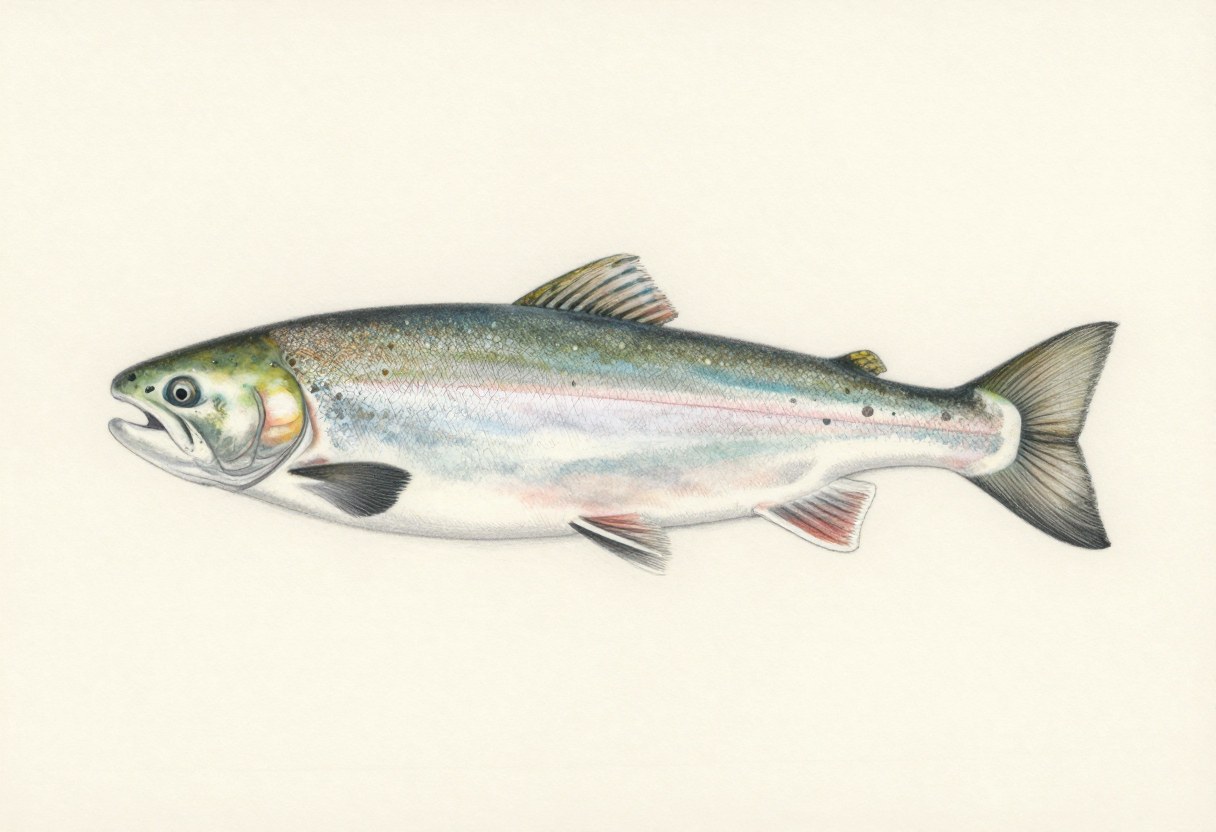
- The body is slender and silver with a blue-green back and no large spots.
- The tail is forked, and the head is small.
- At spawning time the body turns bright red and the head turns green.
- Fish are small compared with other salmon.
Often confused with
- Rainbow Trout: a pink side stripe and many black spots, which kokanee lack.
Best baits and lures
- Small trolling spoons
- Dodger and small squid-style lure combinations
- Corn tipped on a small hook
- Small jigs
Techniques
- Troll very slowly at the depth where fish suspend
- Use a dodger ahead of a small lure, often tipped with corn
- Find schools on sonar and match the depth
- Jig vertically over schools
Fishing notes
Kokanee feed on tiny zooplankton, so they rarely chase a fast-moving lure. They are most often caught by trolling slowly with small, flashy lures behind a dodger, at the exact depth where the school is holding.
Finding that depth is the whole game, which is why sonar and a thermometer are useful. Once you find the school, you can catch fish after fish.
They are delicate and tasty when kept on ice, and many reservoirs have generous limits, but always check your local rules.
Related guides
Size limits, bag limits, legal baits, and seasons vary by state and waterbody and change over time. Check your state's current regulations — our state resources directory links straight to each state's official fishing rules and license portal.