
Green Sunfish
Lepomis cyanellus
A hardy, big-mouthed sunfish that thrives in small streams and ponds where other fish struggle, and bites almost anything.
- Type
- Panfish
- Water
- Warm water
- Habitat
- Streams, Ponds, Rivers, Lakes
- Typical size
- 4 to 7 inches
- Range
- Native to the central and eastern US and parts of the Great Lakes region, and introduced in other areas, including parts of the West.
- Best seasons
- Late spring through summer
How to identify it
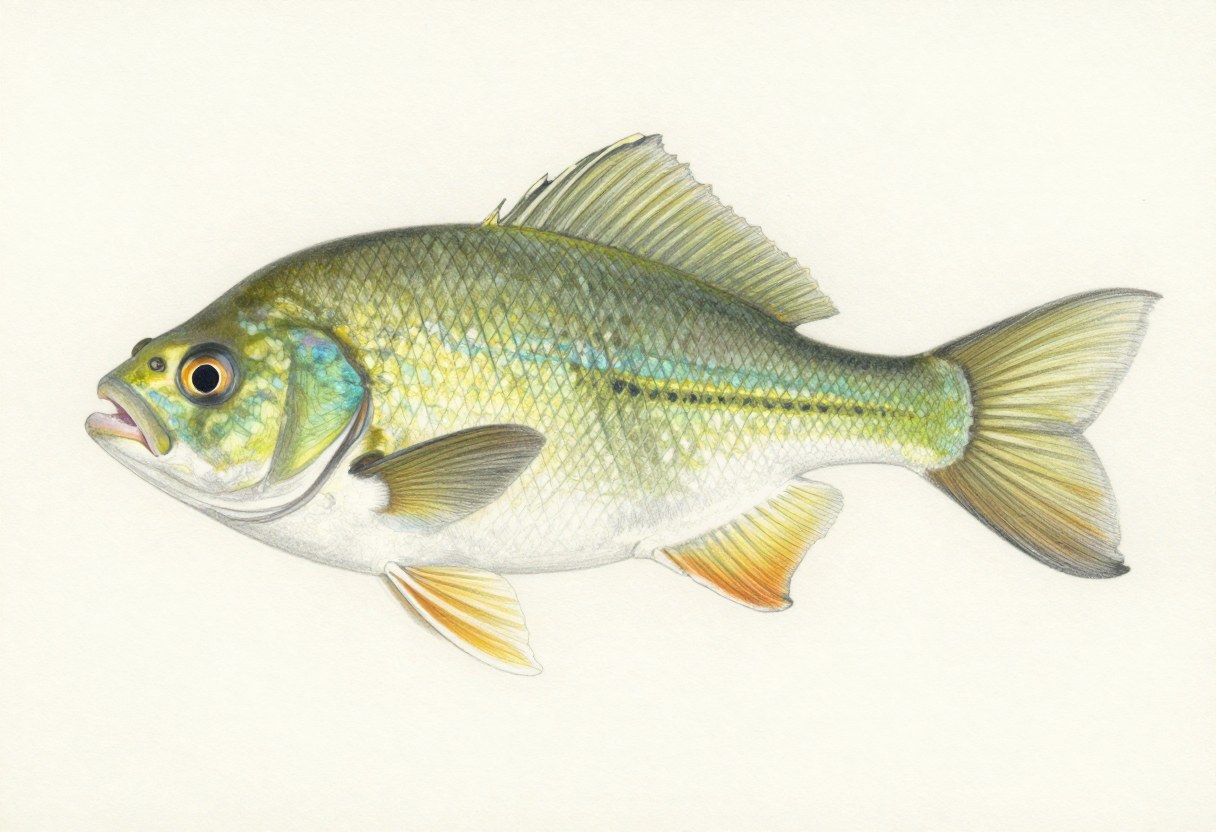
- The mouth is large for a sunfish, with the jaw reaching to about the middle of the eye.
- The dark ear flap has a pale white or yellow edge.
- The cheeks carry blue-green streaks on an olive body.
- Dark spots sit at the rear base of the dorsal and anal fins, and the fins have pale edges.
Often confused with
- Bluegill: a smaller mouth, a deeper body, and an ear flap that is solid dark to its edge.
- Largemouth Bass (young): a bass has a longer, more streamlined body and a stripe along its side.
Best baits and lures
- Worms
- Crickets
- Small jigs
- Small spinners
- Tiny flies
Techniques
- Dangle a worm near cover and undercut banks
- Cast small spinners along pool edges in creeks
- Fish shallow ponds with a small bobber
- Use light line and small hooks
Fishing notes
Green sunfish tolerate warm, muddy, low-oxygen water that eliminates many other species, which is why they are often the only fish in a small creek or an overgrown pond. They are aggressive, will hit nearly anything, and are a favorite for kids' first catches.
In ponds managed for bass and bluegill, they can become a nuisance if they take over, so some pond owners remove them. Check your state's rules before moving any fish between waters.
They are edible but small, and the thin fillets are mostly a pan-fry fish.
Related guides
Size limits, bag limits, legal baits, and seasons vary by state and waterbody and change over time. Check your state's current regulations — our state resources directory links straight to each state's official fishing rules and license portal.