
Freshwater Drum
Aplodinotus grunniens
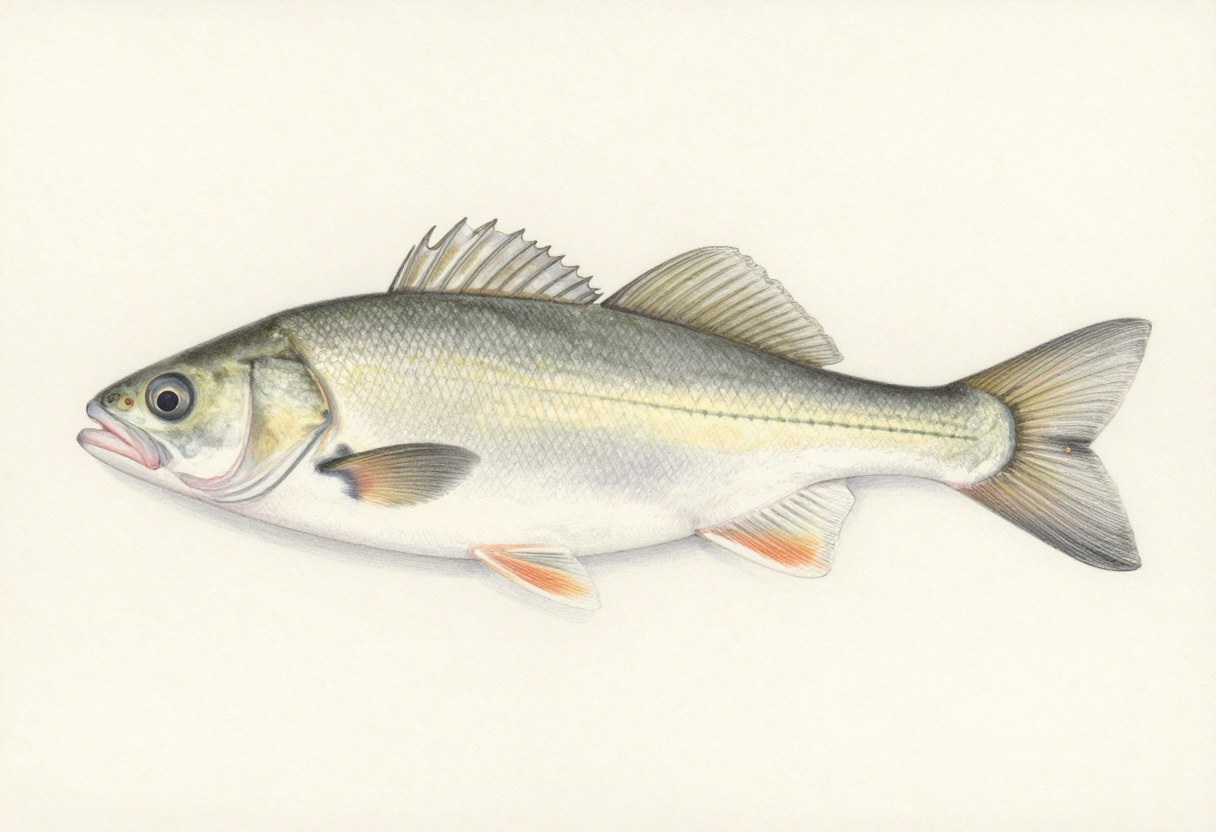
A humpbacked, silvery bottom feeder that grunts underwater, abundant in big rivers and lakes and often caught by accident.
- Type
- Other
- Water
- Warm water
- Habitat
- Rivers, Lakes, Reservoirs
- Typical size
- 1 to 5 lb; larger fish are possible
- Range
- Found from southern Canada through the Great Lakes and Mississippi basin and south into the Gulf Coast states and Central America, east of the Rockies.
- Best seasons
- Late spring through fall
How to identify it
- The back is strongly humped, and the body is silvery-gray with a pale belly.
- A long dorsal fin has a notch between its spiny and soft parts.
- The lateral line runs all the way onto the tail, and the tail is rounded.
- The mouth points downward.
Often confused with
- Common Carp: barbels at the mouth and large golden scales, which the drum lacks.
Best baits and lures
- Worms and nightcrawlers
- Crawfish
- Minnows
- Cut bait
- Small jigs
Techniques
- Fish a bait on the bottom in deep holes and current
- Fish below dams and along channel edges
- Use simple bottom rigs
- Fish at night in warm months
Fishing notes
Freshwater drum, sometimes called sheepshead, make a grunting or drumming sound by vibrating muscles against the swim bladder, which can sometimes be heard from underwater.
They feed on the bottom on insects, crawfish, and mussels, so a worm or crawfish fished on the bottom will often draw a bite. They fight well for their size.
Their fillets are mild and edible, though many anglers overlook them. Check your water's regulations, which may include limits.
Related guides
Size limits, bag limits, legal baits, and seasons vary by state and waterbody and change over time. Check your state's current regulations — our state resources directory links straight to each state's official fishing rules and license portal.