
Common Carp
Cyprinus carpio
A big, strong, wary fish introduced from Eurasia that fights like a freight train and is a growing target for dedicated anglers.
- Type
- Other
- Water
- Warm water
- Habitat
- Lakes, Ponds, Rivers, Reservoirs
- Typical size
- 5 to 15 lb; larger fish are common in many waters
- Range
- Introduced from Eurasia and now found in nearly every state, in lakes, ponds, and slow rivers.
- Best seasons
- Late spring through fall; warm months
How to identify it
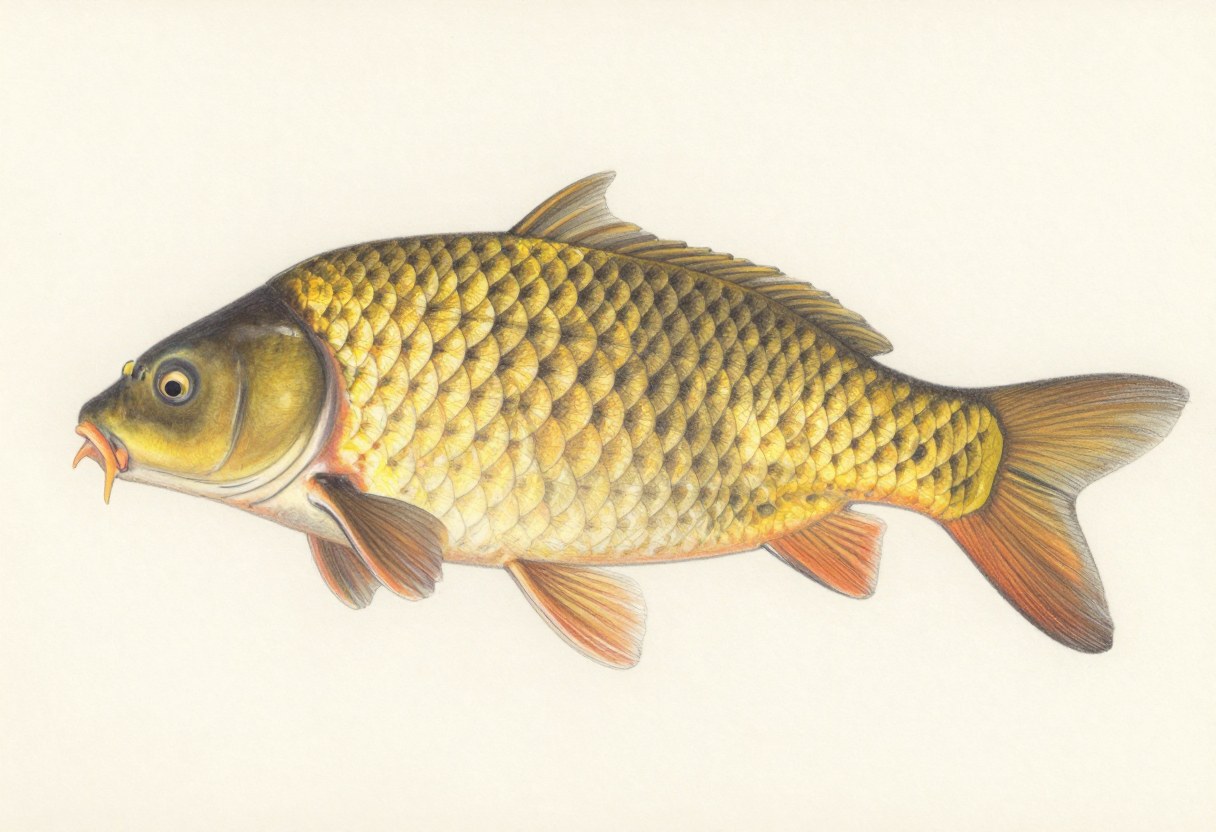
- Large scales cover a thick, golden-bronze to olive body.
- Two pairs of barbels hang from the upper lip.
- A long dorsal fin has a stiff, serrated spine at its front.
- The mouth is toothless and points downward.
Often confused with
- Goldfish: no barbels around the mouth; often smaller and orange, though escaped goldfish can turn bronze.
- Buffalo Fish: no barbels, and a deeper, more humped body with a different mouth shape.
Best baits and lures
- Sweet corn
- Boilies and dough baits
- Worms
- Bread
Techniques
- Fish a bait on the bottom with a light, sensitive setup
- Chum a spot with corn to draw fish in
- Use stealth, since carp are wary
- Use a hair rig with a small hook
Fishing notes
Carp are among the strongest freshwater fish, and a 15-pound carp on light gear is a long, thrilling fight. They feed by sucking up food from the bottom, so bottom rigs with corn or dough baits work well.
Because carp are introduced and often abundant, many states have no limit on them and consider them a nuisance. Even so, some anglers practice catch-and-release for sport, and it is illegal in many places to move live carp between waters.
Check local regulations and never transport live fish from one waterbody to another.
Related guides
Size limits, bag limits, legal baits, and seasons vary by state and waterbody and change over time. Check your state's current regulations — our state resources directory links straight to each state's official fishing rules and license portal.