
Labrador Retriever
Also called: Lab, Labrador
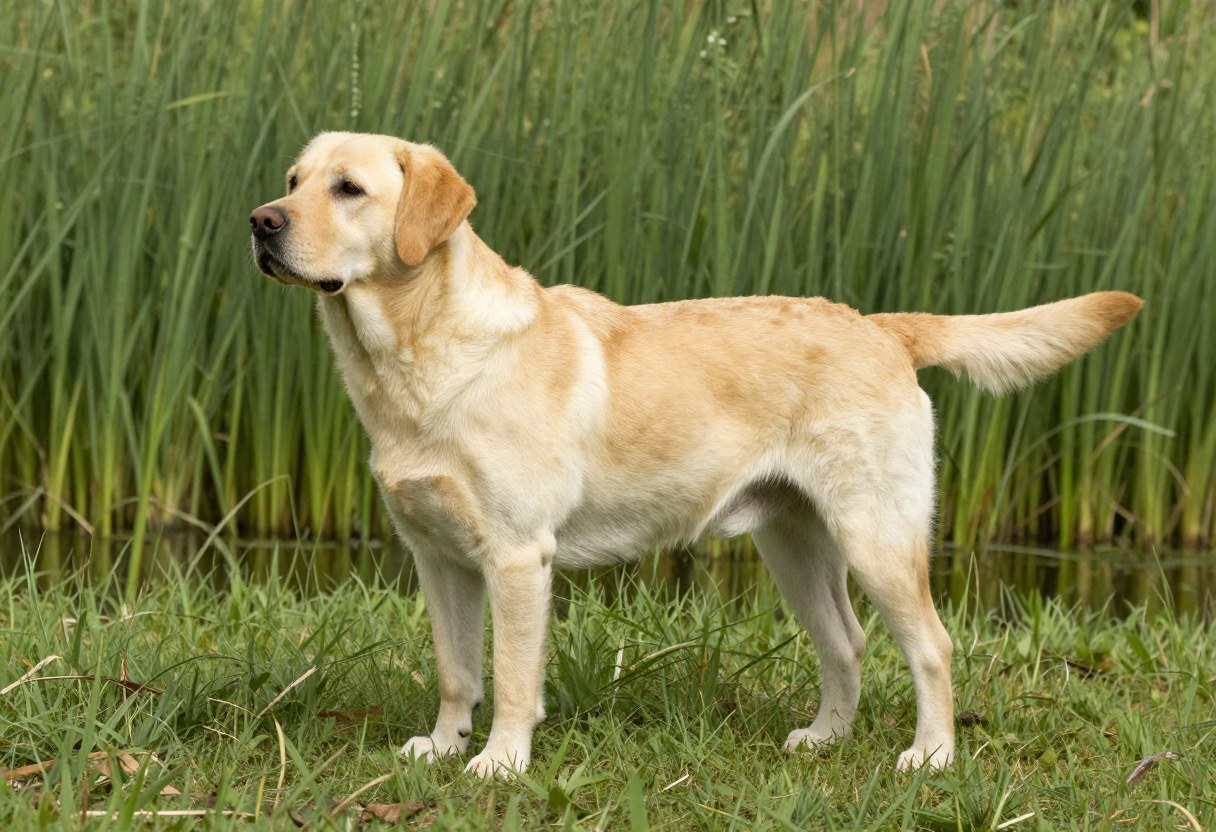
America's most popular retriever and the standard duck dog: eager to please, built for cold water, and easy to train, with plenty of drive for long days.
- Type
- Retrievers
- Hunts
- Waterfowl, Upland birds
- Weight
- 55 to 80 pounds
- Height
- 21.5 to 24.5 inches at the shoulder
- Lifespan
- 10 to 12 years
- Coat
- Short, dense, water-resistant double coat in yellow, black, or chocolate
- Energy
- High energy
- Cold and water
- Excellent. The thick coat and otter-like tail suit icy water.
What it is best at
- Retrieving ducks and geese from cold water and heavy cover.
- Flushing and retrieving upland birds such as pheasants.
- A family dog that also hunts, since most are friendly with people and other dogs.
Temperament
- Eager to please and quick to learn.
- Friendly, rarely aggressive, and good with children.
- High drive that needs work, or it turns into chewing and digging.
Things to know before you get one
- Needs real daily exercise, usually an hour or more.
- Many love to eat and gain weight easily.
- Field-bred and show-bred lines differ a great deal in energy and build.
Training and exercise
Labs respond well to positive, consistent training and are often steady on basic retrieving by the first hunting season. Start with obedience and short marked retrieves, add water work early, and train steadiness in the blind so the dog does not break at the shot.
Common health concerns
- Hip and elbow dysplasia, which breeders screen for.
- Exercise-induced collapse (a genetic test exists) and eye problems.
- Obesity, which strains joints, and ear infections after swimming.
Ask breeders for health testing records, and talk to a veterinarian about screening, vaccines, and tick and heartworm prevention.
Often compared with
- Golden Retriever: longer coat, softer temperament, and a bit more sensitive to harsh correction.
- Chesapeake Bay Retriever: tougher in the coldest water but more independent and strong-willed.
Field notes
Field-bred Labradors tend to be leaner and more intense than show-bred dogs. If you plan to hunt hard, ask breeders about the field records of the parents, not just the pedigree.
Related guides
This is a general breed profile, not veterinary or training advice. Dogs vary individually, so meet the parents and talk to experienced owners before you choose. Rules about hunting with dogs, releasing dogs on public land, and dog training seasons differ by state; our state resources directory links to each state's official regulations.