
English Setter
Also called: Setter
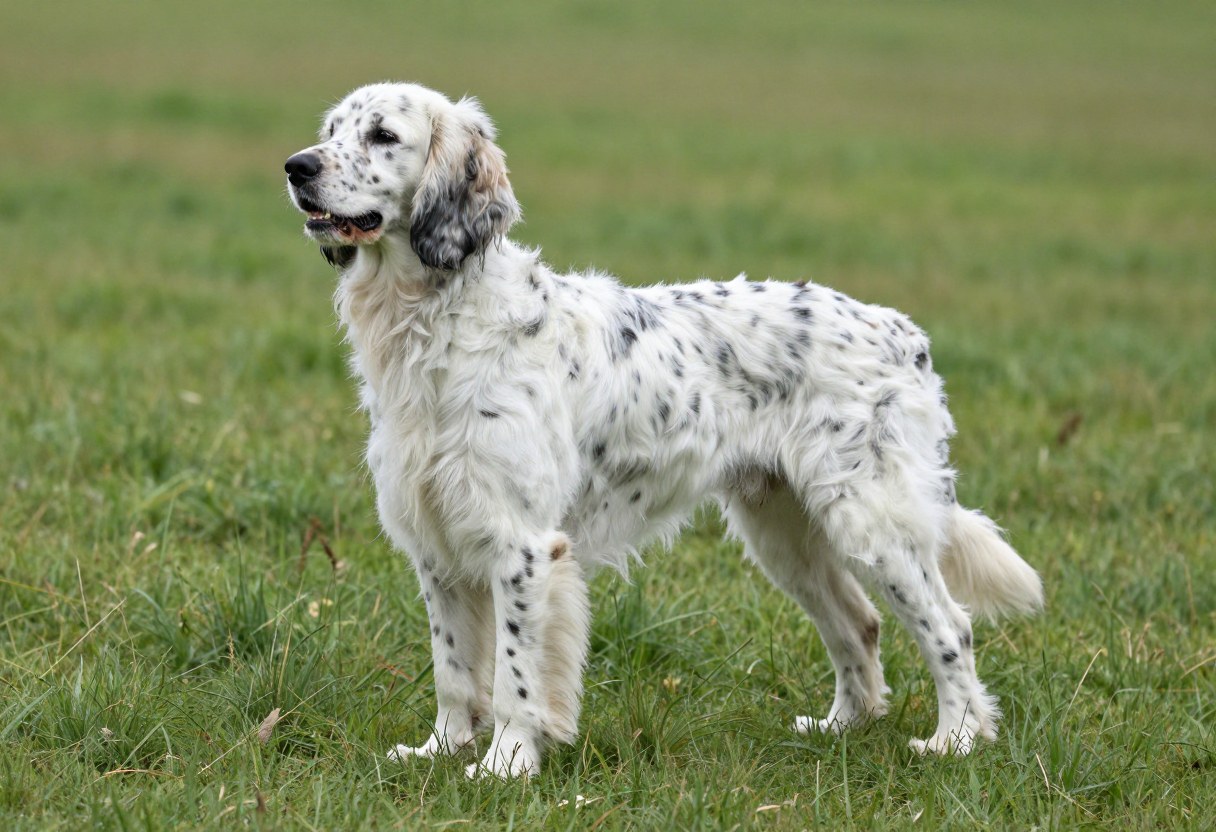
A gentle, elegant pointing dog with a long, silky coat and a flashy, close-to-moderate range, popular for grouse and woodcock.
- Type
- Pointing Breeds
- Hunts
- Upland birds
- Weight
- 45 to 80 pounds
- Height
- 24 to 27 inches at the shoulder
- Lifespan
- 10 to 12 years
- Coat
- Medium-length silky coat with long feathering, white with colored flecks called belton
- Energy
- High energy
- Cold and water
- Fair. The coat helps in cold, but it collects burrs and ice.
What it is best at
- Pointing grouse and woodcock in cover where a closer-working dog is useful.
- Quail and pheasant hunting.
- Hunters who want a gentle, affectionate bird dog.
Temperament
- Gentle, friendly, and good with people.
- Sensitive and can be slow to mature.
- Does not do well left alone for long periods.
Things to know before you get one
- The long coat collects burrs, ticks, and mud, and needs regular grooming.
- Can be slow to mature, sometimes taking two or three years.
- Often a weak retriever and may need extra work.
Training and exercise
Setters are sensitive and respond best to gentle, patient training. Harsh correction can shut them down. Build confidence with lots of bird contact, work on steadiness over time, and expect a slower maturing process than some other bird dogs.
Common health concerns
- Hip and elbow dysplasia.
- Deafness, ear infections, and hypothyroidism.
- Skin allergies.
Ask breeders for health testing records, and talk to a veterinarian about screening, vaccines, and tick and heartworm prevention.
Often compared with
- English Pointer: short-coated and more intense, with a faster pace.
Field notes
The English Setter is named for its habit of crouching, or setting, when it finds birds. Modern setters still point, and many work well in the thick cover where grouse and woodcock live.
Related guides
This is a general breed profile, not veterinary or training advice. Dogs vary individually, so meet the parents and talk to experienced owners before you choose. Rules about hunting with dogs, releasing dogs on public land, and dog training seasons differ by state; our state resources directory links to each state's official regulations.