
English Pointer
Also called: Pointer
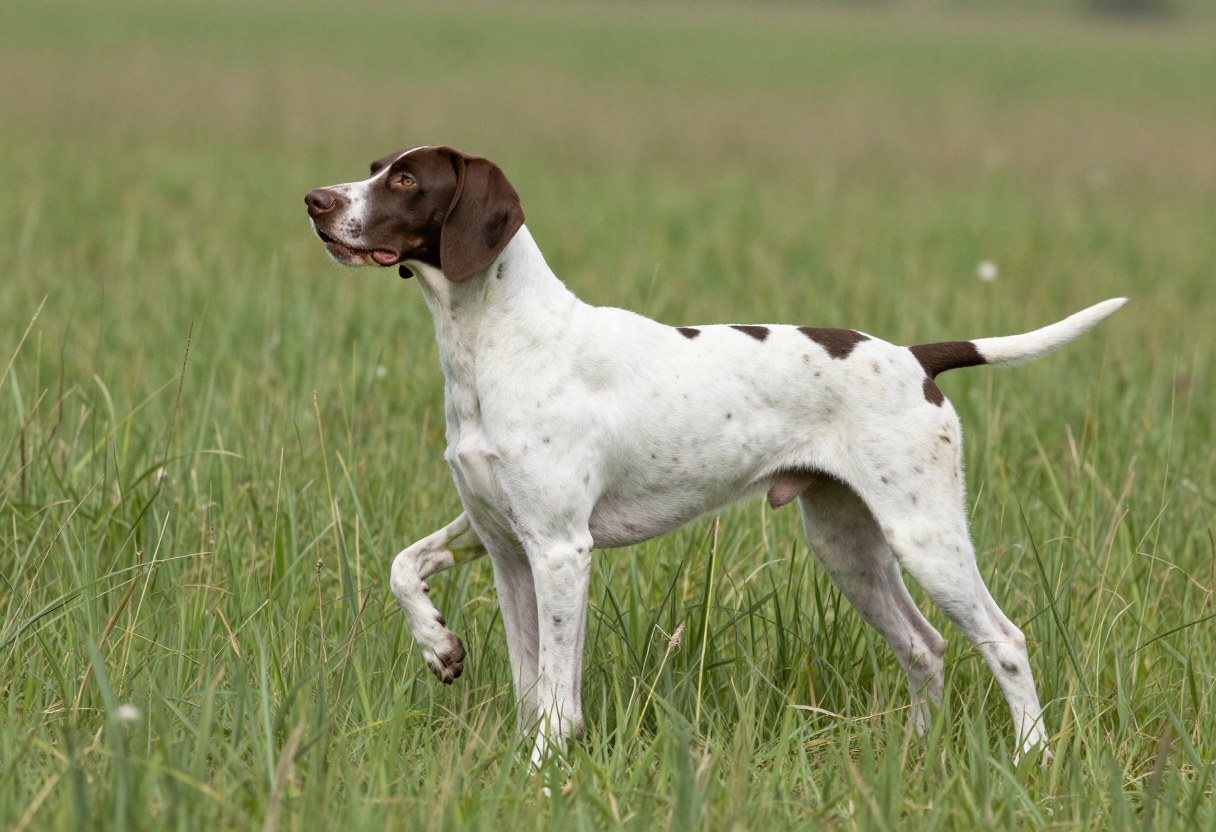
The classic bird dog: a lean, fast, wide-ranging pointer with an intense nose, bred to find quail and grouse across big country.
- Type
- Pointing Breeds
- Hunts
- Upland birds
- Weight
- 45 to 75 pounds
- Height
- 23 to 28 inches at the shoulder
- Lifespan
- 12 to 14 years
- Coat
- Short, smooth coat in liver, black, orange, or lemon, usually with white
- Energy
- Very high energy
- Cold and water
- Poor. The thin, short coat gives little protection in cold or wet weather.
What it is best at
- Finding and pointing quail, grouse, and pheasants over big ground.
- Hunters who hunt on foot or horseback in open country.
- Field trial and serious bird-dog work.
Temperament
- Intense, driven, and athletic.
- Gentle and affectionate at home when exercised.
- Sensitive to harsh correction.
Things to know before you get one
- Needs a great deal of running room, so it suits big country better than small woods.
- A weak retriever in some lines, since the breed is bred to point.
- The thin coat needs protection in cold weather.
Training and exercise
Pointers are bred to hunt, and the instinct to point shows up early. The work is in steadiness, range control, and honoring other dogs' points. Use consistent, gentle handling, plenty of bird contact, and a good trainer if you are new to pointing dogs.
Common health concerns
- Hip dysplasia and hypothyroidism.
- Skin allergies and cold injuries on thin skin.
- Deafness in some white-heavy lines.
Ask breeders for health testing records, and talk to a veterinarian about screening, vaccines, and tick and heartworm prevention.
Often compared with
- English Setter: similar style, with a longer coat and a softer, calmer manner.
- German Shorthaired Pointer: more versatile and retrieves, but not as fast or wide-ranging.
Field notes
The English Pointer is a specialist. In open country it covers ground fast and locks up on point with great style, which is why it has long been the benchmark for bird-dog work.
Related guides
This is a general breed profile, not veterinary or training advice. Dogs vary individually, so meet the parents and talk to experienced owners before you choose. Rules about hunting with dogs, releasing dogs on public land, and dog training seasons differ by state; our state resources directory links to each state's official regulations.