
Bluetick Coonhound
Also called: Bluetick, Blue Tick
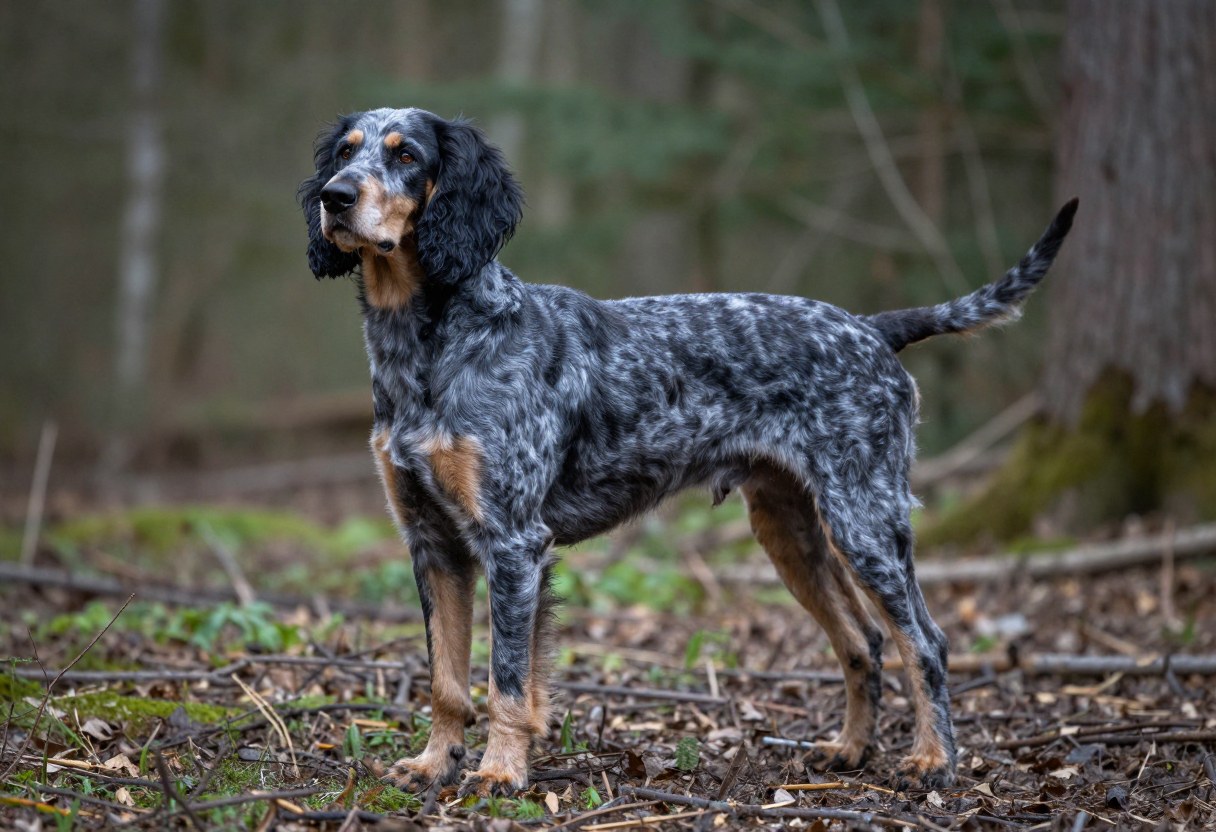
A mottled, blue-ticked trailing hound with a deep voice and a great nose, used to track raccoons and other game and bay them up a tree.
- Type
- Hounds
- Hunts
- Raccoon, bear & cat
- Weight
- 45 to 65 pounds
- Height
- 21 to 27 inches at the shoulder
- Lifespan
- 11 to 12 years
- Coat
- Short, glossy coat with a blue-gray mottled and ticked pattern and black spots
- Energy
- High energy
- Cold and water
- Good. Tough on cold-weather night hunts.
What it is best at
- Trailing and treeing raccoons, opossums, and similar game.
- Night hunts in rough, wooded country.
- Hunters who like a deep, bawling voice on the track.
Temperament
- Loyal and affectionate with family.
- Driven and focused on scent.
- Can be stubborn and reserved with strangers.
Things to know before you get one
- Needs plenty of exercise and room to run.
- Loud voice and a strong urge to follow scent.
- Not a good fit for apartments or unfenced yards.
Training and exercise
Bluetick hounds are bred to follow a track, so teach a solid recall and hunt-and-come-back habits early. Training works best with patient, consistent handling and a lot of time in the woods. Many hunters use GPS collars to keep track of them.
Common health concerns
- Hip dysplasia and ear infections.
- Bloat and eye conditions.
- Hypothyroidism in some lines.
Ask breeders for health testing records, and talk to a veterinarian about screening, vaccines, and tick and heartworm prevention.
Often compared with
- Treeing Walker Coonhound: faster, lighter, and tricolor rather than blue-ticked.
- Plott Hound: brindle, with a reputation for bear and boar.
Field notes
The Bluetick takes its name from its coat, which looks blue from a distance. It is a cold-trailing dog, known for patient tracking and a deep, bawling voice.
Related guides
This is a general breed profile, not veterinary or training advice. Dogs vary individually, so meet the parents and talk to experienced owners before you choose. Rules about hunting with dogs, releasing dogs on public land, and dog training seasons differ by state; our state resources directory links to each state's official regulations.