
Virgo
The Maiden
A big, loosely drawn spring zodiac constellation with brilliant blue-white Spica and a vast cluster of galaxies beyond the reach of small telescopes.
- Best season
- Spring
- Best months
- April through July, high in the south on spring evenings
- Visibility
- Visible from everywhere in the United States
- Abbreviation
- Vir
How to find it
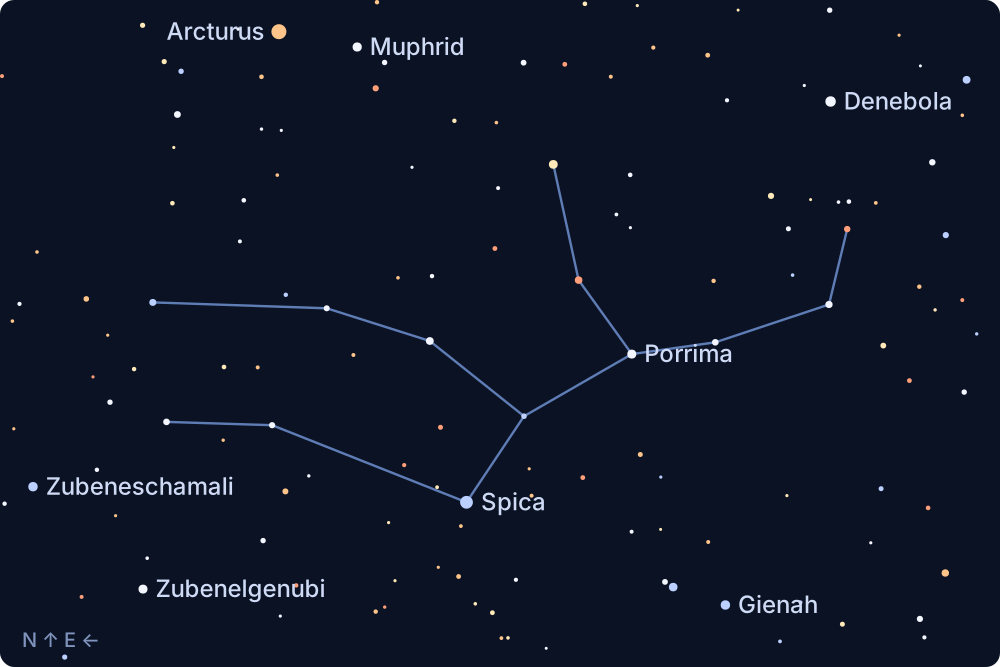
- Follow the curve of the Big Dipper's handle to Arcturus, then continue the same arc 'on to Spica.' The brilliant blue-white star you reach is Spica.
- A Y-shaped pattern of stars rises above Spica to make the rest of the Maiden.
Brightest stars
- Spica (blue-white, the brightest star in Virgo)
- Porrima (a double star)
- Vindemiatrix
What to look for
- The blue-white color of Spica, noticeably different from the orange of Arcturus in the same sweep of sky.
Binocular and telescope targets
- Virgo Cluster: thousands of galaxies, with dozens visible in a mid-sized telescope
- M87: a giant elliptical galaxy at the cluster's heart
- Sombrero Galaxy (M104): a bright galaxy with a dust lane, popular for small telescopes
Using it to find other things
- Arc to Arcturus, speed to Spica: follow the Big Dipper's handle to Arcturus, then continue the arc to Spica.
- Virgo and the Virgo Cluster lie next to Leo's hindquarters.
About this constellation
Virgo is the second-largest constellation in the sky by area, and only Spica stands out clearly. The rest is a loose sprawl of fainter stars.
The real reward is what is behind the maiden: when you look toward Virgo in spring you look out of the Milky Way's disk toward a huge cluster of galaxies. A small telescope can show a few of them, and bigger ones show many more.
Related guides
Visibility depends on your latitude, the date, and the time of night. The months above assume a typical evening from the contiguous United States, so use a planetarium app to confirm what is up tonight. Never look at the Sun through binoculars or a telescope without a proper solar filter.
Star positions: Hipparcos and Bright Star catalogues via d3-celestial (BSD-3-Clause, © 2015 Olaf Frohn).