
Cepheus
The King
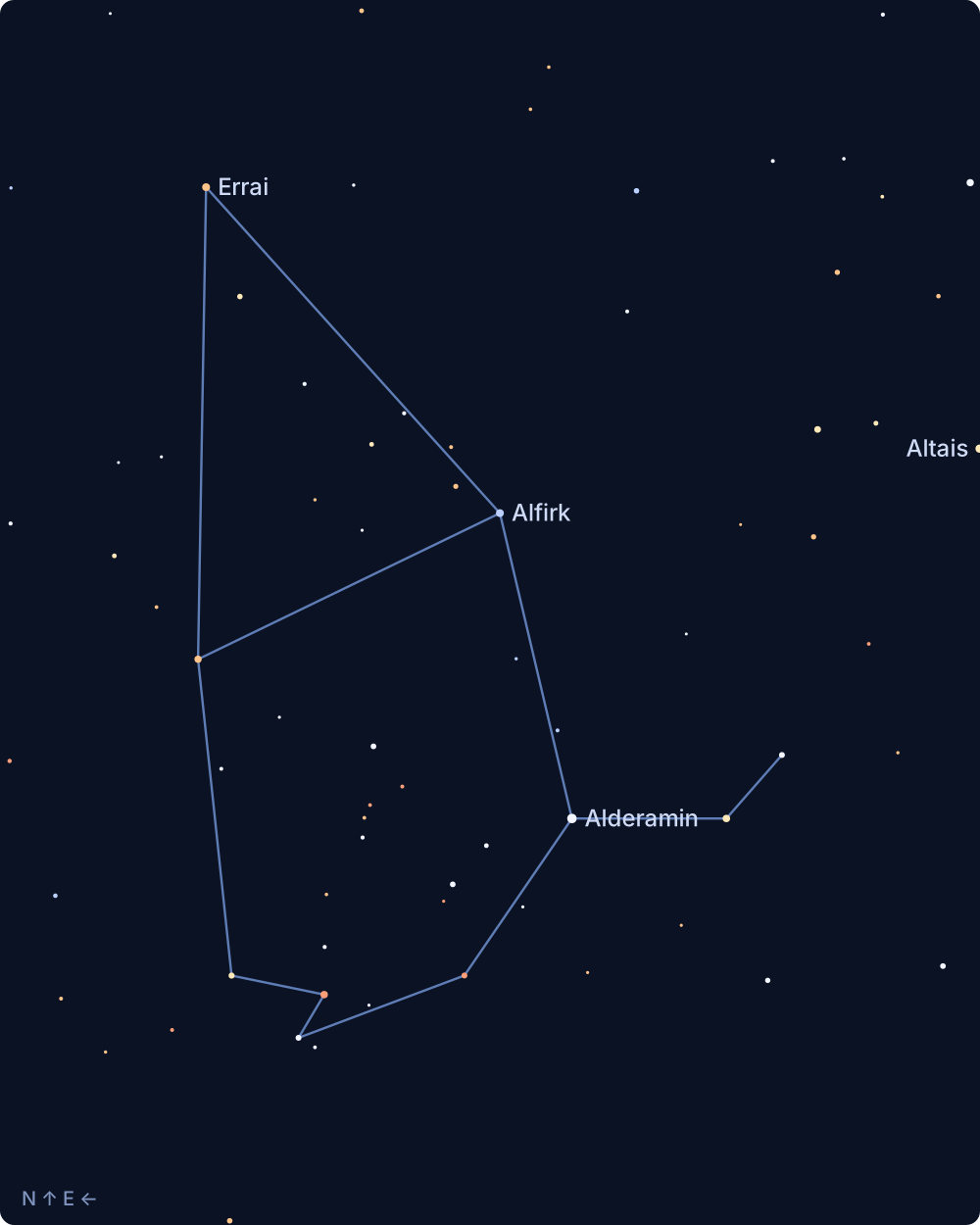
A faint circumpolar constellation shaped like a house with a pointed roof, next to Cassiopeia and pointing toward the North Star.
- Best season
- Autumn
- Best months
- Visible all year in the north, highest on autumn evenings
- Visibility
- Most of the constellation stays above the horizon all night from the northern United States
- Abbreviation
- Cep
How to find it
- Look next to Cassiopeia, on the side nearer Polaris, for a house-shaped pattern of five stars.
- The roof's peak, Errai, points toward Polaris.
Brightest stars
- Alderamin (the brightest star in Cepheus)
- Alfirk
- Errai (at the roof's peak)
What to look for
- Mu Cephei, the Garnet Star, a very red star that shows its color in binoculars.
- Delta Cephei, a star that changes brightness every few days. Compare it with its neighbors over several nights.
Binocular and telescope targets
- Delta Cephei: the star that gave its name to Cepheid variables, a double star in binoculars
- Garnet Star (Mu Cephei): one of the reddest stars visible to the naked eye
Using it to find other things
- Cepheus is next to Cassiopeia. The peak of its roof points toward Polaris.
About this constellation
Cepheus is a dim, house-shaped constellation that is easiest to find through its neighbors. Start from Cassiopeia's W and look toward the north celestial pole.
Delta Cephei changes brightness on a regular cycle of about five days. Astronomers use stars like it to measure distances to other galaxies, so a modest star in the Cepheus house turned out to be a yardstick for the universe.
Related guides
Visibility depends on your latitude, the date, and the time of night. The months above assume a typical evening from the contiguous United States, so use a planetarium app to confirm what is up tonight. Never look at the Sun through binoculars or a telescope without a proper solar filter.
Star positions: Hipparcos and Bright Star catalogues via d3-celestial (BSD-3-Clause, © 2015 Olaf Frohn).