
Canis Major
The Great Dog
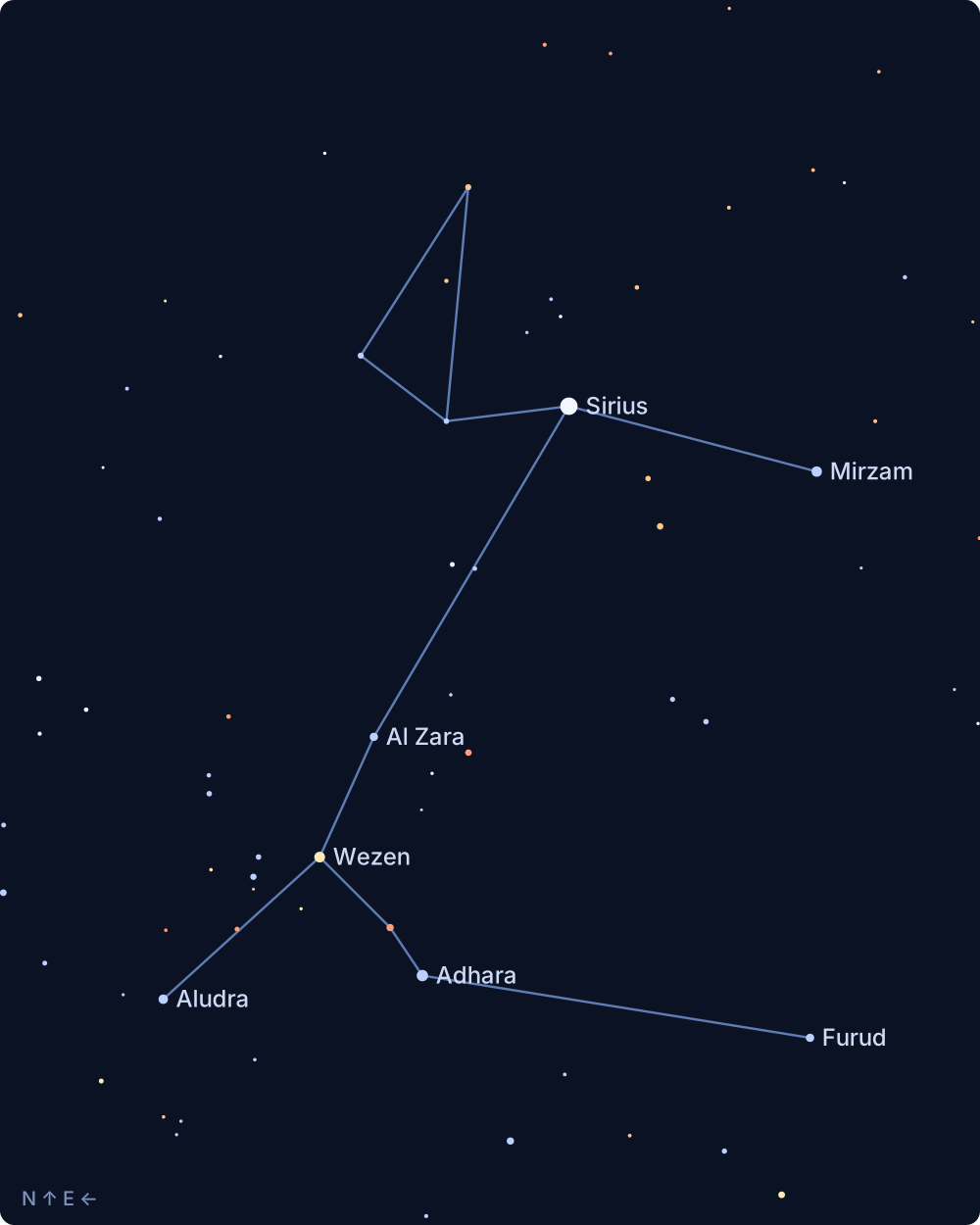
A winter constellation led by Sirius, the brightest star in the night sky, which sits low in the southeast, trailing Orion.
- Best season
- Winter
- Best months
- December through March, low in the south on winter evenings
- Visibility
- Visible from the United States, low in the south; best from southern states
- Abbreviation
- CMa
How to find it
- Follow the line of Orion's belt down and to the left. The first and brightest star you reach is Sirius.
- The rest of the dog trails below Sirius.
Brightest stars
- Sirius (the brightest star in the night sky)
- Adhara
- Wezen
- Mirzam
- Aludra
What to look for
- Sirius twinkling and flashing different colors when it is low in the sky.
- M41, a cluster of stars below Sirius that binoculars show as a hazy patch.
Binocular and telescope targets
- M41: a bright open cluster just below Sirius, visible in binoculars
Using it to find other things
- Orion's belt points down and left toward Sirius.
About this constellation
Sirius is the brightest star in the night sky, about twice as bright as the next brightest star, Canopus. It is bright partly because it is close, only about nine light-years away.
When Sirius is low in the sky, the atmosphere bends its light so that it twinkles and flashes colors.
Related guides
Visibility depends on your latitude, the date, and the time of night. The months above assume a typical evening from the contiguous United States, so use a planetarium app to confirm what is up tonight. Never look at the Sun through binoculars or a telescope without a proper solar filter.
Star positions: Hipparcos and Bright Star catalogues via d3-celestial (BSD-3-Clause, © 2015 Olaf Frohn).