
Auriga
The Charioteer
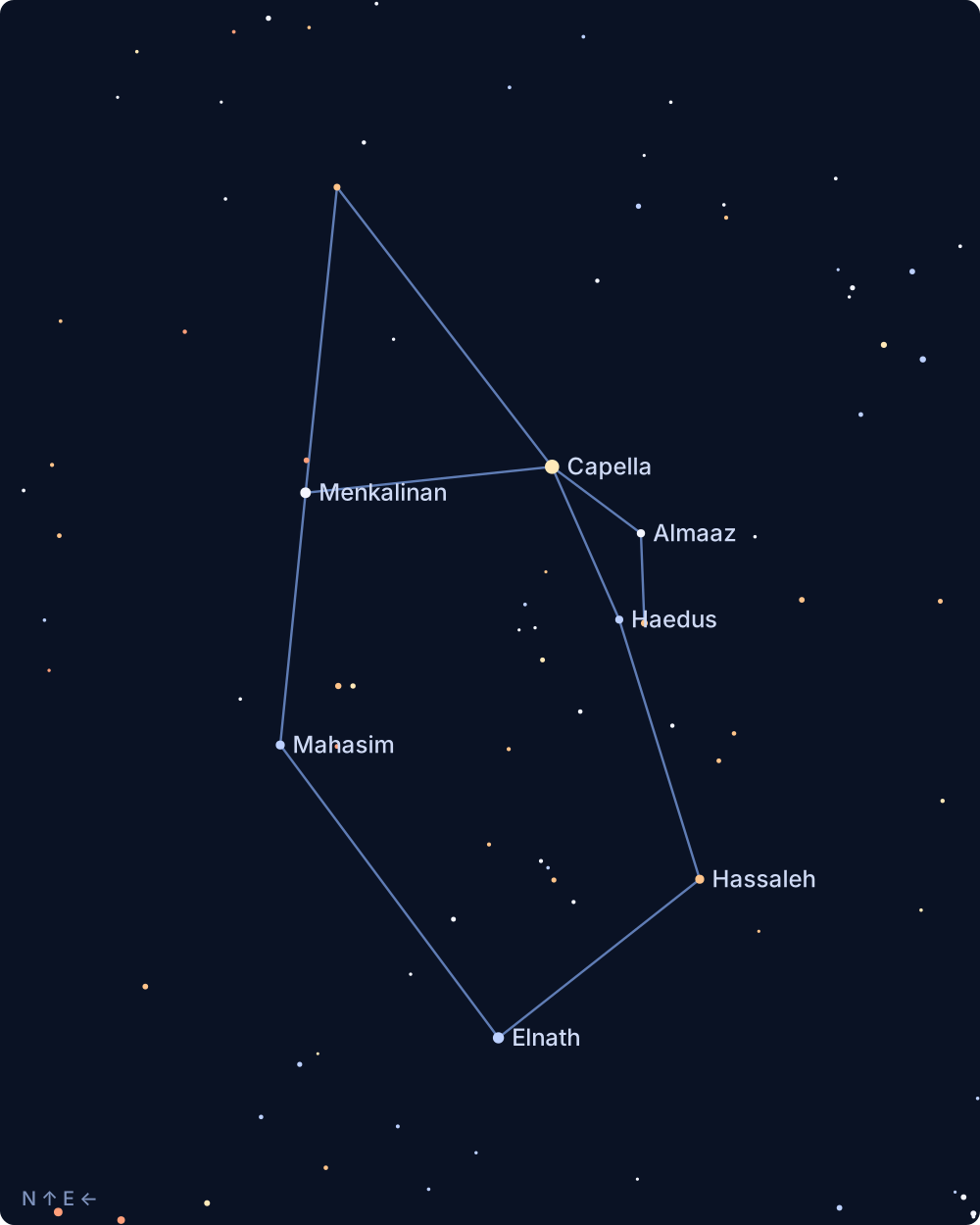
A winter constellation shaped like a lopsided pentagon, led by brilliant yellow Capella and sprinkled with open clusters.
- Best season
- Winter
- Best months
- December through March, nearly overhead on winter evenings
- Visibility
- Visible from everywhere in the United States, and nearly overhead on winter evenings from mid-northern latitudes
- Abbreviation
- Aur
How to find it
- Look nearly overhead on a winter evening for a bright yellow star: that is Capella.
- A lopsided pentagon of stars makes up the figure. One corner, Elnath, is also the tip of Taurus's northern horn.
Brightest stars
- Capella (yellow, one of the brightest stars in the sky)
- Menkalinan
- Elnath (shared with Taurus)
What to look for
- The small triangle of stars near Capella called the Kids.
- Capella's golden color, unusual among bright stars.
Binocular and telescope targets
- M36, M37, and M38: three bright open clusters, all visible in binoculars
Using it to find other things
- Auriga shares Elnath with Taurus; Capella sits high above Orion.
About this constellation
Auriga is sometimes hard to recognize at first because it rides high in the winter sky. The easiest start is Capella, then look for the pentagon around it.
The three star clusters M36, M37, and M38 lie along the Milky Way inside the pentagon. Binoculars show each as a hazy patch, and a small telescope resolves them into stars.
Related guides
Visibility depends on your latitude, the date, and the time of night. The months above assume a typical evening from the contiguous United States, so use a planetarium app to confirm what is up tonight. Never look at the Sun through binoculars or a telescope without a proper solar filter.
Star positions: Hipparcos and Bright Star catalogues via d3-celestial (BSD-3-Clause, © 2015 Olaf Frohn).