
Field Guide / Clouds & Weather Signs
Cumulonimbus
thunderhead
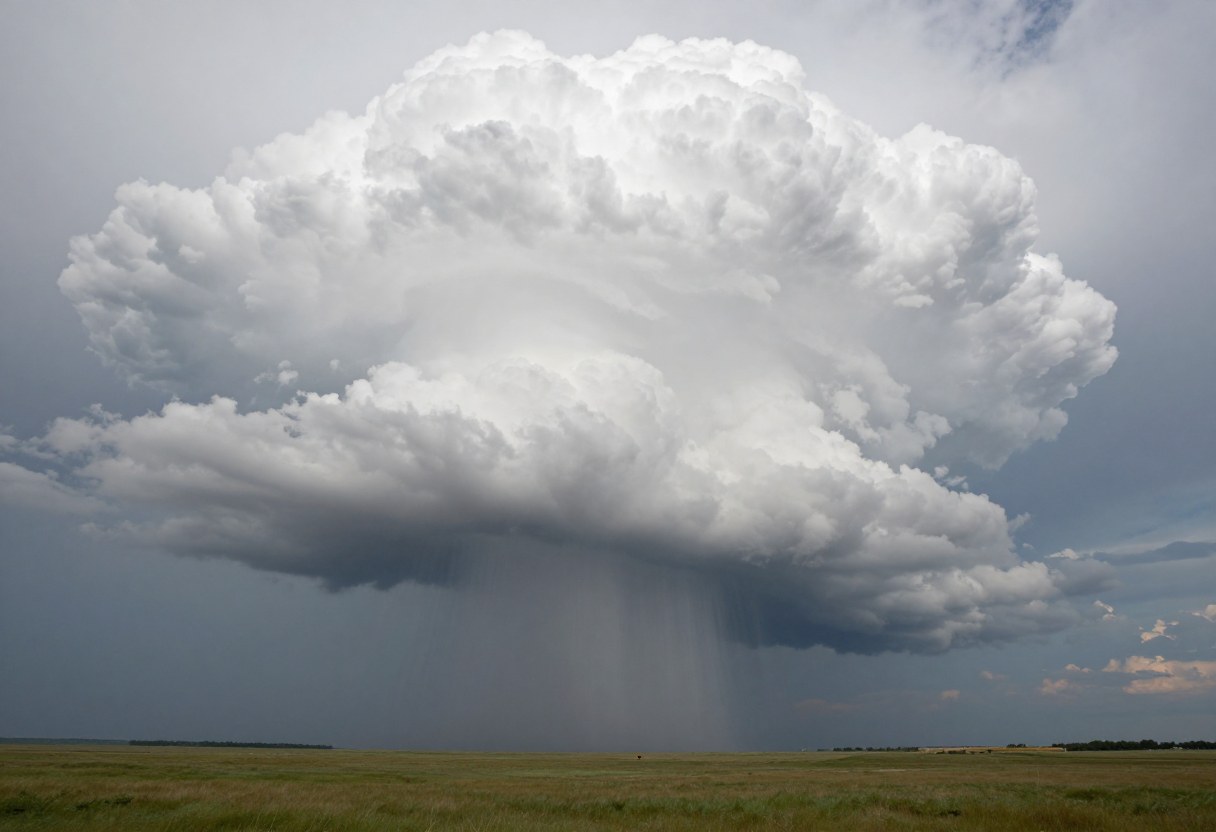
The thunderstorm cloud: a tall tower with a dark base and, often, a flat anvil on top. It can bring lightning, heavy rain, hail, damaging wind, and tornadoes.
- Height
- Towering Clouds
- Abbreviation
- Cb
- Typical altitude
- Base low, below about 6,500 ft (2,000 m), with a top that can climb above 40,000 ft (12,000 m)
- Usually means
- Storms possible
Safety: There is no safe place outdoors when a thunderstorm is nearby. If you can hear thunder, go to a substantial building or a hard-topped vehicle with the windows up, and wait 30 minutes after the last thunder before you go out again. Tents, open fields, ridgelines, open water, and isolated trees are not safe places to be.
How to recognize it
- A huge vertical tower, often taller than it is wide, with a dark, flat base.
- A cauliflower-like top, often flattened into an anvil shape.
- Rain, hail, or darkness below, and sometimes a curtain of rain streaks.
What it usually means
- Lightning, thunder, heavy rain, and often hail and strong, gusty winds.
- Winds can rush out ahead of the storm and arrive before the rain.
- Severe storms can produce tornadoes. Heed all warnings.
What to do outdoors
- Watch the sky from late morning on summer days, and leave exposed places before the storm gets close.
- Get off water, ridgelines, open fields, and summits early.
- Come down from tree stands and put away fishing rods and other tall objects.
- Check weather.gov and carry a way to get alerts.
Often confused with
- Cumulus: smaller puffy clouds that have not grown into a storm.
Field notes
Cumulonimbus clouds are the most dangerous clouds in the sky. A thunderstorm can build in less than an hour, and lightning can strike miles from the rain.
The best defense is to leave early. If you are watching the storm approach and wondering whether to leave, it is already time.
Related guides
Cloud signs are rough guides, not forecasts. Always check the National Weather Service forecast at weather.gov before and during a trip, carry a way to receive alerts, and treat any watch or warning as a reason to change your plans. If you can hear thunder, you are close enough to be struck by lightning.