
Field Guide / Clouds & Weather Signs
Cumulus
fair-weather clouds
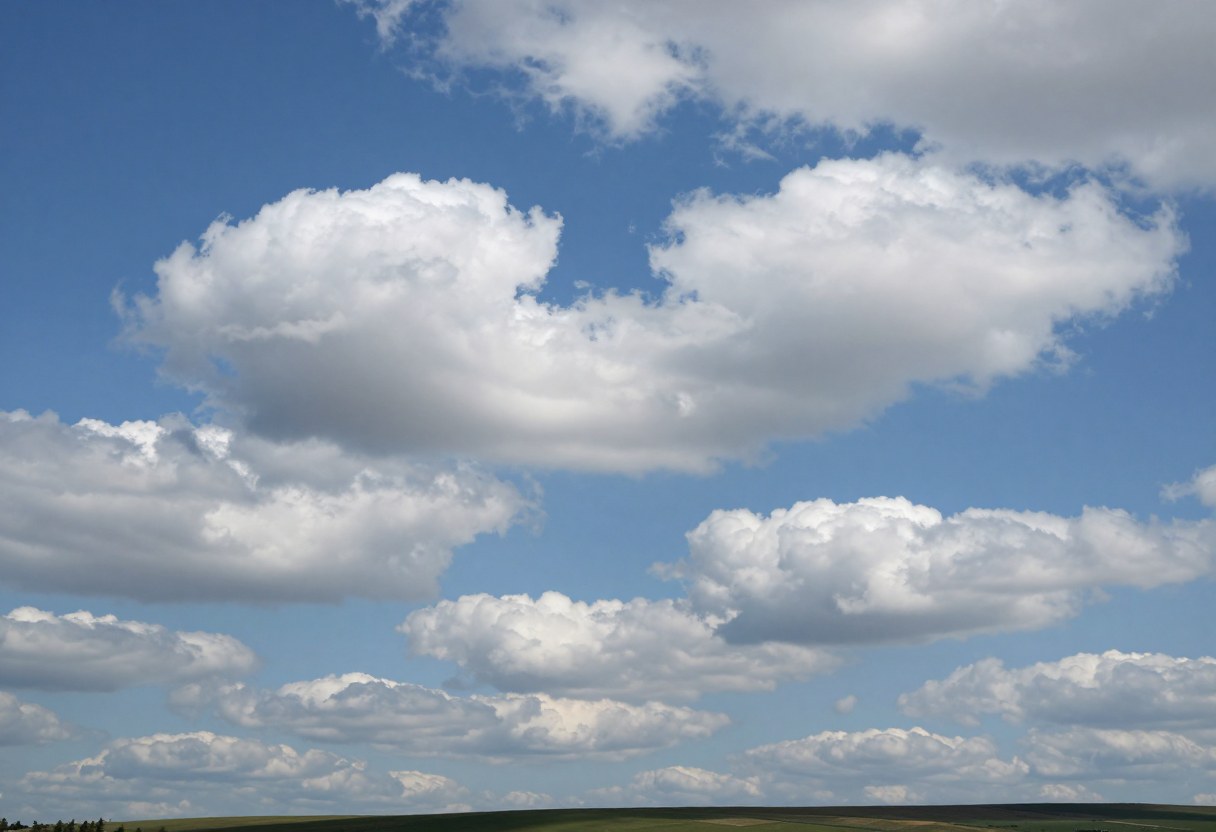
Puffy white cotton-ball clouds with flat bases, typical of a fair day. When they grow tall, they can turn into thunderstorms.
- Height
- Low Clouds
- Abbreviation
- Cu
- Typical altitude
- Below about 6,500 ft (2,000 m), with tops that can rise much higher
- Usually means
- Fair weather
How to recognize it
- Separate puffy, cauliflower-shaped clouds with bright white tops.
- Flat, slightly gray bases.
- Blue sky between the clouds.
What it usually means
- Small cumulus that stay small through the day mean fair weather.
- If the clouds grow tall and dark through the late morning and early afternoon, they can become towering cumulus and then thunderstorms.
- Cumulus often dissolves in the evening as the ground cools.
What to do outdoors
- Enjoy the day, but watch whether the clouds are growing taller.
- In summer mountain country, start early and plan to be off summits and ridges by midday.
- If the towers get tall, dark, and crowded together, head for shelter.
Often confused with
- Cumulonimbus: a cumulus that has grown into a towering storm cloud with an anvil top.
- Stratocumulus: lumpy rolls that cover much of the sky.
Field notes
Cumulus is the cloud of a pleasant day, but it is also the first stage of a thunderstorm. The height it reaches, rather than its presence, tells you which story you are in.
Related guides
Cloud signs are rough guides, not forecasts. Always check the National Weather Service forecast at weather.gov before and during a trip, carry a way to receive alerts, and treat any watch or warning as a reason to change your plans. If you can hear thunder, you are close enough to be struck by lightning.