
Snowshoe Hare
Lepus americanus
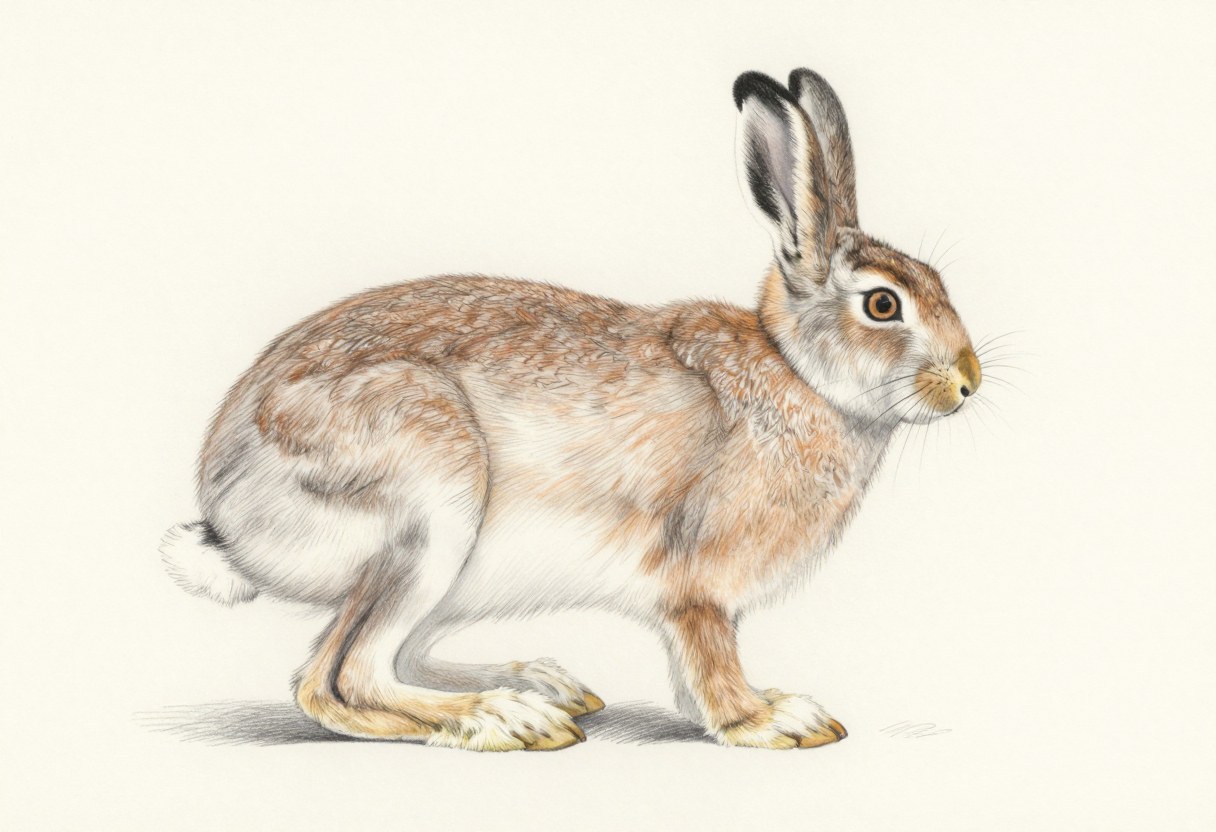
A northern forest hare with huge furry hind feet that turns white in winter.
- Type
- Small Game
- Habitat
- Forests, Mountains
- Typical size
- About 2–3.5 lb
- Range
- Northern forests of the United States, including New England, the Great Lakes, and the Rockies, and across Canada and Alaska
- Seasons
- Long seasons in the fall and winter in states where hares are common
How to identify it
- Brown in summer and white in winter in most of its range, with black-tipped ears.
- Very large hind feet covered in fur that act like snowshoes.
- Longer ears and legs than a cottontail, and a small tail.
Tracks and sign
- Large tracks in snow, with the hind feet landing ahead of the front feet.
- Well-worn runways through thick cover.
- Twigs clipped at an angle, and round pellets.
Often confused with
- Eastern cottontail: smaller, with a white fluffy tail and no color change in winter.
What it eats
- Grasses and clover in summer
- Twigs, buds, and bark in winter
How it's hunted
- Hunting with beagles in dense cover
- Walking conifer thickets and snow-covered trails
- Tracking in snow
Safety: Hares can carry tularemia, so wear gloves when cleaning them and cook the meat thoroughly.
Field notes
Snowshoe hares live in dense northern forests and change color with the seasons, so a white hare against bare ground is easy to see, and a brown one in snow is too.
Hunting them with a beagle in deep cover is a popular tradition in the North.
Related guides
Seasons, tag and license requirements, legal methods, and bag limits vary by state and unit and change every year. Many big-game species require a drawn or purchased tag, and some animals are protected or regulated differently in different places. Check your state's current regulations — our state resources directory links straight to each state's official hunting rules and license portal.