
Raccoon
Procyon lotor
A masked, ring-tailed night forager found almost everywhere there is water, and hunted at night with hounds in many states.
- Type
- Small Game
- Habitat
- Forests, Wetlands, Farmland
- Typical size
- About 10–30 lb
- Range
- Most of the United States, in woods, farm country, and cities
- Seasons
- Regulated seasons in many states, often with night hunts in fall and winter
How to identify it
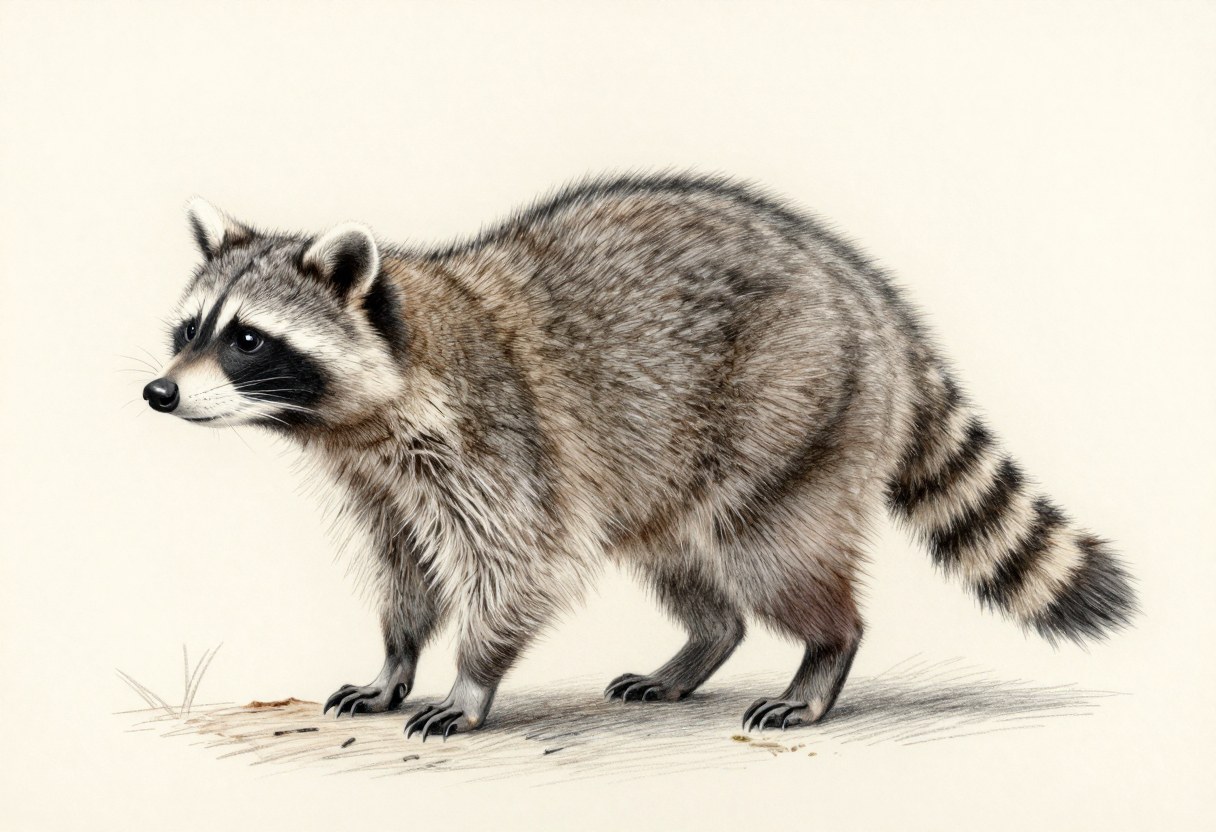
- A black mask across the eyes, gray-brown fur, and a pointed snout.
- A bushy tail with alternating black and gray rings.
- Dexterous front paws that look like small hands.
Tracks and sign
- Tracks resemble small human hands, with five long toes, along muddy banks.
- Latrines: communal piles of scat at the base of trees or on logs.
- Claw marks on den trees and torn-up cornfields.
Often confused with
- Ringtail: a slender, cat-sized animal of the West with a long banded tail, big eyes, and no mask.
What it eats
- Crayfish, frogs, and fish
- Fruit, nuts, and corn
- Eggs and insects
- Garbage and pet food
How it's hunted
- Night hunts with trained hounds and lights where legal
- Trapping under furbearer rules
- Scouting creek bottoms and den trees in daylight
Safety: Raccoon scat can carry a roundworm that is dangerous to people, so avoid latrines and wear gloves when handling carcasses. Raccoons can also carry rabies. Cook the meat thoroughly.
Field notes
Raccoons are strong, curious animals that live near water and in trees. They forage at night, so most hunting is done after dark with dogs.
Because rules differ across the country, check your state's regulations on night hunting, lights, and dogs.
Related guides
Seasons, tag and license requirements, legal methods, and bag limits vary by state and unit and change every year. Many big-game species require a drawn or purchased tag, and some animals are protected or regulated differently in different places. Check your state's current regulations — our state resources directory links straight to each state's official hunting rules and license portal.