
Mountain Lion
Puma concolor
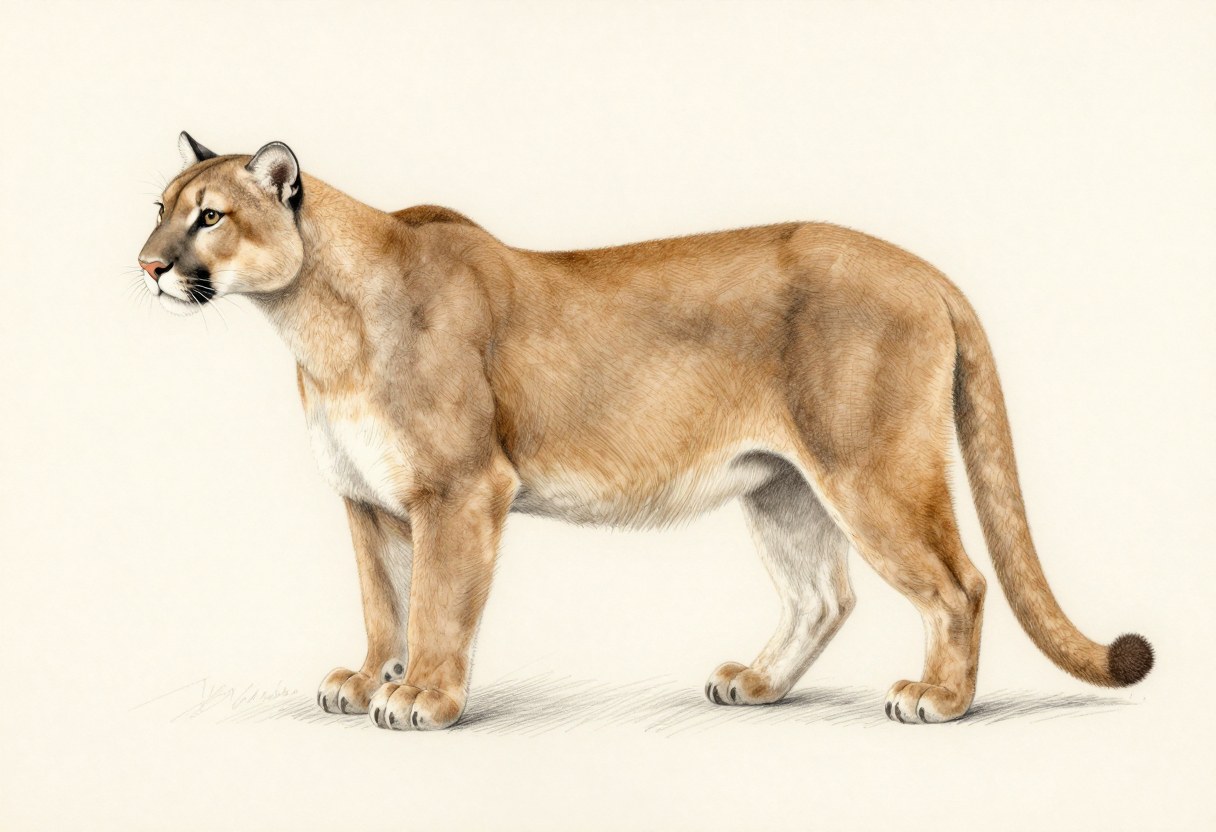
A large, solitary, tawny cat of the West, also called a cougar or puma. It is hunted in many western states and protected in others.
- Type
- Predators & Hogs
- Habitat
- Mountains, Forests, Brush & desert
- Typical size
- Males about 115–220 lb; females about 64–141 lb
- Range
- The western United States, with a small, protected population in Florida and occasional animals farther east
- Seasons
- Legal to hunt in many western states under tag or quota systems, and protected in others, including California. Check your state's rules
How to identify it
- A uniform tawny coat with no spots on adults.
- A long, thick tail with a dark tip.
- A small, round head, with a white chin and dark marks on the muzzle.
- Much larger than a bobcat.
Tracks and sign
- Tracks are large and round with four toes, a three-lobed heel pad, and no claw marks.
- Kills covered with dirt, leaves, or snow, called caches.
- Scrapes of leaves or dirt marked with scat or urine.
Often confused with
- Bobcat: far smaller, with a short bobbed tail and a spotted coat.
What it eats
- Deer and elk
- Smaller mammals
- Livestock in some areas
How it's hunted
- Hunting with trained hounds where legal
- Tracking in fresh snow
- Predator calling in some places
Safety: If you meet a mountain lion, face it, make yourself look large, keep your eyes on it, and back away slowly. Never run. The Florida panther is a protected subspecies.
Field notes
Mountain lions are secretive and rarely seen. Hunters usually find them by tracking or using trained hounds, and the animals often travel long distances.
Rules for hunting lions vary widely, including tags, quotas, and rules on hounds, so read your state's regulations closely.
Related guides
Seasons, tag and license requirements, legal methods, and bag limits vary by state and unit and change every year. Many big-game species require a drawn or purchased tag, and some animals are protected or regulated differently in different places. Check your state's current regulations — our state resources directory links straight to each state's official hunting rules and license portal.