
Feral Hog
Sus scrofa
A non-native, destructive wild pig found in much of the South and beyond. It is hunted year-round in many states to control its damage.
- Type
- Predators & Hogs
- Habitat
- Forests, Brush & desert, Wetlands, Farmland
- Typical size
- About 100–300 lb, with large boars heavier
- Range
- At least 35 states, with the largest populations in Texas, Florida, Oklahoma, and the Southeast, and spreading
- Seasons
- Many states have no closed season or bag limit, at least on private land, but rules vary and some require a license or landowner permission
How to identify it
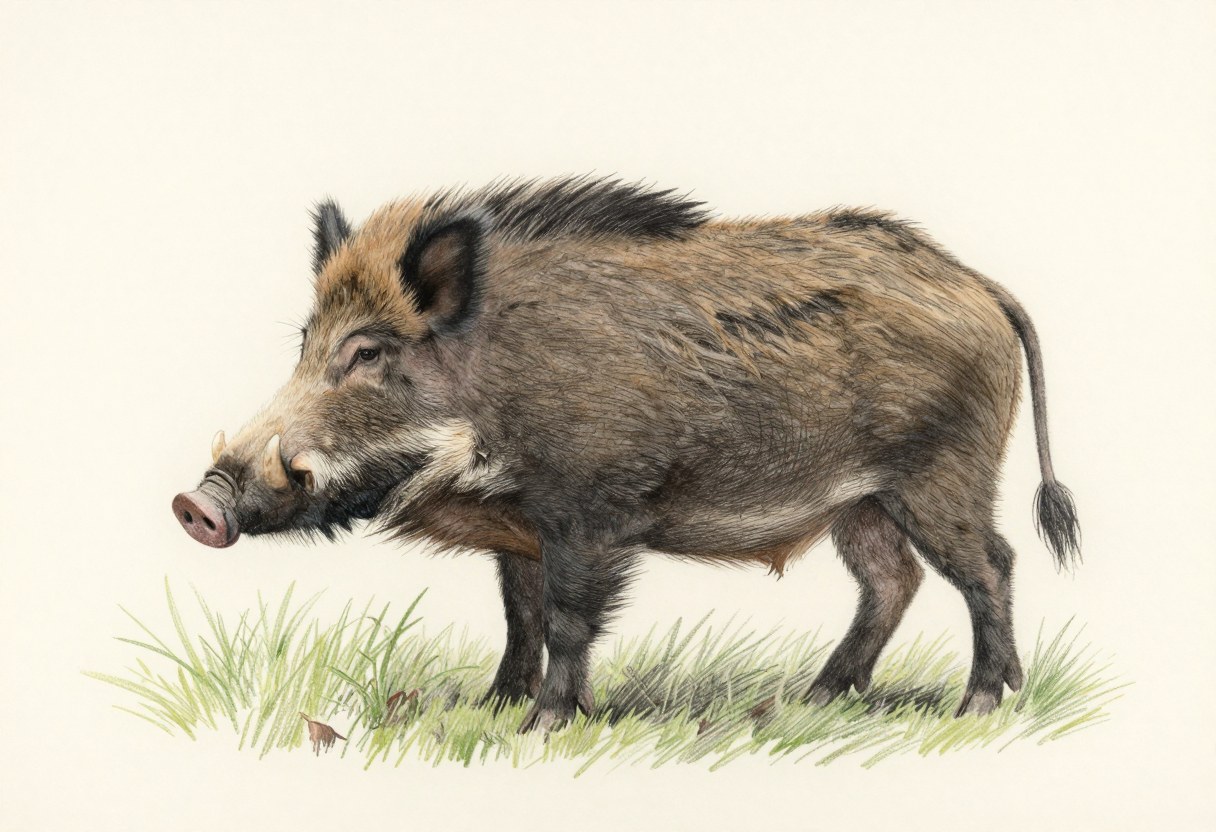
- Coarse, bristly hair in black, brown, red, or spotted colors.
- A long, narrow snout and small ears.
- A straight tail with a small tuft.
- Boars grow short tusks and a thick shield of muscle over the shoulders.
Tracks and sign
- Rooting: large patches of dug-up ground.
- Wallows: muddy holes used to cool off, often with mud rubbed on nearby trees.
- Tracks show two main toes, with dewclaws marking in soft ground, and look rounder than deer tracks.
- Heavy damage to crops and streambanks.
Often confused with
- Collared peccary (javelina): a smaller native animal of the Southwest with a pale collar of fur and a compact body.
What it eats
- Roots and tubers dug from the ground
- Acorns, crops, and fruit
- Eggs, carrion, and small animals
How it's hunted
- Spot-and-stalk near feeding and bedding areas
- Hunting over bait or feeders where legal
- Night hunting with thermal or night vision where legal
- Trapping and hunting with dogs where allowed
Safety: Wounded or cornered hogs can be dangerous, and boars have tusks. Feral swine can carry diseases, including swine brucellosis, so wear gloves when field-dressing and cook the meat thoroughly.
Field notes
Feral hogs cause huge damage to crops, wetlands, and native wildlife, which is why many states encourage their removal. They breed quickly and adapt to nearly every habitat.
Hogs have a keen sense of smell and often feed at night, so many hunters work dawn, dusk, or after dark where legal.
Related guides
Seasons, tag and license requirements, legal methods, and bag limits vary by state and unit and change every year. Many big-game species require a drawn or purchased tag, and some animals are protected or regulated differently in different places. Check your state's current regulations — our state resources directory links straight to each state's official hunting rules and license portal.