
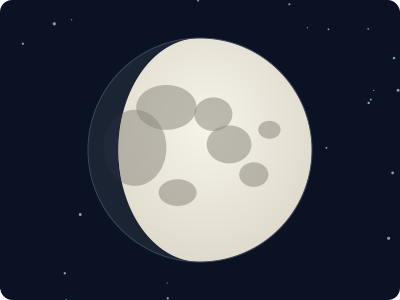
Waxing Gibbous
More than half the Moon is lit and growing toward full. It rises in the afternoon and lights most of the night.
- Type
- Moon Phases
- Best season
- Any time of year
- Gear
- Naked eye
- When to look
- Between first quarter and full Moon, over about a week
- Lit part
- More than half, on the right, growing
- Rises and sets
- Rises in the afternoon and sets in the early morning
- Best for
- Looking at the Moon, not at faint objects
- Age
- About 8 to 14 days after new Moon
What you will see
- A large, bright Moon in the evening and early night.
- Bright moonlight that washes out faint stars.
- Less crater detail as the lit area grows.
How to watch
- Enjoy the Moon in the evening.
- Save faint-object stargazing for later in the month.
- A bright Moon is useful for night walks without a light.
Field notes
The waxing gibbous Moon is up for most of the night and makes the sky bright. It is a poor time for faint-object stargazing but a nice time for a moonlit walk.
Related guides
Dates and times repeat from year to year but shift slightly, and the Moon's phase and the planets' positions are different every year. Check a current source such as NASA, the American Meteor Society, or a stargazing app before you plan a night out, and check the weather forecast for clear skies.