
Venus
Also called: the evening star, the morning star
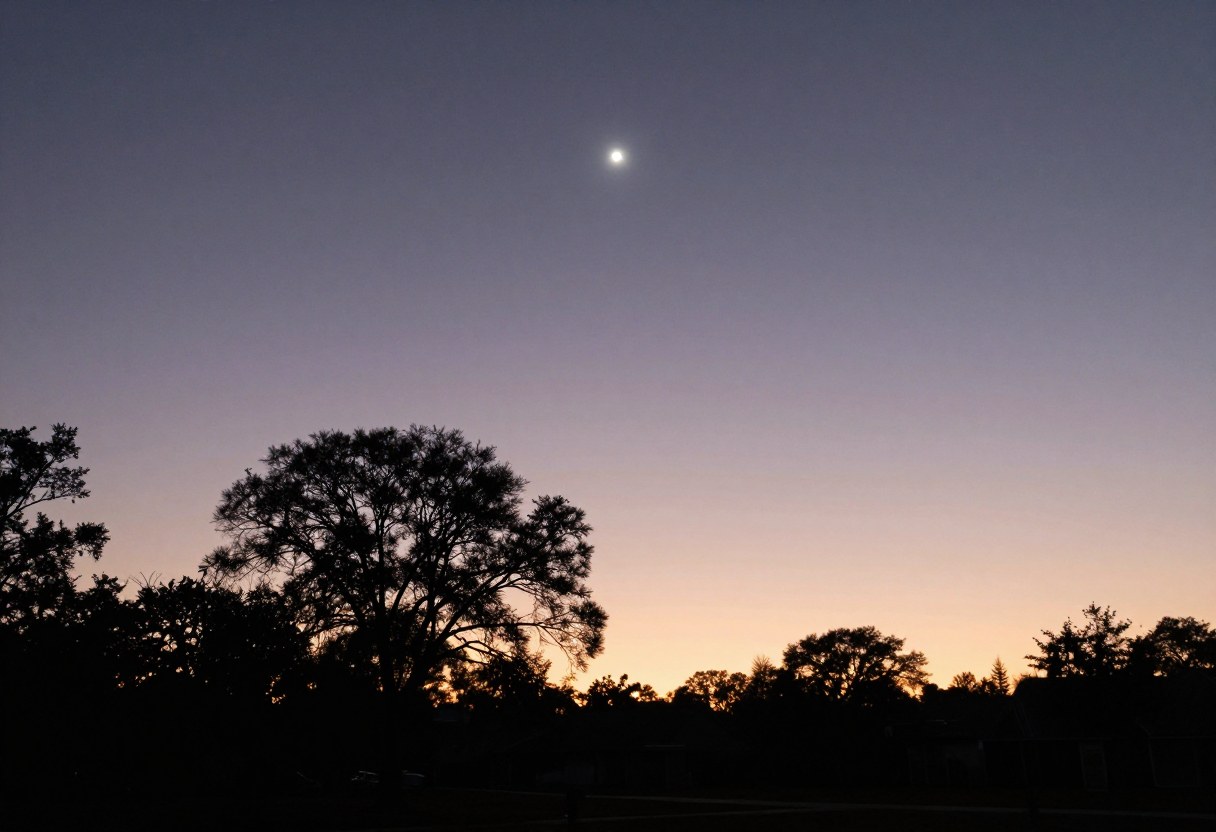
The brightest planet, a brilliant white 'star' in the western sky after sunset or the eastern sky before sunrise.
- Type
- Planets
- Best season
- Any time of year
- Gear
- Naked eye
- When to look
- Alternates between evening and morning sky, each for several months
- Appearance
- Brilliant, steady white, the brightest planet and third-brightest object in the sky after the Sun and Moon
- Orbit
- About 225 days around the Sun
- Phases
- Venus shows phases like the Moon, visible with a small telescope
- Distance from the Sun in the sky
- Never more than about 47 degrees
What you will see
- A very bright 'star' in the west after sunset or the east before sunrise.
- A steady light that barely twinkles.
- In a small telescope, a crescent, half, or gibbous shape.
How to watch
- Look west after sunset or east before sunrise, depending on the year.
- Use an app to find when Venus is the evening or morning star.
- A small telescope shows the phase.
Field notes
Venus is so bright it is often mistaken for an aircraft or a UFO. It is the planet seen when someone mentions the evening star or morning star, and is easy to find when it is up.
Related guides
Dates and times repeat from year to year but shift slightly, and the Moon's phase and the planets' positions are different every year. Check a current source such as NASA, the American Meteor Society, or a stargazing app before you plan a night out, and check the weather forecast for clear skies.