
Saturn
Also called: the ringed planet
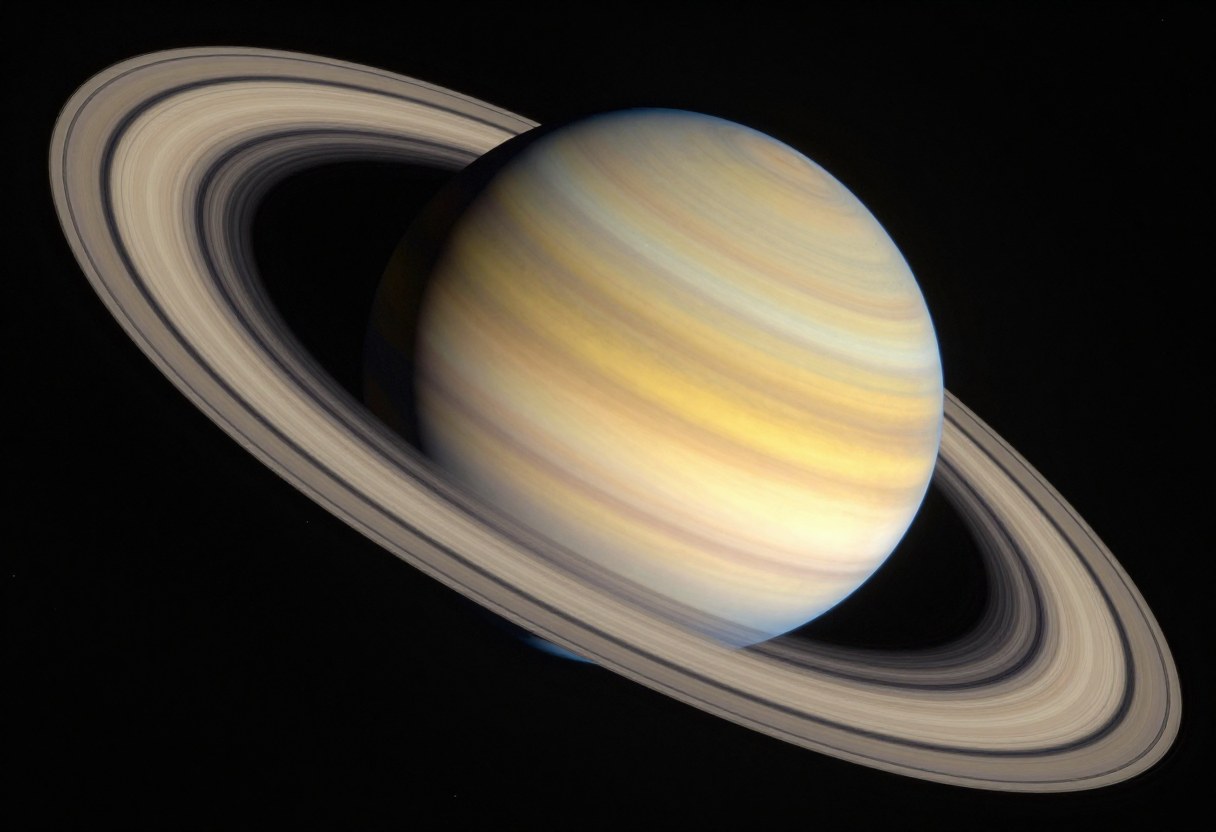
A pale yellow planet that looks like a bright star to the eye, with rings that need a small telescope to see.
- Type
- Planets
- Best season
- Any time of year
- Gear
- Telescope needed
- When to look
- Brightest around opposition, which comes about every 12½ months
- Appearance
- A steady, pale yellow light
- Orbit
- About 29½ years around the Sun
- Opposition
- About every 12½ months, when Saturn is up all night
- Telescope
- A small telescope shows the rings clearly
What you will see
- A steady yellowish 'star' to the naked eye.
- In a small telescope, the rings and the planet's disc.
- The tilt of the rings changes over the years.
How to watch
- Use a small telescope, which shows the rings at modest magnification.
- Use an app to find where Saturn is.
- Be patient with the focus and let the telescope cool down.
Field notes
Seeing Saturn's rings for the first time through a telescope is a memorable moment for many people. The rings are visible even in a small, inexpensive scope.
Related guides
Dates and times repeat from year to year but shift slightly, and the Moon's phase and the planets' positions are different every year. Check a current source such as NASA, the American Meteor Society, or a stargazing app before you plan a night out, and check the weather forecast for clear skies.