
Choosing a Telescope for Beginners
Refractors, reflectors, and compound scopes explained — plus mounts, so you buy a telescope you'll actually use.
Published August 20, 2026
Why the "Best" Telescope Depends Entirely on What You Want to See
There's no single best beginner telescope — the right choice depends on what you actually want to observe (planets and the Moon vs. faint deep-sky objects like galaxies and nebulae), how much you're willing to carry and set up, and your budget. A telescope that's technically excellent but too cumbersome to actually haul outside regularly will see far less use than a more modest scope that's genuinely easy to grab and use. This guide covers the core telescope types, mounts, and how to match both to your actual priorities.
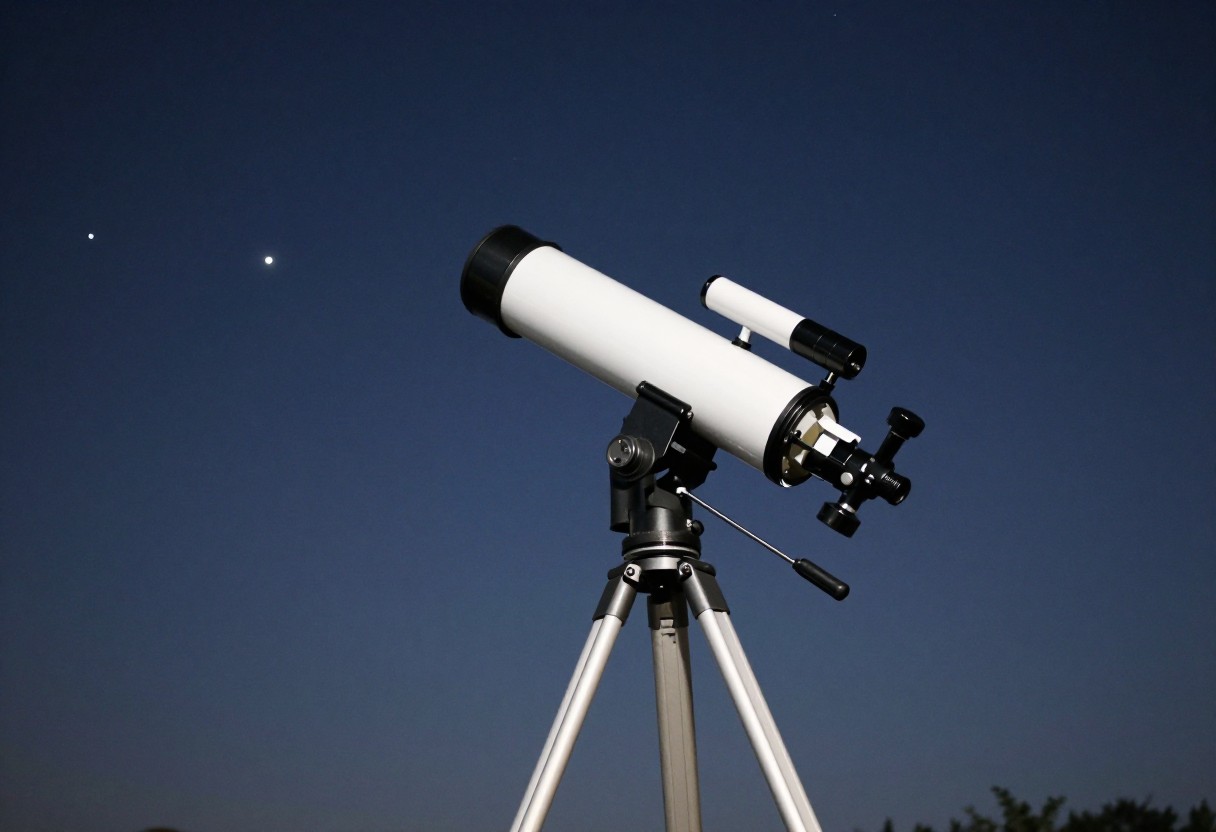
1. Start With What You Want to Observe
- Moon and planets reward sharp optics and higher magnification more than raw light-gathering power — a smaller, high-quality refractor or compound telescope can deliver excellent views.
- Deep-sky objects (galaxies, nebulae, star clusters) reward aperture (light-gathering ability) above almost everything else — a larger reflector telescope, even a relatively simple one, generally shows more than a smaller, more expensive scope of a different type.
- A genuine "I want to see everything reasonably well" beginner is usually best served by prioritizing aperture within budget, which points toward a reflector, specifically a Dobsonian-mounted Newtonian (Section 4) as the most commonly recommended all-around starting telescope.
2. Telescope Types Explained
Refractor
Uses a lens at the front of a sealed tube to gather and focus light.
- Pros: Sharp, high-contrast views, especially good for the Moon, planets, and double stars; sealed tube needs no collimation (mirror/lens alignment) and cools to outdoor temperature quickly.
- Cons: Cost per inch of aperture is high — a refractor under about 4 inches of aperture tends to underwhelm for fainter deep-sky objects compared to a similarly priced reflector.
- Best for: Moon/planet-focused observing, or anyone who values low maintenance and simplicity over maximum aperture per dollar.
Reflector (Newtonian)
Uses a curved mirror at the back of an open tube to gather and focus light.
- Pros: The best aperture-per-dollar of the common telescope types — you get more light-gathering power for your money than any other design, which directly translates to seeing more deep-sky detail.
- Cons: Needs occasional collimation (re-aligning the mirrors) to stay sharp; the open tube takes longer to cool to outdoor temperature and is more exposed to dust.
- Best for: Deep-sky observing on a budget, and — mounted as a Dobsonian (Section 4) — the most commonly recommended genuine all-around beginner telescope.
Compound / Catadioptric (Schmidt-Cassegrain, Maksutov-Cassegrain)
Uses a combination of mirrors and lenses folded into a compact tube.
- Pros: A long focal length in a notably compact, portable tube (an 8-inch Schmidt-Cassegrain can have a 2000mm focal length in an 18-inch-long tube); versatile across planets, the Moon, brighter deep-sky objects, and adapts well to astrophotography.
- Cons: More expensive per inch of aperture than a reflector; longer cooldown time than a refractor; more prone to dew formation given the enclosed design.
- Best for: Observers who want strong versatility and portability together, or who are already thinking ahead toward astrophotography, and are willing to pay more for it.
3. Understanding Mounts
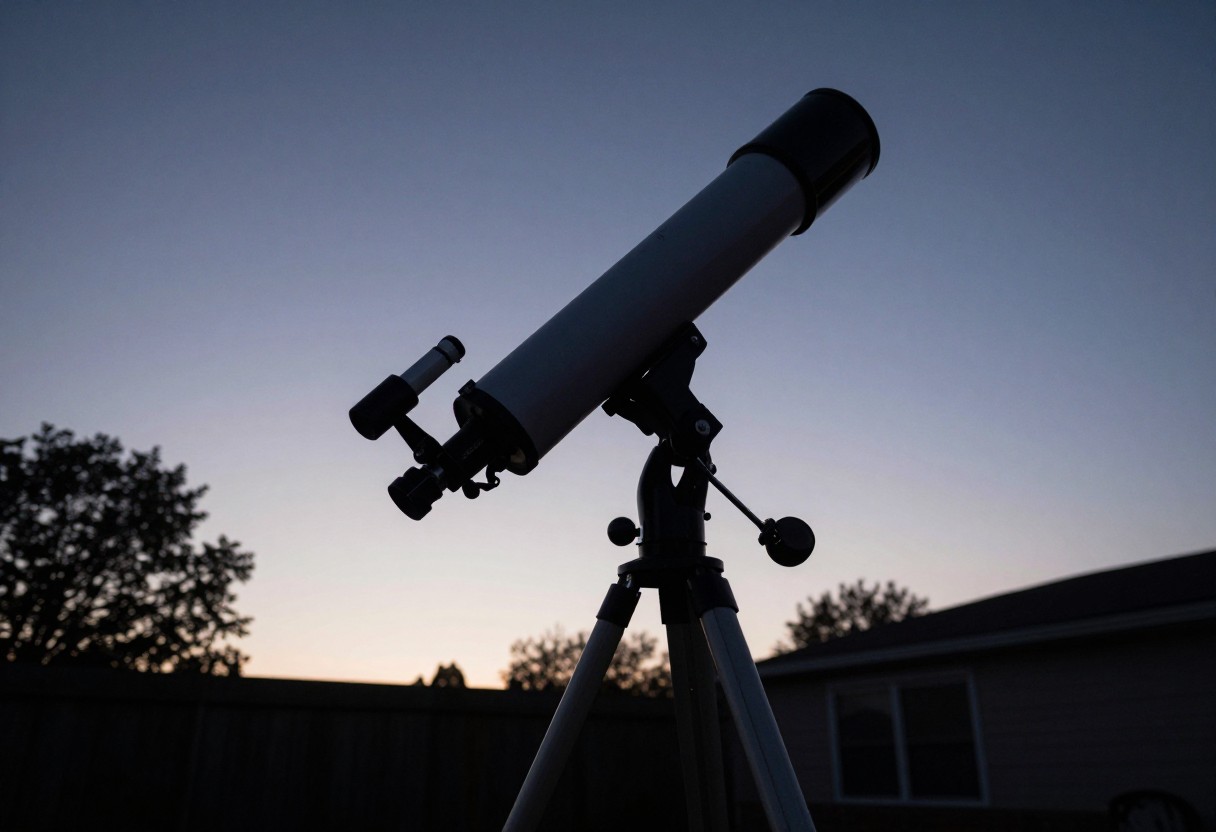
- Alt-azimuth mounts move in two simple directions — up/down and left/right — similar to a camera tripod head. Simple, stable, and entirely adequate for visual observing, but they can't track the sky's rotation without the field of view slowly rotating, which becomes a real limitation for long-exposure astrophotography after roughly 20–30 seconds.
- Equatorial mounts have one axis tilted to align with Earth's rotational axis; once properly polar-aligned, a single motor or knob can track the sky's rotation smoothly, which is what makes long-exposure astrophotography practical.
- Dobsonian mounts are a simplified, exceptionally stable alt-azimuth design specifically paired with Newtonian reflector telescopes — the combination (a "Dobsonian" or "Dob") is prized for maximizing aperture-per-dollar in a mount that's simple to use, at the cost of not being suited to long-exposure imaging without significant additional modification.
- GoTo mounts are computerized versions of any of the above mount types — after an initial alignment process, a GoTo mount can automatically locate and track objects selected from a handheld controller or connected app, which meaningfully speeds up finding fainter objects but adds cost, complexity, and a battery/power dependency.
4. Why a Dobsonian Is the Most Common Beginner Recommendation
- A 6 to 8-inch Dobsonian combines a genuinely large aperture (meaning real deep-sky performance) with a simple, stable mount and a comparatively low price for that aperture — this combination is why it's so consistently recommended as a first "real" telescope.
- The tradeoff is size and simplicity of tracking — a Dobsonian is larger and heavier than a small refractor, and its alt-azimuth mount requires manual nudging to keep an object centered as it drifts, rather than automatic tracking.
- For a genuine first telescope prioritizing "see the most for the money," a 6–8 inch Dobsonian is a defensible, widely-recommended default — the main reasons to choose differently are portability priorities or a specific early interest in astrophotography.
5. Typical Price Bands (Treat as Approximate)
| Telescope Type | Typical Range | Notes |
|---|---|---|
| Tabletop Dobsonian (4–6") | Under $300 | Compact, genuinely usable, good for tight budgets or limited storage/transport |
| Classic 6–8" Dobsonian | $300–$600 | Widely considered the best general beginner value |
| Small Maksutov-Cassegrain (90–127mm) | Under $500 | Compact, grab-and-go, planetary-focused |
| 8" Schmidt-Cassegrain with GoTo | $1,000–$2,500 | A common intermediate step-up, versatile and imaging-capable |
Prices fluctuate with the market — treat these as a rough starting reference and check current pricing from an established telescope retailer before budgeting. Generally avoid "toy" department-store telescopes advertised primarily on magnification numbers rather than aperture — they tend to underdeliver badly relative to their marketing.
Don't Skip This: Magnification is not the spec to prioritize when choosing a telescope, despite how heavily it's marketed on lower-end products. Aperture (the diameter of the main lens or mirror) determines how much light a telescope gathers, which is what actually determines how much detail and how many faint objects you can see — a telescope advertised primarily by an impressively high magnification number and little else is a common sign of a low-quality instrument.
6. Portability: The Telescope You'll Actually Use
- A telescope that's difficult to set up or transport tends to get used far less than one that's genuinely convenient, regardless of its optical quality on paper — this is a real, well-documented pattern among beginners specifically.
- Consider your realistic situation honestly: a large Dobsonian offers the most aperture-per-dollar, but if you're in an apartment with limited storage and car access, a smaller, more portable scope you'll actually take outside regularly may serve you better in practice.
- "Grab-and-go" telescopes (smaller refractors, tabletop Dobsonians, compact Maksutov-Cassegrains) trade some raw aperture for genuinely low-friction use, which is a completely reasonable priority for many beginners.
7. Common Telescope Buying Mistakes
- Prioritizing magnification over aperture, a common marketing tactic on low-quality telescopes that leads to disappointing, blurry high-magnification views.
- Buying more telescope than you'll realistically transport and set up, leading to a technically capable instrument that ends up rarely used.
- Choosing a refractor for deep-sky-focused observing without accounting for how much aperture-per-dollar you're giving up compared to a reflector.
- Not budgeting for eyepieces and accessories, which are often sold separately from the base telescope and meaningfully affect the actual observing experience.
- Skipping collimation on a reflector, letting image sharpness degrade over time rather than periodically checking and adjusting mirror alignment.
- Assuming a GoTo mount is necessary for a first telescope, when manual star-hopping (navigating by known landmarks) is a genuinely valuable skill worth learning, and many experienced observers prefer manual Dobsonians even after trying GoTo systems.
Quick Decision Checklist
- I've identified whether I'm prioritizing planets/Moon (favors refractor or compound) or deep-sky objects (favors reflector/aperture)
- I've been honest with myself about how portable a telescope needs to be for me to actually use it regularly
- I understand the mount tradeoffs (alt-az simplicity vs. equatorial tracking vs. Dobsonian aperture-per-dollar vs. GoTo convenience and cost)
- I'm prioritizing aperture over magnification numbers when comparing options
- I've checked current pricing from an established telescope retailer rather than relying on outdated price expectations
- I've budgeted for eyepieces and basic accessories, not just the base telescope price
Glossary
- Aperture: The diameter of a telescope's main lens or mirror, determining how much light it gathers — the primary factor in how much detail and how many faint objects are visible.
- Collimation: The process of aligning a reflector telescope's mirrors, needed periodically to maintain image sharpness.
- Dobsonian: A simplified, stable alt-azimuth mount paired with a Newtonian reflector telescope, widely recommended for its aperture-per-dollar value.
- GoTo Mount: A computerized telescope mount that can automatically locate and track objects after an initial alignment process.
- Focal Length: The distance light travels within a telescope from the main lens/mirror to the point of focus, affecting magnification and field of view relative to a given eyepiece.
Final Takeaway
Choose a telescope based on what you actually want to observe and how much you'll realistically transport and set up, not by chasing magnification numbers or the most technically capable option on paper. For most genuine beginners prioritizing overall value, a 6–8 inch Dobsonian remains the most consistently recommended starting telescope, balancing real aperture with simplicity — but a smaller, more portable scope is a completely reasonable choice if it's the one you'll actually take outside.
Telescope pricing and specific model availability change over time — check current offerings and pricing from an established telescope retailer before making a final decision.