
Mercury
Also called: the elusive planet
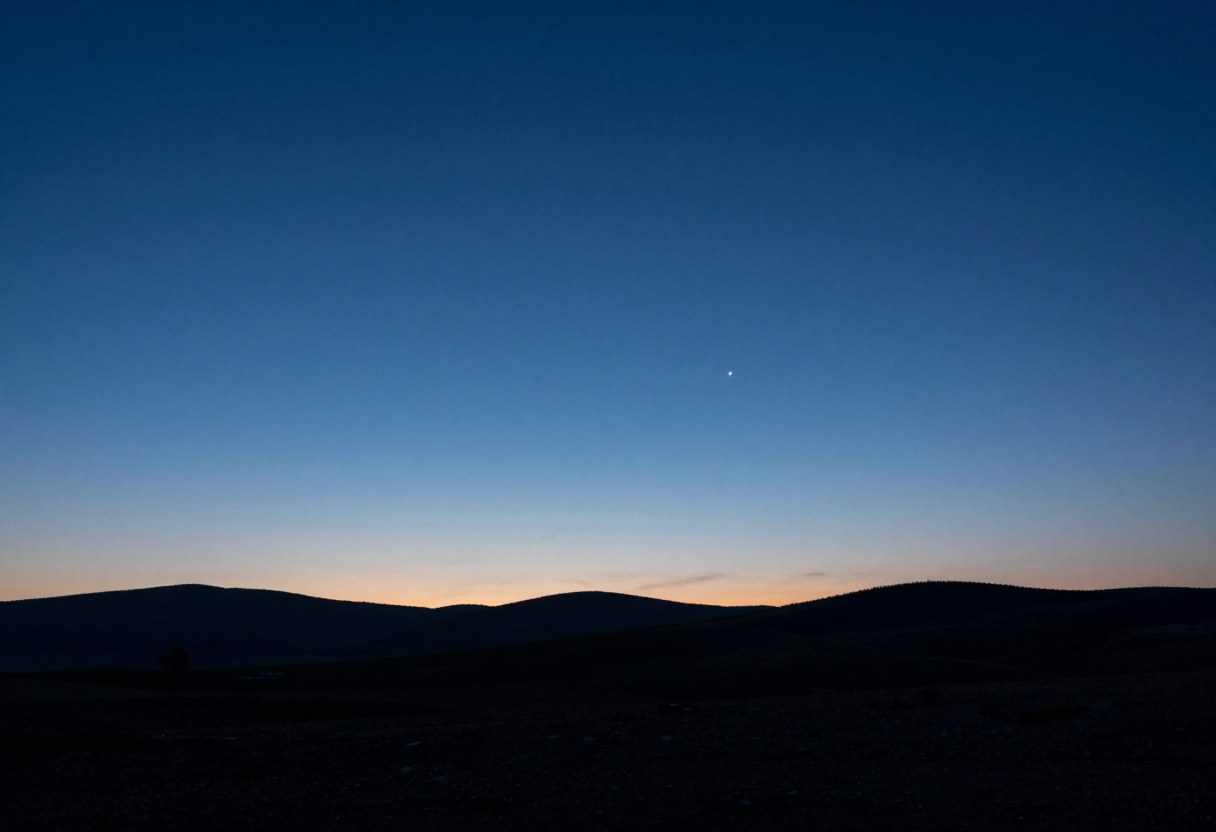
The smallest planet and the closest to the Sun, which makes it hard to spot: it only appears low in the twilight for a few weeks at a time.
- Type
- Planets
- Best season
- Any time of year
- Gear
- Naked eye
- When to look
- A few short windows each year, low in the twilight
- Appearance
- A steady, bright, pale-yellow point of light with no twinkling
- Orbit
- 88 days around the Sun
- Best views
- Evenings in spring and mornings in autumn for northern observers
- Distance from the Sun in the sky
- Never more than about 28 degrees
Safety: Use caution when searching for Mercury at twilight: never use binoculars or a telescope when the Sun is above the horizon.
What you will see
- A bright point of light near the horizon in the twilight.
- Often near the horizon in the west after sunset or in the east before sunrise.
- Mercury never moves far from the Sun.
How to watch
- Look for a clear, flat horizon just after sunset or just before sunrise.
- Use an app to find out when Mercury is at its greatest elongation.
- Binoculars help to find it, but never sweep near the Sun.
Field notes
Mercury's orbit keeps it close to the Sun, so it is always a twilight object. Plan around its best evening and morning appearances, which you can find in any stargazing app.
Related guides
Dates and times repeat from year to year but shift slightly, and the Moon's phase and the planets' positions are different every year. Check a current source such as NASA, the American Meteor Society, or a stargazing app before you plan a night out, and check the weather forecast for clear skies.