
Lunar Eclipse
Also called: blood moon
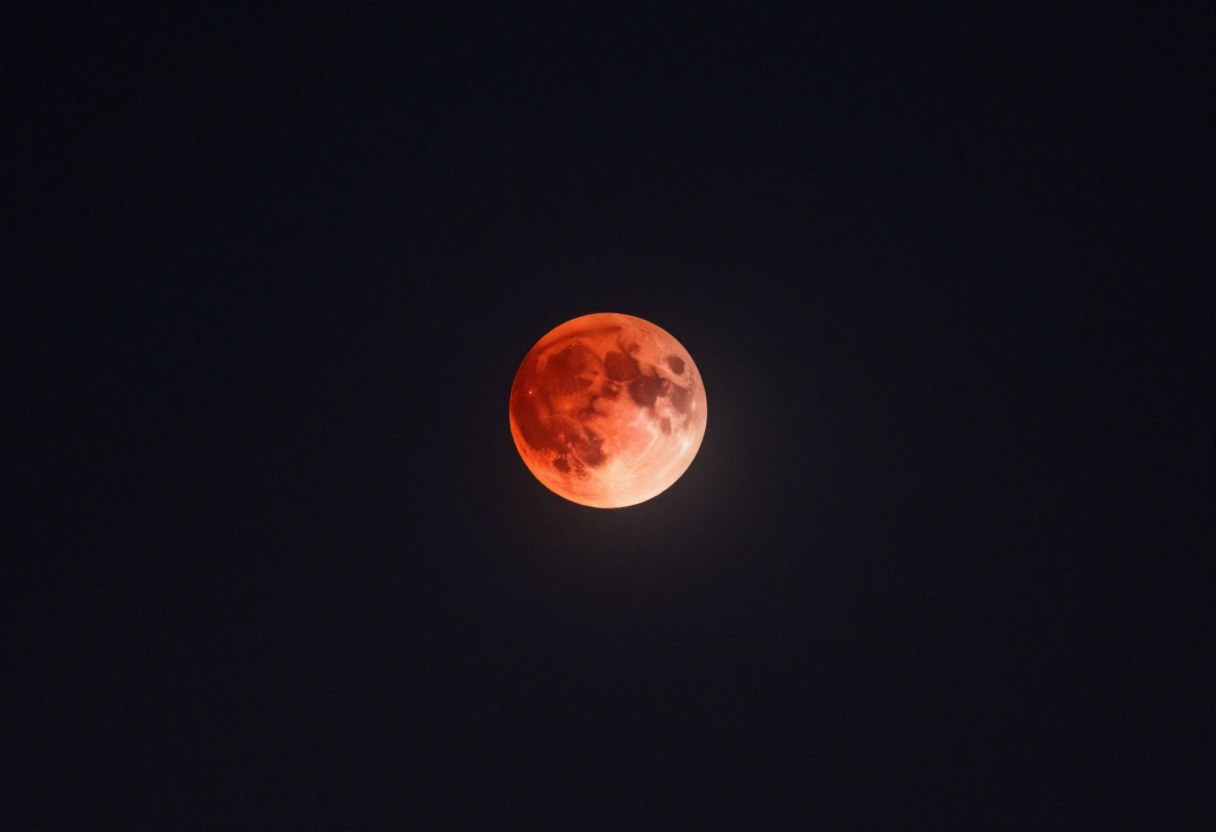
When the Moon passes into Earth's shadow. A total lunar eclipse turns the Moon deep red, and unlike a solar eclipse, it is safe to watch with your eyes.
- Type
- Eclipses
- Best season
- Any time of year
- Gear
- Naked eye
- When to look
- Several times a year somewhere on Earth; visible from anywhere the Moon is above the horizon
- Types
- Total, partial, and penumbral
- Totality lasts
- Up to about an hour and 45 minutes
- Why red
- Sunlight bent through Earth's atmosphere falls on the Moon
- Eye safety
- Safe to view with the naked eye, binoculars, or a telescope
What you will see
- The Moon gradually darkening as Earth's shadow creeps across it.
- In a total eclipse, a deep red, orange, or copper Moon.
- Stars appearing in the sky that the full Moon had washed out.
How to watch
- Check the times for your location and look toward the Moon.
- No filter is needed, and binoculars give a good view.
- Dress warmly and give it time, since the eclipse takes hours.
Field notes
A lunar eclipse happens only at the full Moon. It is easy to watch and visible over a large part of the Earth, which makes it an easy event to enjoy with family.
Related guides
Dates and times repeat from year to year but shift slightly, and the Moon's phase and the planets' positions are different every year. Check a current source such as NASA, the American Meteor Society, or a stargazing app before you plan a night out, and check the weather forecast for clear skies.