
Jupiter
Also called: the giant planet
The largest planet, a brilliant creamy-white light, with four moons that show up in a pair of binoculars.
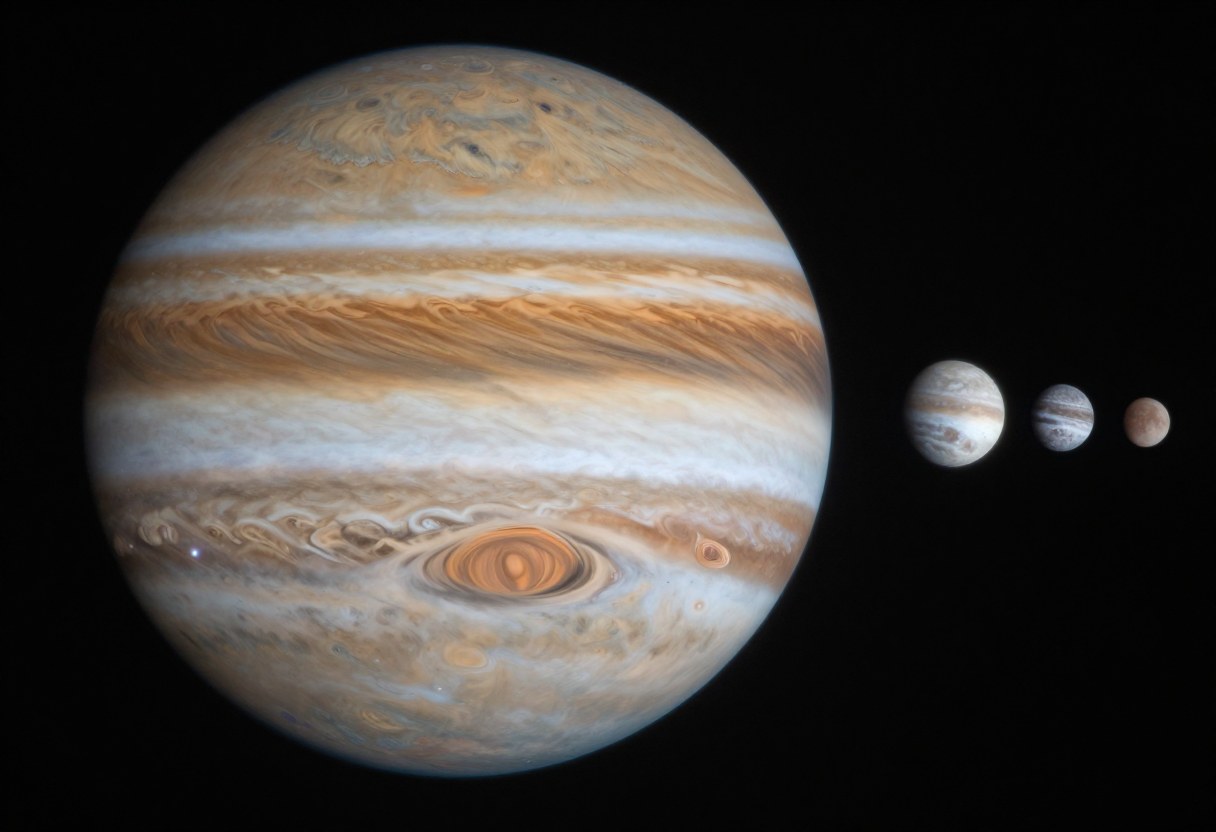
- Type
- Planets
- Best season
- Any time of year
- Gear
- Binoculars help
- When to look
- Brightest around opposition, which comes about every 13 months
- Appearance
- A very bright, steady, creamy-white light
- Orbit
- About 12 years around the Sun
- Opposition
- About every 13 months, when Jupiter is up all night
- Moons
- Four large moons that show in binoculars, changing places night to night
What you will see
- A very bright light, brighter than any star.
- In binoculars, up to four tiny points of light in a line beside the planet.
- In a small telescope, two dark cloud bands on the disc.
How to watch
- Use steady binoculars to see the moons and watch them change positions each night.
- A small telescope shows the cloud bands.
- Use an app to find where Jupiter is.
Field notes
Galileo's discovery of Jupiter's moons in 1610 changed how people understood the solar system. You can repeat the observation with binoculars on any clear night when Jupiter is up.
Related guides
Dates and times repeat from year to year but shift slightly, and the Moon's phase and the planets' positions are different every year. Check a current source such as NASA, the American Meteor Society, or a stargazing app before you plan a night out, and check the weather forecast for clear skies.