
Full Moon
Also called: harvest Moon, hunter's Moon
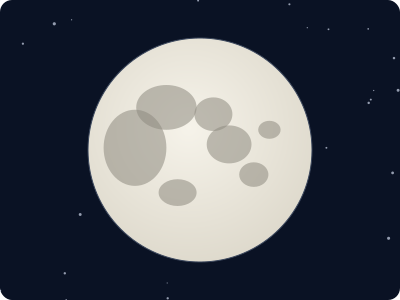
The whole face of the Moon is lit. It rises at sunset, sets at sunrise, and is the brightest night of the month, which washes out faint stars and meteors.
- Type
- Moon Phases
- Best season
- Any time of year
- Gear
- Naked eye
- When to look
- About once a month, roughly every 29½ days
- Lit part
- The whole face
- Rises and sets
- Rises near sunset and sets near sunrise
- Best for
- Moonlit walks, moonrise photography, and a lunar eclipse
- Names
- Many cultures give each full Moon a seasonal name, such as the Harvest Moon in autumn
What you will see
- A bright disc up all night.
- Moonlight bright enough to see by.
- Few stars: the Moon's glare drowns them.
How to watch
- Watch the Moon rise at dusk: it looks biggest near the horizon.
- Skip faint-object stargazing and meteor showers near the full Moon.
- A lunar eclipse can occur only at a full Moon.
Field notes
The full Moon is the brightest night of the month, which is why meteor showers and the Milky Way are hard to see. It is also why it gets a lot of attention, and a lot of folklore.
Many anglers and hunters plan around the Moon, but the evidence that it changes animal behavior is mixed, so treat it as one more factor and not a rule.
Related guides
Dates and times repeat from year to year but shift slightly, and the Moon's phase and the planets' positions are different every year. Check a current source such as NASA, the American Meteor Society, or a stargazing app before you plan a night out, and check the weather forecast for clear skies.