
Tarpon
Megalops atlanticus
Also called: silver king
A giant, silver, jumping gamefish of passes, bridges, and beaches, famous for aerial fights and a mouth like a bucket.
- Type
- Inshore & Flats
- Typical size
- Typically 40 to 150 lb; fish over 200 lb are possible
- Range
- The Atlantic coast from the Carolinas south, the Gulf of Mexico, and the Caribbean
- Coasts
- Southeast Atlantic, Gulf of Mexico
- Where
- Flats & estuaries, Reefs, wrecks & jetties, Surf & beaches
- Best seasons
- Spring through summer, with a peak around May through July in Florida
Note: Tarpon are heavily regulated, and most anglers release them. Many states require a special tag or permit to keep one, and fish should be kept in the water for release. Check current rules.
How to identify it
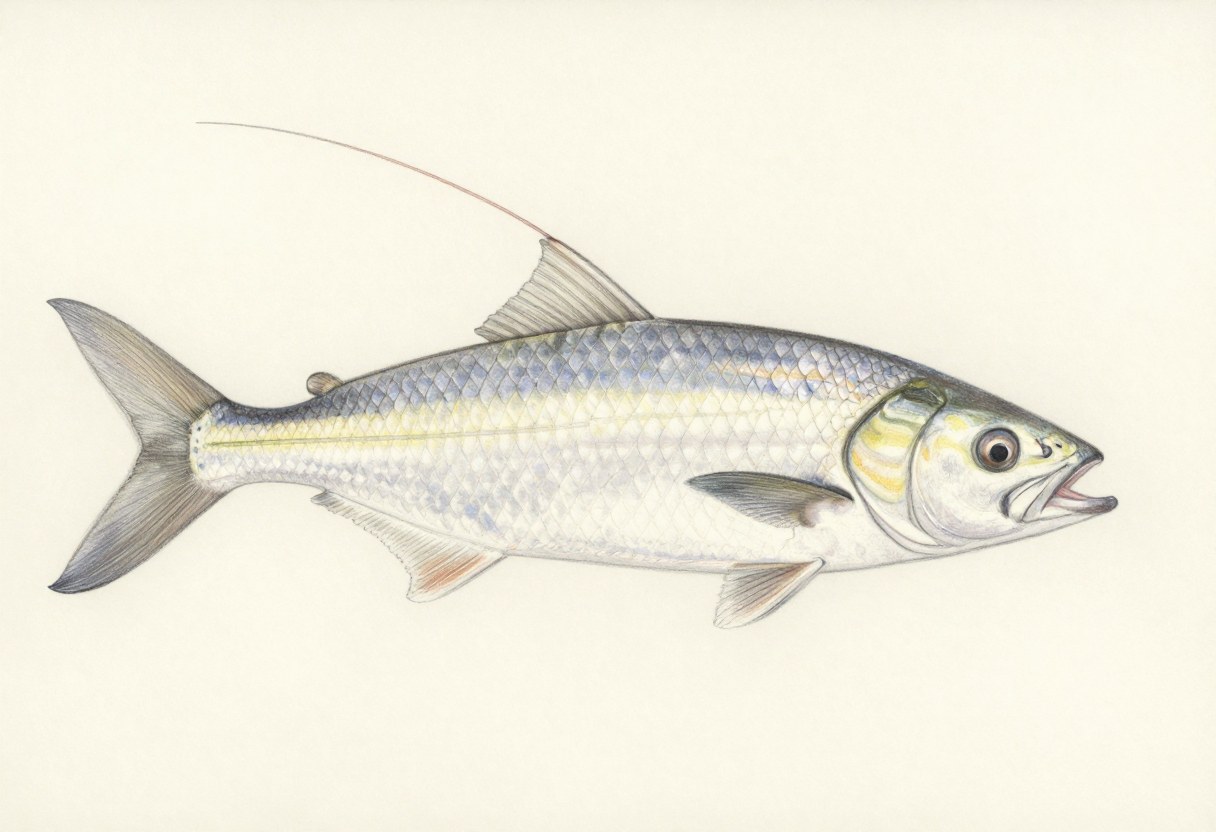
- Very large, mirror-like silver scales.
- An upturned mouth with a protruding lower jaw.
- The last ray of the dorsal fin is extended into a long filament.
- A forked tail and a back that looks dark blue or green.
Often confused with
- Snook: has a black lateral line, a sloped head, and two dorsal fins.
Baits and lures
- Live crabs, mullet, and pinfish
- Large flies
- Swim baits and plugs
- Cut bait in some areas
Techniques
- Drift live crabs in passes and along bridges on an outgoing tide.
- Sight-cast flies and lures to rolling fish on flats and beaches.
- Use a strong leader and heavy tackle for big fish.
- Keep fish in the water and release them quickly.
Field notes
Tarpon breathe air at the surface, which is why they often roll. Handling large fish out of the water can hurt them, so many guides recommend leaving them in the water.
Related guides
Saltwater size limits, bag limits, seasons, gear rules, and license requirements change often and differ by state and in federal waters. Some species are catch-and-release only or closed in certain areas. Check your state's current fishing regulations before you keep a fish; our state resources directory links to each state's official wildlife and fisheries agency.