
Common Snook
Centropomus undecimalis
Also called: snook, linesider
A powerful, line-sided ambush predator of mangroves, passes, and beaches in Florida and the western Gulf, known for strong runs and a love of structure.
- Type
- Inshore & Flats
- Typical size
- Most fish are 18 to 30 inches and 2 to 10 lb; over 20 lb is a trophy
- Range
- Florida, south Texas, and the tropical western Atlantic and Caribbean
- Coasts
- Southeast Atlantic, Gulf of Mexico
- Where
- Flats & estuaries, Reefs, wrecks & jetties, Surf & beaches
- Best seasons
- Warm months; they move toward warm water in winter and are sensitive to cold
Note: The edge of a snook's gill plate is razor sharp, so handle it with care and avoid putting a hand under the gill cover. Snook have closed seasons and slot limits that are strictly enforced in Florida. Size limits, bag limits, and seasons for this species change often, so check current state and federal rules before you keep one.
How to identify it
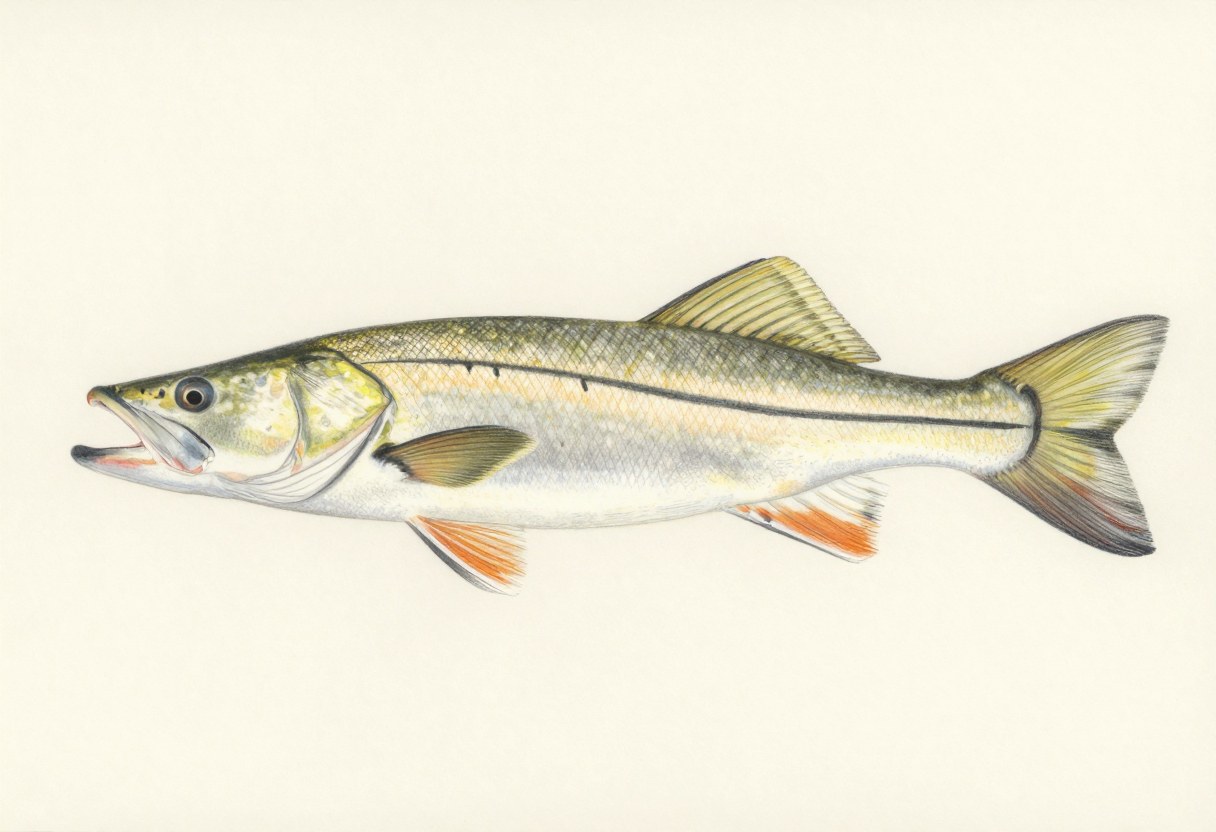
- A bold black lateral line running from the gill cover to the tail.
- A long, slightly flattened head with a sloped forehead.
- A large mouth with a projecting lower jaw.
- Two separate dorsal fins and yellowish pelvic fins.
Often confused with
- Tarpon: has huge silver scales, an upturned mouth, and a filament on its dorsal fin.
Baits and lures
- Live pilchards, pinfish, and shrimp
- Soft plastic jerkbaits and paddle tails
- Topwater plugs and twitchbaits
- Large streamer flies
- Cut bait in some fisheries
Techniques
- Cast live baits to mangrove edges, docks, and bridge pilings.
- Fish passes and inlets on moving tide, especially around the summer spawn.
- Use lighted docks at night, where bait and snook gather.
- Use a stout leader, since snook rub fish against structure.
Field notes
Snook are a favorite of Florida inshore anglers. Catch-and-release is common, and many states protect the fish with seasons and slot limits.
Related guides
Saltwater size limits, bag limits, seasons, gear rules, and license requirements change often and differ by state and in federal waters. Some species are catch-and-release only or closed in certain areas. Check your state's current fishing regulations before you keep a fish; our state resources directory links to each state's official wildlife and fisheries agency.