
Summer Flounder
Paralichthys dentatus
Also called: fluke
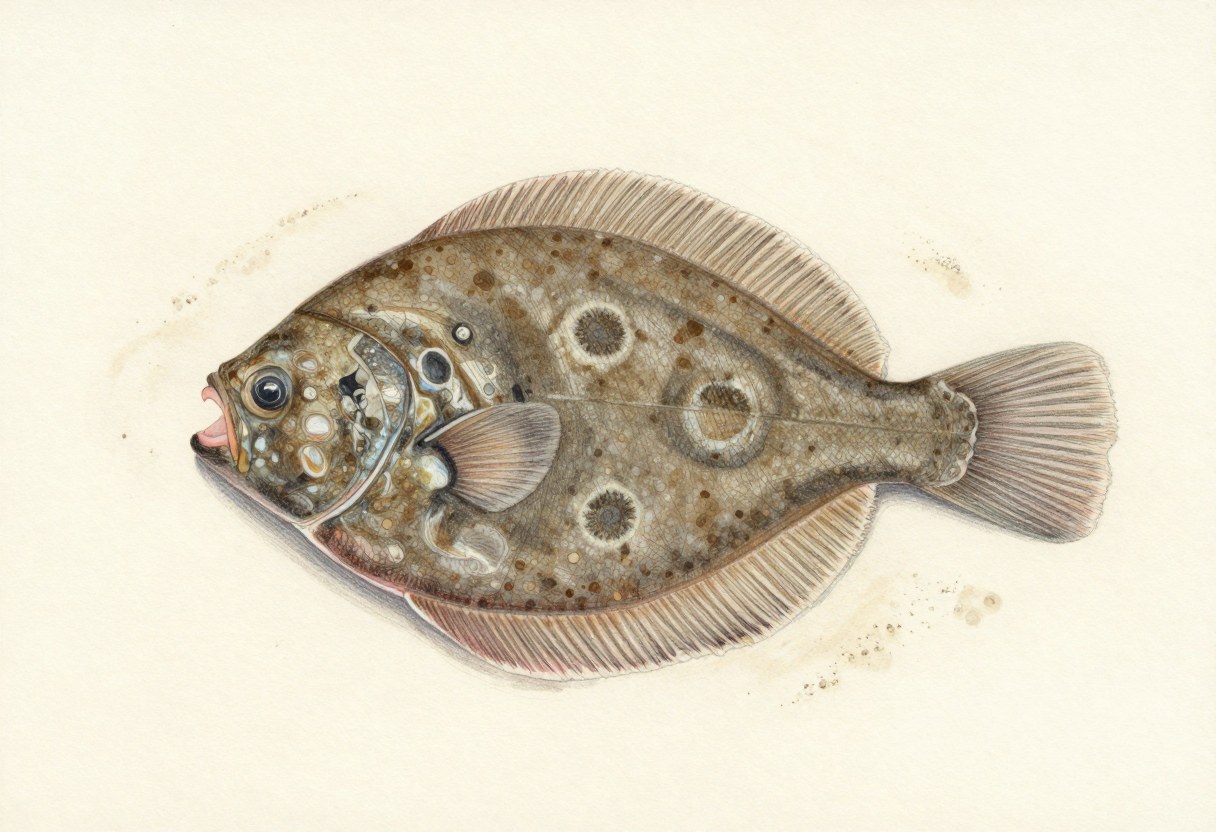
The fluke of the Mid-Atlantic and Northeast, a big-mouthed, left-eyed flatfish found over sand in bays, inlets, and nearshore water.
- Type
- Bottom & Reef Fish
- Typical size
- 1 to 5 lb; 'doormats' over 8 lb
- Range
- The Atlantic coast from Maine to the Carolinas
- Coasts
- Northeast Atlantic, Southeast Atlantic
- Where
- Flats & estuaries, Reefs, wrecks & jetties, Open water
- Best seasons
- Summer, from late spring into early fall
Note: Summer flounder rules are strict and change often, with minimum sizes and seasons. Size limits, bag limits, and seasons for this species change often, so check current state and federal rules before you keep one.
How to identify it
- Both eyes on the left side of the body.
- Several dark, ringed eyespots on the upper side.
- A large mouth with sharp teeth.
- A brown or gray body that changes to match the bottom.
Often confused with
- Southern Flounder: lacks the ringed spots and is found farther south.
Baits and lures
- Live killifish and spearing
- Strips of squid and fish
- Bucktail jigs with a plastic or strip trailer
Techniques
- Drift over sandy bottom with a jig and bait strip.
- Fish channel edges, inlets, and drop-offs.
- Bounce the bait along the bottom and set the hook after a short pause.
- Use a long rod and plenty of lead in current.
Field notes
Fluke are aggressive ambush predators and often grab large baits. Anglers use large strips and live baits to target big fish.
Related guides
Saltwater size limits, bag limits, seasons, gear rules, and license requirements change often and differ by state and in federal waters. Some species are catch-and-release only or closed in certain areas. Check your state's current fishing regulations before you keep a fish; our state resources directory links to each state's official wildlife and fisheries agency.