
Spanish Mackerel
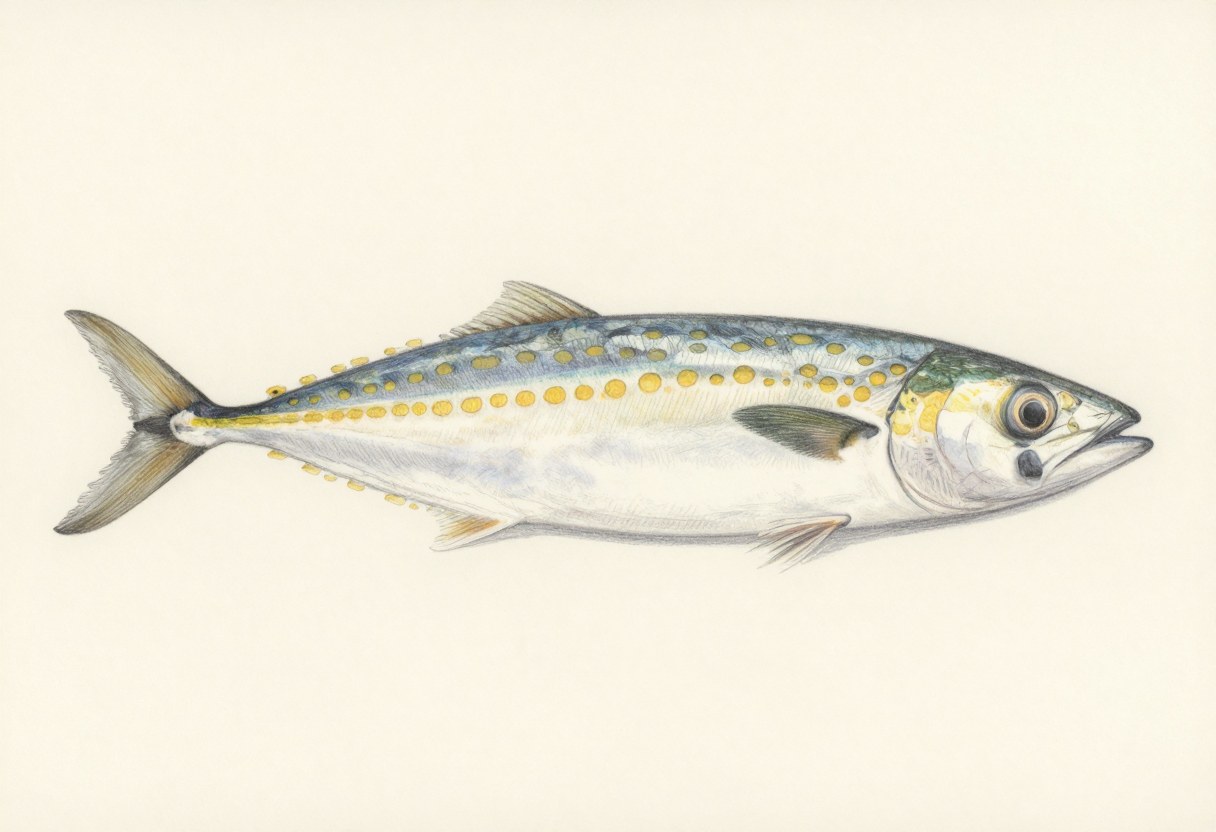
Scomberomorus maculatus
Also called: Spanish, spots
A fast, silvery, golden-spotted schooling fish of nearshore waters, beaches, and inlets, easy to catch on small spoons.
- Type
- Offshore & Pelagic
- Typical size
- 1 to 3 lb; fish over 5 lb are large
- Range
- The Atlantic coast from the Mid-Atlantic south and around the Gulf of Mexico
- Coasts
- Northeast Atlantic, Southeast Atlantic, Gulf of Mexico
- Where
- Surf & beaches, Open water, Reefs, wrecks & jetties
- Best seasons
- Warm months; they move north in summer
Note: Mackerel have sharp teeth, so handle with pliers. Size limits, bag limits, and seasons for this species change often, so check current state and federal rules before you keep one.
How to identify it
- A slim, torpedo-shaped silver body.
- Rows of golden-yellow oval spots along the sides.
- A forked tail.
- A front of the dorsal fin that is black.
Often confused with
- King Mackerel: bigger, with a lateral line that dips sharply and no spots on adult fish.
Baits and lures
- Small spoons such as Clark spoons
- Small jigs
- Live shrimp and cut bait
- Small flies
Techniques
- Troll small spoons behind a planer or trolling weight along beaches and inlets.
- Cast small jigs into breaking schools.
- Use a short wire or heavy fluorocarbon leader to stop bite-offs.
- Watch for birds and surface activity.
Field notes
Spanish mackerel are quick, so a fast retrieve and a good leader matter. They are good eating when fresh and bled.
Related guides
Saltwater size limits, bag limits, seasons, gear rules, and license requirements change often and differ by state and in federal waters. Some species are catch-and-release only or closed in certain areas. Check your state's current fishing regulations before you keep a fish; our state resources directory links to each state's official wildlife and fisheries agency.