
King Mackerel
Scomberomorus cavalla
Also called: kingfish, king
A large, toothy, fast mackerel of nearshore and offshore waters, famous for blistering runs and for slicing through line.
- Type
- Offshore & Pelagic
- Typical size
- Typically 5 to 30 lb; smoker kings over 40 lb
- Range
- The Atlantic coast from the Carolinas south and the Gulf of Mexico
- Coasts
- Northeast Atlantic, Southeast Atlantic, Gulf of Mexico
- Where
- Open water, Reefs, wrecks & jetties
- Best seasons
- Spring through fall, following baitfish
Note: King mackerel have razor-sharp teeth. Use pliers and gloves, and be careful removing hooks. Size limits, bag limits, and seasons for this species change often, so check current state and federal rules before you keep one.
How to identify it
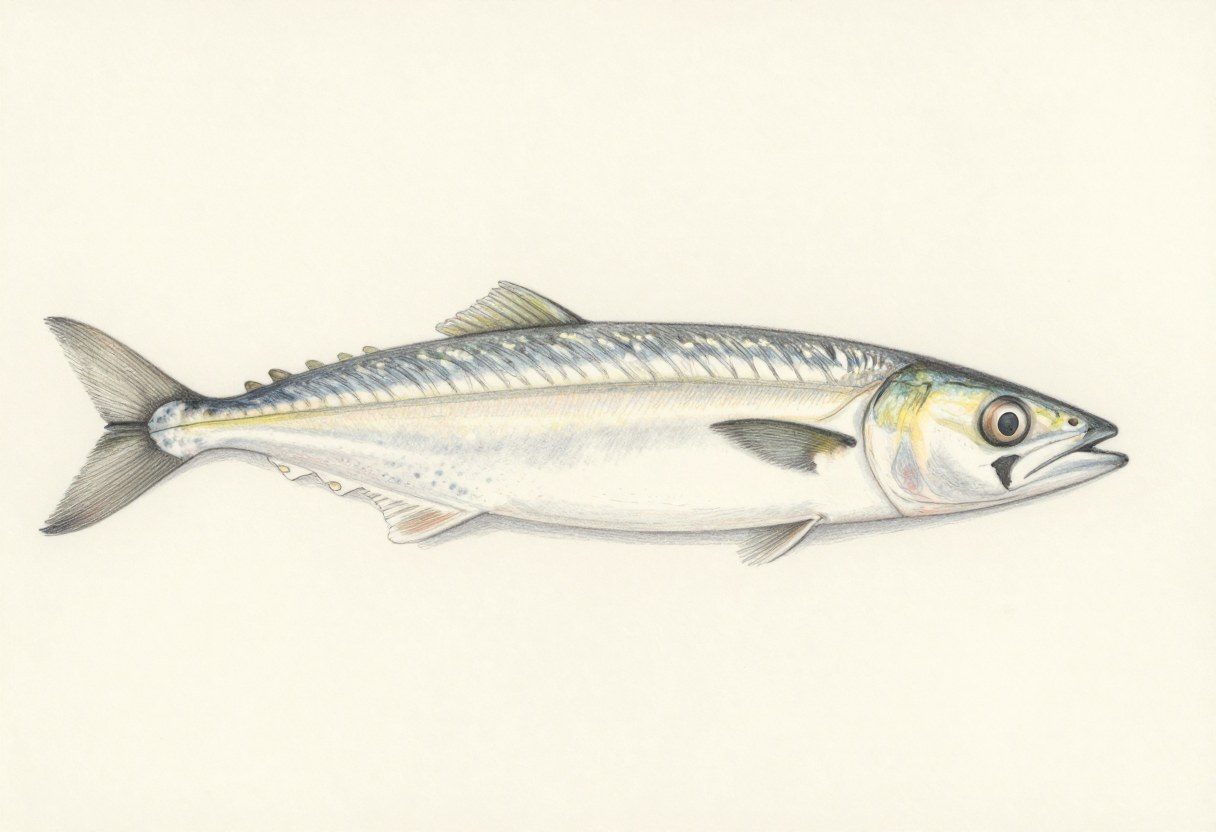
- A silver body with a lateral line that dips sharply about halfway along the side.
- No spots on adult fish, though small fish may show some.
- A forked tail.
- A mouth full of sharp teeth.
Often confused with
- Spanish Mackerel: smaller, with golden spots and a lateral line that drops gradually.
Baits and lures
- Live blue runners, menhaden, and cigar minnows
- Trolled spoons and plugs
- Dead ballyhoo
Techniques
- Slow-troll live baits with a stinger hook rig.
- Troll lures over reefs, wrecks, and bait schools.
- Use wire leaders to stop bite-offs.
- Handle fish carefully, since their teeth are razor sharp.
Field notes
Kings are strong runners and often bite hard. Many anglers use stinger rigs to catch short-striking fish.
Related guides
Saltwater size limits, bag limits, seasons, gear rules, and license requirements change often and differ by state and in federal waters. Some species are catch-and-release only or closed in certain areas. Check your state's current fishing regulations before you keep a fish; our state resources directory links to each state's official wildlife and fisheries agency.