
Sheepshead
Archosargus probatocephalus
Also called: convict fish (young)
A bar-striped, tooth-studded fish of pilings, jetties, and oyster beds, a strong fighter and a nibbler that is hard to hook.
- Type
- Inshore & Flats
- Typical size
- Typically 1 to 5 lb; fish over 8 lb are large
- Range
- The Atlantic coast from the Chesapeake Bay south and around the Gulf of Mexico
- Coasts
- Northeast Atlantic, Southeast Atlantic, Gulf of Mexico
- Where
- Reefs, wrecks & jetties
- Best seasons
- Late winter and spring, when fish gather at structure to spawn
Note: A sheepshead's dorsal and anal spines are sharp, so handle with care. Size limits, bag limits, and seasons for this species change often, so check current state and federal rules before you keep one.
How to identify it
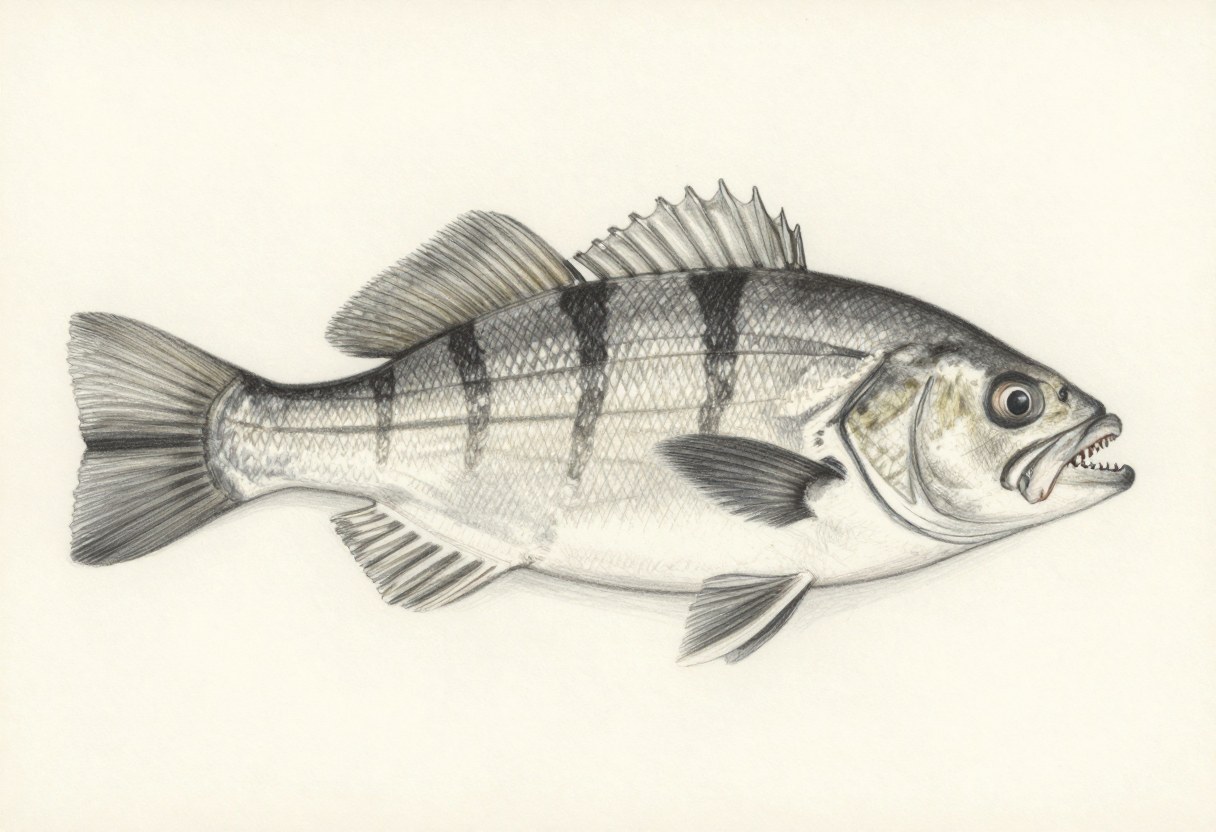
- Five to seven bold black vertical bars on a silvery-gray body.
- Strong, protruding front teeth that look like human teeth.
- A tall, spiny dorsal fin.
- A deep, flattened body.
Often confused with
- Black Drum: has chin barbels and a darker body, and lacks the front teeth.
Baits and lures
- Fiddler crabs
- Live shrimp
- Barnacles, oysters, and sand fleas
- Small pieces of crab
Techniques
- Bounce a small bait down pilings and along jetty rocks.
- Use a small, sharp hook and a light sinker.
- Set the hook at the first tap, since they nibble.
- Use stout line to keep fish from wrapping structure.
Field notes
Sheepshead use their teeth to crush barnacles and crabs, which is why they hang around pilings and why they are so good at stealing bait.
Related guides
Saltwater size limits, bag limits, seasons, gear rules, and license requirements change often and differ by state and in federal waters. Some species are catch-and-release only or closed in certain areas. Check your state's current fishing regulations before you keep a fish; our state resources directory links to each state's official wildlife and fisheries agency.