
Red Snapper
Lutjanus campechanus
Also called: snapper
A reddish, red-eyed reef fish of the Gulf and South Atlantic, one of the most popular offshore bottom fish and one of the most tightly managed.
- Type
- Bottom & Reef Fish
- Typical size
- 2 to 15 lb; fish over 20 lb are large
- Range
- The Gulf of Mexico and the Atlantic coast from the Carolinas south
- Coasts
- Southeast Atlantic, Gulf of Mexico
- Where
- Reefs, wrecks & jetties, Open water
- Best seasons
- Open seasons are short and set each year by state and federal managers
Note: Red snapper seasons are short and vary by state and by federal waters, and barotrauma is a problem for released fish. Use a descending device and check rules before you go. Size limits, bag limits, and seasons for this species change often, so check current state and federal rules before you keep one.
How to identify it
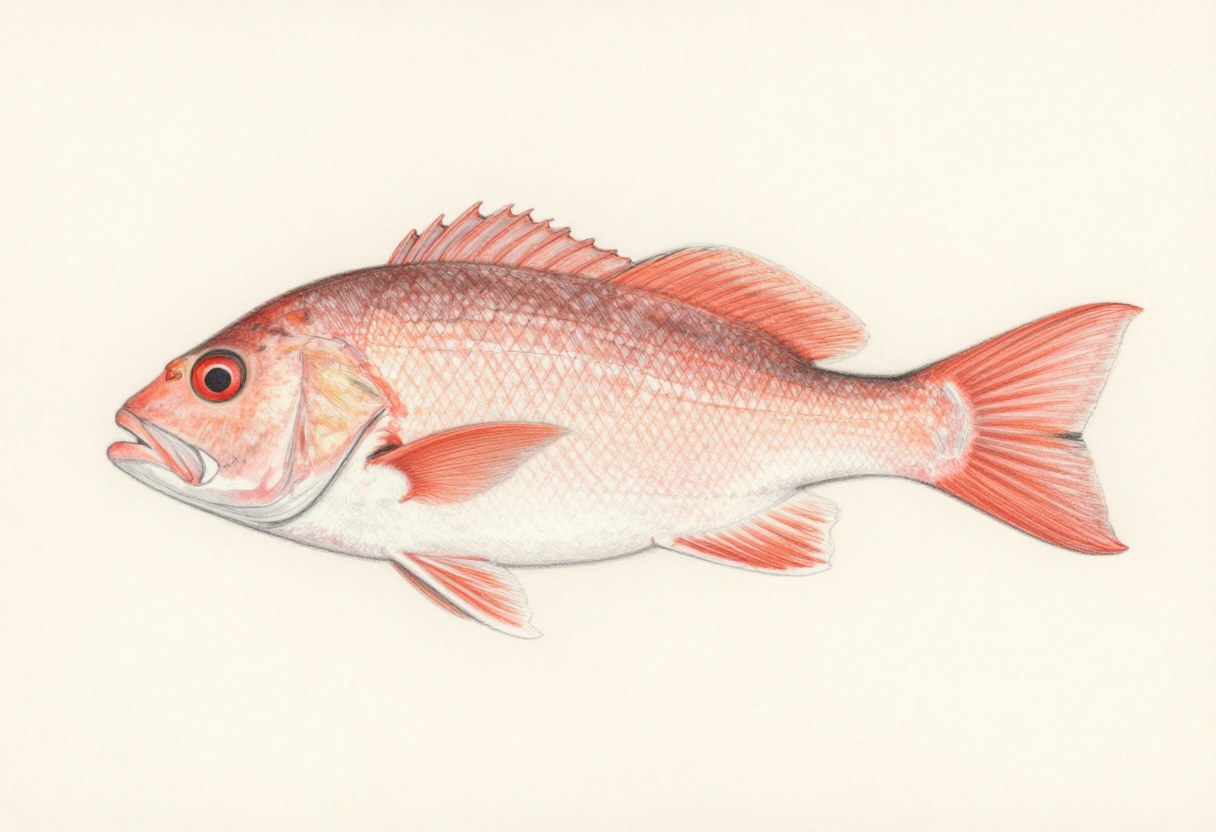
- A pinkish-red body, paler on the belly.
- Red eyes.
- A sloping head and a pointed anal fin.
- A slightly forked tail.
Often confused with
- Gag Grouper: a heavier, grayish fish with worm-like markings.
Baits and lures
- Cut squid and sardines
- Live pinfish
- Jigs and slow-pitch jigs
Techniques
- Anchor or drift over reefs, wrecks, and rigs and fish the bottom.
- Use a circle hook and a heavy sinker.
- Use a descending device to release fish that come up with barotrauma.
- Handle fish carefully and return undersized fish quickly.
Field notes
Red snapper gather around reefs, wrecks, and oil platforms. Fish that come up from deep water often have swollen stomachs and need help returning to depth.
Related guides
Saltwater size limits, bag limits, seasons, gear rules, and license requirements change often and differ by state and in federal waters. Some species are catch-and-release only or closed in certain areas. Check your state's current fishing regulations before you keep a fish; our state resources directory links to each state's official wildlife and fisheries agency.