
Gag Grouper
Mycteroperca microlepis
Also called: gag, grouper
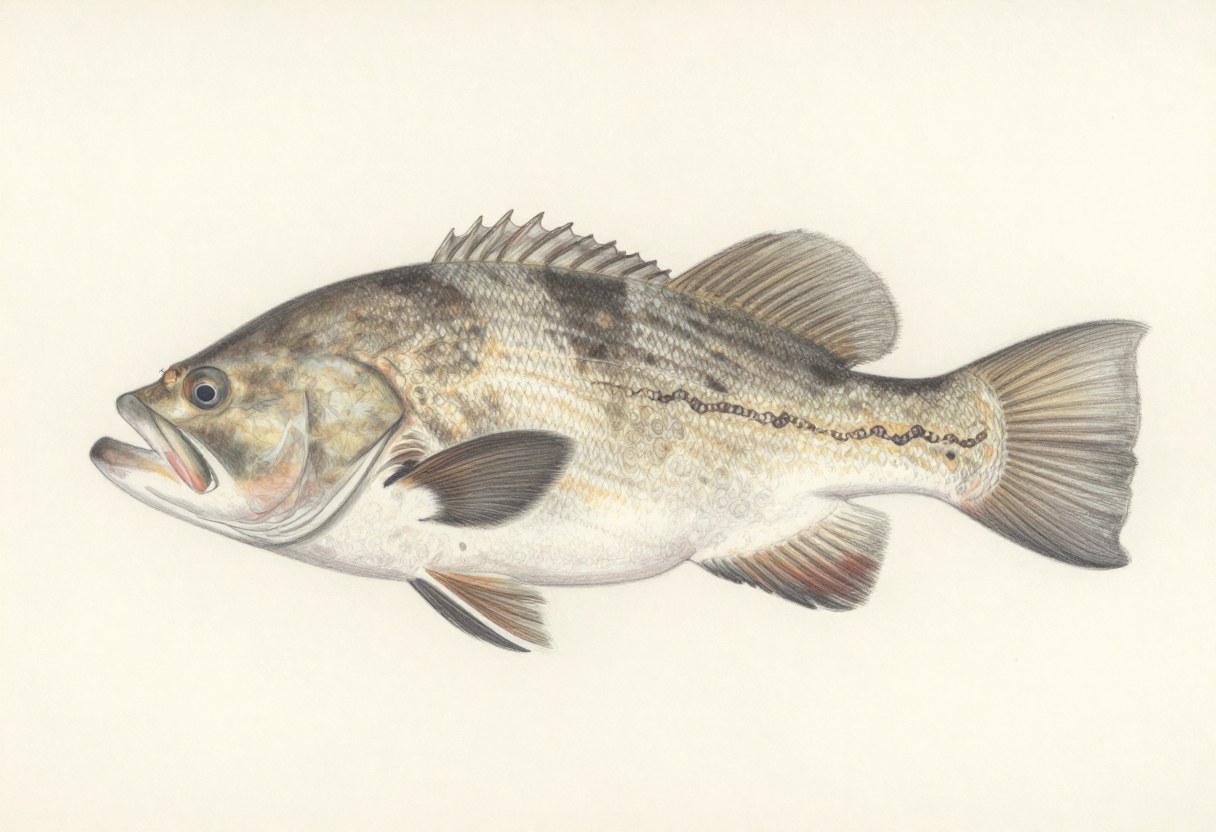
A heavy, gray-brown reef predator of the Gulf and South Atlantic, strong and quick to dive into rocks and holes.
- Type
- Bottom & Reef Fish
- Typical size
- 5 to 20 lb; fish over 30 lb are large
- Range
- The Gulf of Mexico and the Atlantic coast from the Carolinas south
- Coasts
- Southeast Atlantic, Gulf of Mexico
- Where
- Reefs, wrecks & jetties, Open water
- Best seasons
- Seasons vary; inshore in summer for some fish, offshore in winter
Note: Grouper rules include seasons, size limits, and closed areas that change often. Size limits, bag limits, and seasons for this species change often, so check current state and federal rules before you keep one.
How to identify it
- A gray-brown body with darker, worm-like marks on the sides.
- A large mouth with a projecting lower jaw.
- A tail with a slightly concave edge.
- A thick, heavy body.
Often confused with
- Red Snapper: reddish and thinner, with a pointed anal fin.
Baits and lures
- Live pinfish, grunts, and cigar minnows
- Large cut bait
- Trolled deep-diving plugs
Techniques
- Drop a live bait to a ledge or wreck and hold the fish out of the rocks.
- Troll deep plugs over reefs and ledges.
- Use heavy tackle, since groupers dive into holes.
- Use a descending device for released fish.
Field notes
Gag grouper change sex as they grow, and the large fish are usually males. Strict rules help keep populations healthy.
Related guides
Saltwater size limits, bag limits, seasons, gear rules, and license requirements change often and differ by state and in federal waters. Some species are catch-and-release only or closed in certain areas. Check your state's current fishing regulations before you keep a fish; our state resources directory links to each state's official wildlife and fisheries agency.